Showing posts with label lesser black-backed gull. Show all posts

Sunday, 13 October 2024

Late September

21st September

Another early start at Petworth for a check of the reservoir there as it's been on a bit of a roll recently. This morning proved to be a bit of a quiet one though, with just a single Wigeon of note among the assembled wildfowl on the water and a couple of flyover Yellow Wagtails. A scan of the South Brooks from the tea terrace at Pulborough proved even more quiet, not helped by the thick fog which was slow to clear.

Wigeon
Pulborough fog!
A look at Southlands Farm on my way to Knepp late afternoon produced a Green Sandpiper and eight Shoveler on the pool there. Continuing the Shoveler theme, eleven flew north over the Southern Block during my dusk safari at Knepp this evening. 

22nd September

Not much time for birding today as I had a packed day of morning and afternoon safaris and a staff party at Knepp. A brief look at Waltham Brooks on the way to Knepp produced a light easterly movement of Swallows but little else of note. 

23rd September

WeBs count a day late today, so I headed over to Petworth in the rain. A drake Pochard was on the reservoir among the usual Tufted Ducks, Mallards, Little Grebes and three Shoveler, while the lingering Common Sandpiper was still patrolling the shoreline. A first-winter Common Gull almost dropped in briefly before flying off east. 

A lunchtime walk round the local farmland produced a modest 27 species but did include my first local Willow Warbler for almost two weeks plus at least one Hobby (one flew high east, then a bit later a juvenile was hawking over Lodge Hill which may have been a second bird but hard to be sure). A light south/south-westerly passage of Herring Gulls included two adult Lesser Black-backed Gulls. 

24th September

After dropping B off at nursery I stopped off in Pulborough for a walk down to the North Brooks. Straight away it was clear there were a lot more ducks about than on my last visit, as a female Marsh Harrier flushed some 400 or more from the wet grassland on the north side of the North Brooks. These were mostly Mallard and Teal but with at least 10-15 Wigeon and a single Gadwall among them. Another 250 or more Teal were on the North Brooks proper along with two juvenile Ruff among ~120 Lapwing.

Ruff and Teal
Late afternoon I dropped in at Petworth again. The lingering Common Sandpiper was still about - will it stay into October? A female Pochard was sleeping among the Tufted Ducks and three Shoveler were still present. I haven't seen many hirundines locally for a couple of days, so it was a pleasant surprise to see some 150 or so drifting gently east during my hour here, mostly House Martins. 

25th September

I managed my first proper little vismig watch of the season this morning, albeit only 25 minutes (it was a year ago yesterday that I broke and dislocated my shoulder in a skateboarding accident and am feeling strangely nostalgic about the amount of time it afforded me to get out and enjoy the spectacle of visible migration at this time of year!) The main movers this morning were House Martins, with some 226 south/south-west over the garden in the aforementioned half hour. 
In a repeat performance of yesterday I again headed over to Petworth in the afternoon for a check of the reservoir. A Golden Plover called overhead as I arrived (though I never did manage to see it!). Other highlights were seven Pochard among the usual suspects on the water and a dark-masked first-winter Herring Gull which did have me trying to turn it into a Yellow-legged.
Herring Gull
26th September

An early walk from home out to Waltham Brooks proved relatively quiet aside from a Marsh Harrier flying upriver, two Stonechats and a rather late Whitethroat in the meadow, and a light trickle of House Martins flying east/south-east. 

Late afternoon, with some lively showers moving through, I again headed over to Petworth. A juvenile Great Crested Grebe was back on the reservoir along with 30 Little Grebes, five Pochards, four Shoveler and the usual scattering of Coots and Tufted Ducks. A first-winter Common Gull flew south/south-east, while a few Swallows and a single House Martin flew north-west.
Egyptian Geese
Grey Wagtail
27th September

A little tour of some wetland sites out to the western side of my patch area in the rain first thing today. At Petworth, some 360 Canada Geese and 150 Egyptian Geese left roost at the reservoir, leaving behind the four Shoveler again and a couple of Pochard. Next up, a brief scan of Burton Mill Pond from the roadside, which proved fairly lively, mostly in terms of vismig, with at least 52 Swallows through west/north-west in the 25 minutes or so I was there. Water Rail is pretty much guaranteed here most visits but usually heard only, so I got a bit of a shock when one suddenly appeared from underneath the boat jetty where I was stood and flew into the reeds nearby!
Mute Swans
The scrape at Bignor Park is again holding water for the first time since May. Just eight Mallards on it this morning but it's good to know it's worth checking again in passing. 

Early afternoon I headed out for a stroll round the local fields. By now the cloud cover and breeze had increased quite a bit and it was feeling considerably more autumnal, and this was reflected in the birds. Some 80 or more hirundines (roughly 3/1 House Martin/Swallow) were moving through or lingering to feed among the cattle, sometimes whizzing past just a few metres from me. Continuing the vismig theme, two Marsh Harriers flew south together over Waltham Brooks, a tight flock of large gulls high south seemed to be all Lesser Black-backed Gulls, and a heard-only Siskin heading south-west represented my first record locally for several weeks. A little flurry of passerines in the hedgerow nearest the Waltham Brooks boundary included at least ten Chiffchaffs and a single Goldcrest but sadly nothing rarer.
House Martin
Swallow
Lesser Black-backed Gulls
28th September

Very little birding today as I was leading back-to-back beaver pen safaris at Knepp. A quick glance at the pool at Southlands Farm on the way past produced eight Shoveler and three Teal but little else.
Southlands Farm
It was an absolute beauty of a morning but really quite cold, with proper ice on the windscreen. Clearly it was lively on the vismig front judging by messages in various WhatsApp groups and this was well illustrated by a Skylark over the beaver enclosure at Knepp - not a common bird here. A Redstart was also a nice bonus flying in front of the off road vehicle a couple of times as I was driving the group around. 

29th September

I was up Amberley Mount at first light this morning in the hope of some success from my first proper vismig session of the autumn. Two hours up here proved to be fairly lively, with waves of hirundines coming through, making up the bulk of the birds. There were little nuggets of interest from other species throughout to pique the interest though, including a Hawfinch flying east, two Golden Plover south-west, a juvenile Mute Swan high south-west over Bury Hill and, most frustratingly, what I'm pretty sure were two Commic Terns high north/north-east but which I got on too late to get any salient features. The absolute worst feeling in birding: when you know you've potentially got a good bird in view but it sails away from you before you can clinch the ID!
Dawn up Amberley Mount
30th September

A wet start to the day. After dropping B at nursery I headed over to Pulborough for a look at the North Brooks. The water levels were quite a bit higher than my last visit, with not much in the way of muddy margins for waders. Four Snipe and around ten Lapwing were the best of the bunch on the deck, although I did also flush a Green Sandpiper from a ditch halfway along the public right of way back to the village. I also heard a Golden Plover calling but couldn't see it, presumably just a flyover. Duck numbers continue to rise, with somewhere in the region of 450 Teal this morning, with nine Shoveler and two Wigeon among them.

Wednesday, 20 March 2024

Arrivals and Departures

11th March

I had the day off today and the weather looked exciting so I ended up having a fairly big morning session. Starting off at Amberley, I found the visibility to be less than ideal, with the mist fairly low and precluding decent observation. Highlights from a relatively short stay here were a Great Crested Grebe (actually an Amberley tick for me!), 15 Tufted Duck and a Great White Egret. 

Next up, I headed to Pulborough Brooks. The water levels here were still very high, with much of the reserve still entirely flooded. It was encouraging to see some land exposed on the South Brooks though, and the Lapwings, Redshanks and Skylarks were taking full advantage and singing and displaying enthusiastically. The long-staying Water Pipit was again in the wet grassland between Winpenny and West Mead hides, and a few Dunlin were lurking among the Lapwings (I only actually saw one but up to 12 were reported by others). A lone Great Crested Grebe was still on the North Brooks and at least four Chiffchaffs and three Cetti's Warblers were singing around the trail.

Wren
On the way home I stopped for a brief check of Waltham Brooks which actually proved to be a really good call. Pretty much the first bird I saw as I scanned the lake from the riverbank was a Great White Egret in full breeding plumage. A Skylark singing rather distantly to the east was a 1k area tick for this year, as was the Mediterranean Gull(s) calling as I got back to my car, which I never actually saw. A Lesser Black-backed Gull flew north with Herring Gulls.
Lesser Black-backed Gull
Great White Egret
Later in the day I popped back out for an hour or so to check a couple of other sites. The scrape at Bignor Park/Hadworth Farm held singles of Green Sandpiper and Little Grebe, while my private WeBS site near Petworth revealed a Dunlin feeding along the shore - my first proper migrant wader here this year and an encouraging sign of things to come!

12th March

No birding first thing today owing to the pouring rain. I had put my moth trap out overnight though, so spent a bit of time checking through what was a reasonably decent haul, despite the weather. 20 moths of six species, with the highlights being singles of Early Thorn and Early Grey.

Early Grey
At lunchtime I popped out for a check of a couple of local water bodies. First up, the scrape at Bignor Park which was business as usual really, with only a Little Grebe and a pair of Gadwall of note. Next up, the private reservoir at Petworth which, while still not providing any migrant goodies, was considerably more birdy than it has been in my past few visits, with a single Tufted Duck my first here for a while along with a pair of Great Crested Grebes, six Gadwall and a lone Mute Swan. 

13th March

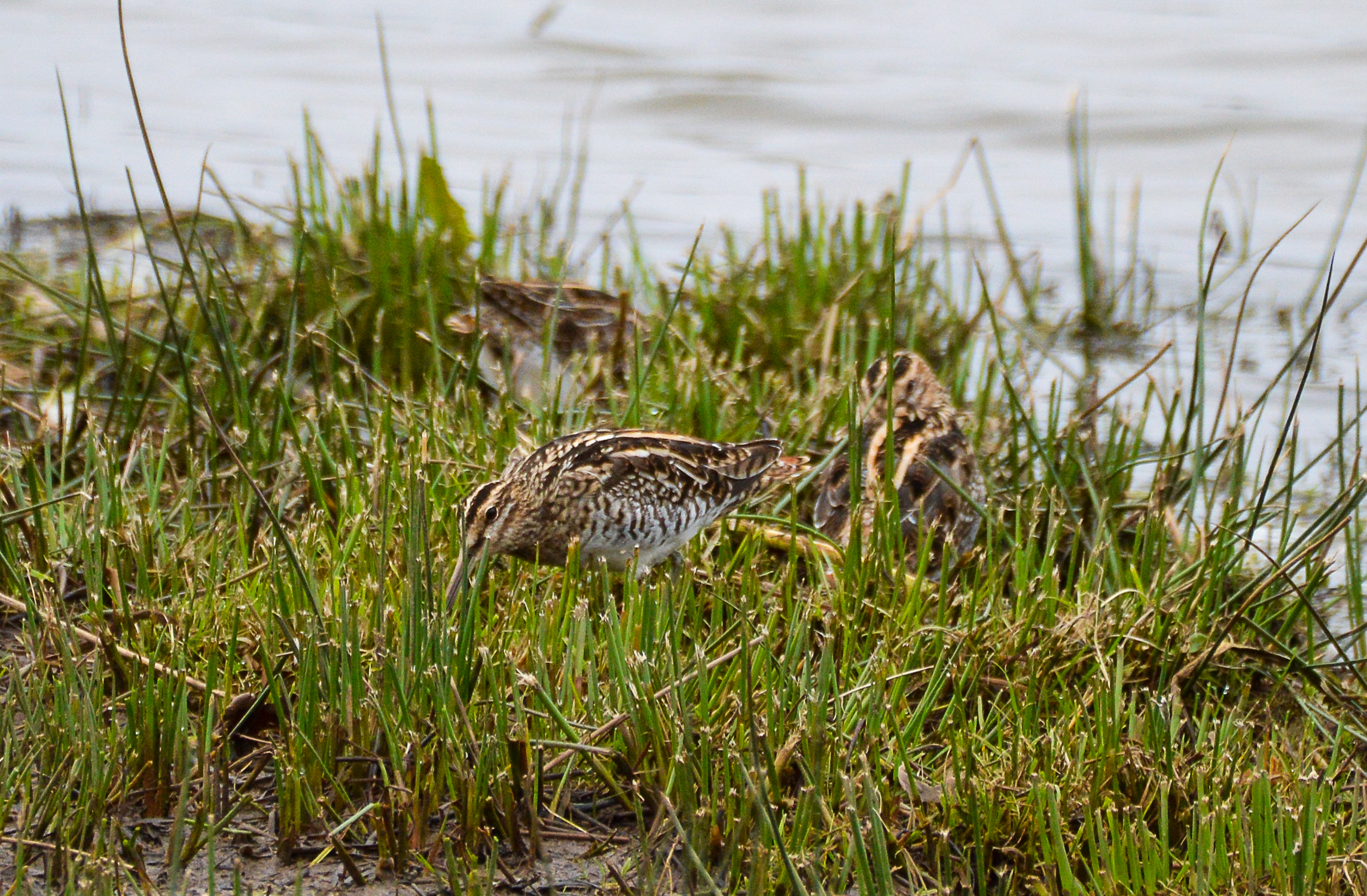
I had a short window of birding opportunity this morning before heading over to Woods Mill but wasn't 100% sure where I would go. In the end, the decision made itself when Chris and Juliet Moore circulated news of Spotted Redshank and Oystercatcher from West Mead hide at Pulborough - both decent year ticks there, especially the latter which is less than annual. I dashed over and down to the hide and was kindly shown the Spotted Red through Juliet's scope, while the Oystercatcher strutted about within spitting distance of the hide. After a few minutes, the Spotted Redshank flew across from the back of the pool and more or less joined the Oyc in the same bins view for a brief time. A duo of species I've actually never seen together here before! There were also a few showy Snipe lurking in the grassy margins in front of the hide. 
Oystercatcher
Spotted Redshank
Snipe
A lunchtime walk at Woods Mill proved fairly lively with a definite trickle of Meadow Pipits north (at least 15 in 40 minutes or so) and a Peregrine circling high overhead, the latter a new bird for me here, taking the office bird list to 70 species.

14th March

This morning I woke up in Exeter, having driven down yesterday evening for a Natural England Beaver training workshop. As I had a couple of hours to spare before the training started, I decided to head to RSPB Bowling Green Marsh and the Exe Estuary, just down the road from where I was staying. I had never visited this area for birding before but I was immediately taken with it, the main reserve reminding me of a mini Pulborough, but with the added bonus of the estuary and tidal lagoons on the outer edges. A singing Blackcap greeted my arrival, my first of the year. The apparently long-staying two Spoonbills were still on the marsh, mostly sleeping, along with a single Avocet and some 350 Black-tailed Godwits, 250 Redshank, five Dunlin and a heard only Greenshank. The tide was rapidly coming in in the estuary so there were scant waders to be found out there, but two drake Red-breasted Mergansers were a nice bonus here. The Goose Moor tidal lagoons proved rewarding, with my first Common Sandpiper of the year among four Greenshanks and a couple of Curlews. A Raven flew over, as did a trickle of half a dozen Lesser Black-backed Gulls heading north.
Spoonbills
The Beaver training session itself was excellent, and it was just superb to see the effects that England's only officially licenced wild population of the species (on the River Otter) have had in this area in just a decade or so.
Scenes from some of the beaver activities on the River Otter
After the training session was done for the day I decided to drop back in to Bowling Green Marsh again, which proved to be a good decision as, within minutes of arriving, I picked up first two Sand Martins and then a Swallow hawking over the reserve. Needless to say, my first records of either species this year! The Spoonbills were still about too. The tide was out now so the estuary channels on both the eastern and western sides of the reserve were busy with waders including around 25 Grey Plover,  60 Avocets, ten Bar-tailed Godwits and a few Oystercatchers and Curlews among the hundreds of Dunlin and Redshanks.
15th March

My second and final day in Devon and I again headed out to the Exe Estuary and Bowling Green Marsh early doors. The tide was still out but coming in fast as I arrived, and I was able to notch up ten species of wader out on the mud flats, including some 50 or more Bar-tailed Godwits, 30 Knot, 60 Grey Plover, 180 Black-tailed Godwits and 500 or more Dunlin. 
Bar-tailed Godwits
The two Spoonbills were still present on the marsh, rather less expected were two Black Swans swimming about on the water behind them. Not sure I've ever had those two species in the same scope view before! By the time I was leaving the reserve the tide had come in on the estuary and upwards of 300 Black-tailed Godwits and 250 Redshank were gathering to roost on the marsh. 
Wigeon
Spoonbills

Black Swans and Spoonbills
16th March

Not much birding today but a brief session at the private site near Petworth started auspiciously with a Peacock butterfly on the wing. The reservoir was quiet but, just 15 minutes or so after I arrived and with multiple Buzzards and Red Kites getting up on the thermals it was perhaps not entirely surprising to see an immature female Goshawk get up from the trees near Duncton Common. I watched it for the following ten to fifteen minutes as it climbed stratospherically high, briefly sparred with a Buzzard before stooping down at high speed in the rough direction of Burton Mill Pond. As it disappeared behind the tree line there, a cloud of corvids and Woodpigeons exploded into the air. Walking back to my car I saw my first Comma of the year on the wing, while on the drive home I noted at least three male Brimstones from the car. 
Goshawk - very high by this point!
Peacock
17th March

Rain and a southerly wind to start the day so I hit up various local water bodies, sadly without much reward for my drenching. Perhaps the most lively were the scrape at Bignor Park which held a pair of Mandarins (a site tick for me here) and Waltham Brooks where eleven Tufted Ducks were persisting on the main lake. 

Later in the day we met friends in Arundel for a walk and lunch at Swanbourne Lake. This picturesque site is always worth a visit and is included in mine and Ed's book for good reason, as it is pretty consistently busy with gulls and wildfowl, thanks in no small part to the amount of willing visitors buying and emptying bags of bird seed! Duck highlights today were some 50 Tufted Duck, 40 Gadwall and a single Pochard. A singing Blackcap on the north side of the lake was my first locally this year, while a Peregrine was circling high overhead as we left. 

18th March

An hour dash round Pulborough Brooks this morning proved reasonably fruitful, producing 56 species in total. Highlights were a pair of Avocets and an impressive 16 Shelduck squabbling at West Mead. Two pairs of Great Crested Grebe were displaying out on the South/Mid Brooks while a fifth bird was on its own on the North Brooks. Easily my highest count of this usually scarce species here, it just goes to show how high the water levels have been here for a pretty long period of time. A dozen Tufted Ducks would likewise normally be a pretty remarkable count here, but seems fairly routine at the moment. Other bits of note included a Blackcap singing at the top of Green Lane, a male Stonechat on the fence near Redstart Corner and at least eight singing Chiffchaffs around the trail. 
Shelducks
Shelducks, Avocets and Canada Geese
A check of Waltham Brooks at lunchtime didn't reveal any lurking summer migrants (that I could see). In fact, aside from a couple of singing Chiffchaffs it felt rather wintry, with 22 Tufted Ducks on the main lake probably the standout birds. 

19th March

I was in Kent this morning for work, at a woodland site in the High Weald. There were good numbers of finches around, especially Siskins and Redpolls, and I heard what sounded like at least a couple of Crossbills flying over too. 

Heading back into Sussex early afternoon in intermittent light rain and a light south-westerly, I decided I had to check out a couple of local water bodies in my lunchbreak. The private reservoir at Petworth was disappointingly quiet, but I had better luck at the flooded Rother in Fittleworth which held five Little Egrets and a Kingfisher busily feeding. The scrape at Bignor Park, meanwhile, was still hosting a Green Sandpiper and the lingering Egyptian Goose family. Just as I thought it was going to be another blank session in terms of any summer migrants I heard the distinctive chattering call of Sand Martin and looked up to see two flying west overhead. They didn't even drop in to feed over the water, despite the rain. 

An after work look at Waltham Brooks proved relatively quiet aside from at least eight Tufted Duck on the main lake. Two Marsh Harriers flew downriver in close succession, including a very smart looking male. 
Marsh Harrier
20th March

The Spring Equinox. Always a momentous day in the calendar and this morning held promise with a light south-easterly breeze and a touch of haze in the air. In short, the air felt rare. After dropping B off at nursery I popped by Amberley. Garganey was a species I had in mind as I scanned through the many ducks. After a couple of passes with the scope I looked again and was delighted to see a very smart drake dabbling about with a female Wigeon, to which he displayed a few times! Always a highlight of the year seeing the first drake Garganey and it was nice to find one at a different site, having spent many hours trying to find one at Waltham Brooks in recent springs. Funnily enough, I also realised it was exactly six years to the day since I found a pair at my old patch of Shalford Water Meadows near Guildford. Typically for Amberley, it was hundreds of metres away, so I only managed to get some very ropey record shot photos and videos through my scope. 
(Very distant) Garganey

After the early mist cleared it turned into an absolutely beautiful early spring day, with the mercury rising to 16 degrees Celsius; more than enough to coax out multiple butterflies and other inverts, including my first female Brimstone of the year.
Brimstone
After work I headed out for another little evening session, by which time the temperature was still well into the teens! First up I checked the scrape at Bignor Park which held a pair of Little Grebe, half a dozen Teal and the lingering Egyptian Goose family. An hour at Burton Mill Pond produced 37 species including six Sand Martins feeding overhead before heading off south, five Little Egrets flying south to roost, and the usual Great Crested Grebe pair and 23 Tufted Duck on the water.
Sand Martin

Sunday, 19 March 2023

Winter begone!

After a few false starts, I think it's fair to say that spring has well and truly arrived now; both in terms of the weather and migrant birds. Since my previous blog post I have seen several sub-Saharan travelers, my first flowering Blackthorn and my first Brimstone butterfly of the year and each birding session or even just a local walk from home is again garnished with anticipation at the thought of what might be seen. It doesn't matter how many springtimes one experiences, it never gets any less exciting or reassuring to see all the pieces of the jigsaw falling into place at this time of year.

9th March

This morning I headed over to Heyshott Down with Paul Stevens to follow up on a recent report of a Lesser Spotted Woodpecker there. Sadly it really wasn't the weather to go looking for this species, with low cloud and intermittent rain and sleet and still a fair bit of snow on the ground as we climbed the hill. Highlights here included two Marsh Tits, at least four Yellowhammers, at least two singing Skylarks and a very territorial pair of Ravens perhaps trying to distract us from a nest nearby.

Mid-afternoon I was heading up to Aldershot so dropped in at one of my old birding haunts, Cutt Mill Ponds, for a quick look. The House Pond was relatively quiet apart from ten Gadwall and four Mandarin, but I was pleased to find three Goosander on the Tarn (two drakes and a redhead). 

10th March

Just a 1k walk this morning through the local farmland towards the river. Unfortunately, the flood water had risen again to such an extent I couldn't get through under the railway bridge and, indeed, struggled to get through at various other points on my walk back home. All in all, a fairly underwhelming session with only 36 Redwing in one of the horse paddocks and 38 Meadow Pipits in another nearby field of note. 32 Common Gulls flew south over River Lane and a Siskin was heard in flight but not seen. Six Gadwall and two Snipe flew up from the marshy ground west of the railway near Thorndale Bridge. 

11th March

Not much in the way of birding today but a short stroll round the local fields in the morning did produce a little flurry of Lesser Black-backed Gull movement, with a dozen north in around 20 minutes (flocks of five, four and three).

Later in the day, I saw my first Blackcap of the year (a male) in my mum's garden in Aldershot. Presumably a wintering bird rather than a freshly arrived migrant but still very nice to see.

Lesser Black-backed Gulls
12th March

It was WeBS day so I headed over to my private reservoir site near Petworth for the monthly count of the birds here. Not much of note on the reservoir itself (I was hoping for an LRP or Sand Martin) but still three each of Shoveler and Gadwall and a few gulls drifting over including a Lesser Black-backed Gull. The local Skylarks and Yellowhammers were in fine voice though and a flock of at least 130 Fieldfare were in the fields near the reservoir.
Yellowhammer
Later in the morning I headed out into the local farmland near home for a short walk, which ended up turning into an impromptu sky watch, as it was clear there were a fair amount of gulls on the move. In 15-20 minutes I noted 176 Black-headed Gulls, 16 Herring Gulls, 10 Common Gulls, 4 Lesser Black-backed Gulls and a single adult Mediterranean Gull, all moving north. Various other birders in West Sussex and Surrey were also reporting Meds on the move, so clearly a good day for the species inland.
Mediterranean Gull

13th March

A very blustery morning. I headed over to Waltham Brooks for a quick circuit after dropping B at nursery. The water levels were way up since my last visit. The main lake held at least 60 Wigeon, a few Shoveler, Teal and Gadwall plus a single Little Grebe, while two Snipe flew up from the water's edge. More Wigeon (40-50) were on the flood just across the river on the north-west side of Amberley. Best of all was a female/immature type Merlin which came in from the north and made a couple of fast low passes over the main lake before regaining height and heading off back to the north-east.
Merlin

14th March

En route to meet Ed at his near Godalming I dropped in at my WeBS site near Petworth for a quick check of the farm reservoir, in hope of an LRP or Sand Martin. Sadly neither revealed themselves and it was generally fairly quiet, save for a Great Crested Grebe among the Coots and usual ducks on the water.

After a few hours' work, Ed and I headed out for a wander around some of his 1k area, specifically Eashing Farm where we found at least 60 Chaffinch still on the stubble field just above the river, and 30 Linnet and at least 8 Skylarks in the fields up Halfway Lane, where there were also two Little Grebes on the private farm reservoir. 

Towards the end of the day we decided to head over to Lydling Farm at Shackleford to see if the long-staying Corn Bunting trio were still present. Thankfully we found them straight away associating with around 100 Linnets in the field nearest Chalk Lane. A Surrey lifer for me - and they showed beautifully in the late afternoon sunshine. Other bits from our session here included a couple of Stonechats, a Ring-necked Parakeet (my first of the year!) and a tight flock of around 40 Starlings powering north-east at height.
Corn Buntings
15th March

On my way from my mum's in Aldershot back to Ed's I dropped in at one of my old haunts, Crooksbury Common, for a quick wander around. Here I found at least two each of Woodlark and Dartford Warbler singing as well as a heard-only Siskin and two Grey Herons over, heading east. 
Woodlark
After a couple of hours work at Ed's, it was abundantly clear that there was quite an arrival of common migrants going on in Surrey and Sussex and the draw of the birding opportunities outside the window proved too much, so we headed up to Eashing Fields for a quick scan for a Wheatear. There was no sign of any, although a Stonechat was nice here (and Nuthatch was a hotspot tick for me) but really our attention was distracted by events at Beddington Farmlands where a Stone-curlew had just turned up. We quickly made the decision to head up the A3 to scratch this particular itch (a Surrey lifer for both of us) and, thanks to Zach Pannifer, we were allowed access to the southern section of the site where we clapped eyes on the bird - amazingly the first proper migrant either us had seen this spring! Thanks again must go to Zach for persuading the site manager to allow a few birders to gain access, and of course to the finder, Glenn Jones.
Stone-curlew
With that rather extended lunchbreak out of the way we got back to work on the book, although Ed was soon on the road again - off to twitch the first local Wheatear of the year, found by Abel at Shackleford. On my way home I swung by Burton Mill Pond, hoping for a Sand Martin, but sadly no joy. Tomorrow is another day!

16th March

This morning I was at Knepp, leading a safari for a group from Compassion in World Farming. With the shift to southerly airflow, it felt considerably more spring-like, especially when the sunshine really started to break through around noon. This coaxed up a few raptors, mostly Buzzards, although Peregrine and Sparrowhawk also made an appearance. The White Storks were busy pair bonding and spring cleaning their nests too.

On the way home I stopped off for a quick look at Waltham Brooks. Highlights here included at least half a dozen Chiffchaffs, several singing in spots away from the water treatment works which felt like they were probably 'new in' rather than lingering wintering birds. Hard to be sure though, of course. Also of note were 2 Little Grebe and 6 Tufted Duck on the lake, 2 Stonechats in the scrub and a flyover Peregrine.
Greenfinch
Late afternoon I went for a little wander round the local farmland which produced another singing Chiffchaff in an area I've not heard one before, so this must surely have been a newly arrived bird, and also a female Stonechat in the hedgerow down our lane - also a 'new in' migrant from somewhere. Things are picking up!
Stonechat
17th March

A drizzly morning with continuing southerly winds sounded like an ideal combination to produce some migrants, so I headed back over to the private reservoir near Petworth, hoping for some sub-Saharan goodies. It was clear from the get-go there had been a little arrival of Chiffchaffs, with at least four singing around the area. An initial scan of the reservoir didn't produce anything, although I did think I heard a Little Ringed Plover, but dismissed it as part of a nearby Song Thrush's repertoire. A few minutes later though I picked up what was definitely an LRP in flight, circling over the reservoir before heading off to the west. It returned a minute or two later and circled again before disappearing off to the west/north-west, perhaps dissuaded from landing by the high water levels. Nonetheless, a very welcome first for the year! A couple of minutes after this, two Sand Martins dropped out of the cloud before continuing off north-east - also my first of the year. A little while later three were feeding low over the reservoir, so a minimum of three today or possibly five in total.

An early afternoon skywatch from the local farmland produced a Peregrine and two Ravens over as well as an adult Lesser Black-backed Gull high west, but otherwise no real hint of movement, and no sign of yesterday's Stonechat. Always an annual highlight though, was the first Brimstone of the year dropping into our garden as the sun broke through mid-afternoon.

A short visit to Arundel with Kate and B in the afternoon produced 7 Cattle Egrets on Mill Road Watermeadows, a pair of Mandarin on the Mill Stream and at least one (possibly two) Marsh Harrier over Swanbourne Lake where there was also a Firecrest singing.
Marsh Harrier
Mandarins
18th March

One of those days where the amount of effort put in didn't quite produce the desired reward. A rainy start with a shift to south-easterly winds ought to have produced some goodies, and indeed it did, just not where I was unfortunately! I walked from home early morning out to the river and up to Waltham Brooks, then home via the sewage works and a check of some local paddocks and fields. Despite being out for two hours from first light, the sum total of highlights from this session were 16 Tufted Duck on the lake at Waltham (admittedly a high count here for me), 4 Shelduck over and a scattering of Chiffchaffs. Basically a soaking for nothing! Meanwhile, others were basking in the glory of finding White-fronted Goose and Little Gulls, there were Wheatears aplenty on the Downs and a Garganey turned up at Pulborough...

Later in the day I gave the reservoir near Petworth another go but this was equally without fanfare, with not even any sign of yesterday's LRP or Sand Martins.

Having decided to write the day off entirely as a bad job, I put my head down to work on the book for a couple of hours, after which time Kate suggested a little evening walk down the lane from home. I'm glad I said yes as, just minutes from the front door, I picked up three Sand Martins powering north high overhead - a 1k tick and my first proper migrants this close to home this year. Result!

19th March

Quite a contrast to the previous day, with bright sunshine and a light north-westerly wind to start. I got out early and headed to Waltham Brooks first, in the hope of a Garganey. Sadly no joy, though yesterday's Tufted Duck count was smashed by a total of 23 on the main lake.

Next stop was Pulborough Brooks where I was immediately greeted by the sound of distant Redshank calling on the South Brooks - my first locally this year. There were at least four out there, making themselves heard throughout my visit. I dashed straight over to the North Brooks first to try and find yesterday's Garganey. Sadly I wasn't able to but did find a few lingering Pintail among the usual dabblers, and a pair of Avocet. The walk round the main trail was soundtracked all the way by Chiffchaffs - at least ten singing males here now - and, as I approached Winpenny hide, I heard the distinctive call of a Water Pipit, just in time to see the bird flying off west towards the river. Once in the hide it didn't take me too long to find it again, showing rather distantly at the back of one of the pools. It really has been an extraordinary winter for this species here and elsewhere locally, given their traditionally scarce status in the Arun Valley.
Water Pipit
Later in the morning I headed out for a short walk with B and checked a few of the local fields in the hope of some migrants and was rewarded with a smart White Wagtail in a horse paddock just a few hundred metres from home. This is my absolute favourite thing about migration when birds which are only part-way through their epic journey drop in almost on your doorstep. It's amazing to think this bird will be continuing on its way to Iceland or the Faroe Islands in the coming days.
White Wagtail
As it was Mother's Day, Kate and I decided to head to Arundel for a stroll round Swanbourne Lake late morning. The best bits here were singing Firecrest and at least three Chiffchaffs plus an adult Great Black-backed Gull among the Herring Gulls on the water. Elsewhere in Arundel, highlights were two Cattle Egrets on Mill Road Watermeadows and two Oystercatchers low over the Mill Road car park.
Great Black-backed Gull