Showing posts with label west sussex. Show all posts

Saturday, 24 June 2023

Dust and lowering skies

Given that this is supposed to be the relatively quiet period in the birding year, the past fortnight or so has actually been one of the most enjoyable periods of 2023 so far for me, from a local birding perspective. The clear highlight, of course, was finding a Marsh Warbler just a few hundred metres from home, which was still present at the time of writing (update: it has since departed, it seems).

Otherwise it's been a fairly steady stream of waders, Cuckoos and various less common breeding species, plus some of the first high summer butterflies and odonata of the year.

Weather-wise, it's been a relief to get some much-needed rain in the past week or so, including some particularly impressive thunderstorms. I have been once again reminded how spectacular lightning is when it flashes around the South Downs, as storm fronts slowly approach Sussex from the English Channel.

12th June

A fairly brief whizz round Pulborough Brooks this morning produced a pleasing selection of species including 3 Little Ringed Plover, Cuckoo, Dunlin, 10 Avocet, my first Redshank chick of the year, a single White Stork on the North Brooks and at least three Nightingales still singing. 

13th June

I was out of the house before 05:30 this morning (not something that has happened often lately) with my plan being to head up the Arun to Waltham Brooks then back via the sewage works. In the end I never even made it as far as the river as around 500m from home my attention was drawn to an odd Acro song coming from an area of mixed rank vegetation right next to the railway line at Thorndale Bridge. I've often heard Cetti's Warbler in this spot but not Reed Warbler as far as I can remember, so it instantly stood out as rather out of context. This, combined with the fact I was hearing elements of mimicry (including Goldfinch, Swallow, Blackbird, Blue Tit and even Bee-eater) immediately rang alarm bells and my thoughts quickly turned to Marsh Warbler. I positioned myself near the railway bridge and, over the course of the next hour, hoped that the bird would show itself well enough to get some record shorts and audio recordings, which it dutifully did, and I left site at 07:00 very happy I had self-found my first Sussex Marsh Warbler and, indeed my first anywhere in the UK for around ten years!

Marsh Warbler


14th June

A decent session at Burton Mill Pond this morning produced 43 species in 100 minutes. Highlights included a female Mandarin with young on the outflow near the mill house, the Great Crested Grebe pair feeding three young on the main pond and a Little Owl hunting along the fenceline at Burton Park Farm. Two Siskins over Newpiece Moor were also noteworthy, given what a poor first half of the year it's been for the species. Apparently, they were once known as 'barley birds' owing to their tendency to reappear around the onset of high summer (i.e. the time that barley is ripening for harvest), presumably due to dispersing young birds and post-breeding adults.

15th June

Not much birding today aside from an hour or so at Thorndale Bridge in the evening, where I bumped into Michael and Dan Booker, hoping to connect with the Marsh Warbler. Sadly, we didn't have any luck this time, despite a Reed Warbler doing its best to convince us otherwise, by throwing in occasional bursts of Goldfinch mimicry into its song - strange, considering I hadn't heard Reed Warbler here before, but a quick Google search on my phone brought up a BB paper which suggested Reed Warblers which spend any length of time in the vicinity of Marsh Warblers have been known to incorporate mimicry into their songs. A Barn Owl kept us entertained, hunting around Wharf Field, while there were again plenty of Swallows flying about overhead and a Nightingale called briefly by the railway line as I was heading for home. 

16th June

An early two hour session at Pulborough this morning proved to be quite lively. Highlights included all three egrets (9 Little Egret and one each of Great Egret and Cattle Egret), two each of Ringed Plover and Little Ringed Plover together on the North Brooks (which was a bit confusing at first as it's very unusual to see these two species together here at this time of year), singles of Dunlin, Black-tailed Godwit and White-tailed Eagle and three White Storks (GB0S, GB6S and GB3U from Knepp). There was still plenty of birdsong around including Yellowhammer and Stonechat near Winpenny and a few bursts of Nightingale around the main trail. There were plenty of young birds about too, especially Whitethroat, with at least three family groups seen. 
White Storks
In the afternoon, I headed down to Worthing with B for a walk around Brooklands Park where the highlights were a newly fledged Reed Warbler, a few Swifts and House Martins, two Cetti's Warblers and two Great Black-backed Gulls. On the way home we dropped in at Knepp to watch a bit of the White Stork ringing.
Reed Warbler

White Stork ringing
17th June

Not much birding today other than a short local walk in the morning which was uneventful. While I was at Knepp in the afternoon and evening, news emerged that the Marsh Warbler had been rediscovered along the riverbank at Waltham Brooks so I swung by on my way home in the hope it might still be singing well after sunset. Sadly no luck, just the odd burst of song from Sedge and Reed Warblers. It was quite impressive and more than a little unnerving to be out on the riverbank as lightning flickered distantly all around, but I was glad to get home before the big storm hit in the small hours!

18th June

WeBS day today so I headed over to the private reservoir near Petworth, which produced the usual fare on the water - Coots, Tufted Ducks, Mallards and singles of Mute Swan and Great Crested Grebe - plus two Little Ringed Plovers on the shore. The best in this area though was discovering an active Barn Owl nest in a farm building, with an adult seen leaving a box which I was able to see contained three small chicks.

The owl theme continued later in the day, as a dusk safari at Knepp produced heard-only Barn Owl and at least two squeaking juvenile Tawny Owls near the campsite. Anecdotally, it seems to have been an excellent year for breeding Tawny Owls, as I've been seeing and hearing them all over the place, especially at Knepp, where at least three pairs have bred in the Southern Block. Also of note this evening was a Peregrine over the Southern Block, not a raptor I see here all that often. 

19th June

Not a great amount of birding today due to other life stuff.

20th June

The first butterfly safari of the season at Knepp this morning produced my first White-letter Hairstreaks of the year, but otherwise not a massive amount of lepidopteran interest, as it was decidedly cool and grey, with even a bit of light rain in the air at times.

21st June

An hour early afternoon checking out the local fields near home for the first time in a while didn't produce much in the way of birds, but it was great to discover a colony of White-letter Hairstreaks in some hedgerow Elms just a couple of hundred metres from the house - in an area I had actually earmarked for the species a few weeks back. It's always nice when that happens! Typically they were either whizzing about at high speed above the trees or hidden up in the foliage, so no useable photos really...

An evening session at Thorndale Bridge and the very south-western corner of Waltham Brooks produced a great selection of species, most notably the Marsh Warbler singing in reeds/willow on the south side of the river. This is the first time I've managed to catch up with this elusive bird since finding it last week. It does seem to be splitting its time between the original location and this spot along the river. It was really belting out its song this evening, until just before 22:00 when it went quiet. Mimicry included Goldfinch, Swallow, Wren, Bee-eater, Blue Tit and Nightingale. 
22nd June

Proving the old adage that it's better to get in the field for a few minutes than not at all, this morning I dropped in at Waltham Brooks for all of 15 minutes on my way to Knepp, but it turned into a surprisingly great little session. The Cuckoo was still singing away along the river, my first 1k Little Grebe for a while was on the main lake but, best of all, a Common Sandpiper was perched up on the post in the middle of the lake before taking flight and disappearing out of view towards the western end. A 1k year tick for me, taking the local total to 116 (146 for the wider 10k). Also my first locally for four weeks - too early to call it the first returning bird of autumn?
Song Thrush
After a great butterfly safari at Knepp which yielded my first Purple Emperors of the year, an evening session in the Beaver enclosure produced some equally breathtaking encounters with the resident pair, including a spectacular tail slap just as we were about to leave! It really is astonishing what a great job they have done of engineering the wetland habitat in this part of the estate in the past 18 months or so. Avian highlights here included multiple singing Chiffchaffs, a couple of croaking and whistling Nightingales and what sounded like at least two fledgling Bullfinches calling in the scrub.
Purple Emperor
 
The Beaver enclosure at Knepp

23rd June

The planned early start didn't happen this morning but, after dropping B at nursery, I headed over to Amberley for an hour walk from the castle entrance up to the river bank and back. A pleasing selection of 40 species were recorded including Cuckoo, Hobby (putting the wind up around 40 Swifts gathered over the castle) and a Mute Swan pair with seven cygnets.
Mute Swans
An evening session up the river from home to Waltham Brooks sadly didn't produce the Marsh Warbler, but three singing male Cuckoos were pretty remarkable to hear so late in June (as reported by Pete Hughes the previous evening too), and a female Mandarin with eight ducklings on the main lake represented my first confirmed breeding for the site.

Tuesday, 18 January 2022

All change

 As I said in my 2021 Pulborough review, last year was a record breaking and memorable year in so many ways. I'd decided by the autumn though, once I reached my 150 target, that 2022 would be a year for change. Not least, in part, due to becoming a father in October, my priorities changed somewhat. It seemed rather a fruitless exercise to go through the same routine as last year and try to beat my own record Pulborough year list.

Instead, I decided this year would be about exploring, adventures and enjoying birding for its own sake. Indeed, I have made it my goal, within reason to visit as many new places as possible, and try to go somewhere different every day. Discovering new places and species right on my doorstep. Coincidentally, Birdwatch/BirdGuides then announced their #LocalBigYear challenge, which fitted perfectly with what I'd already been planning for the new year.

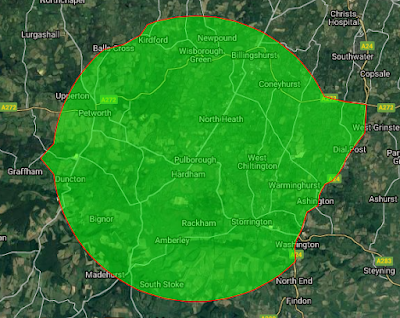
So, I set about studying maps and decided a rough 10km radius around Pulborough would offer plenty of interesting and diverse habitat to get stuck into. Some of it, like Pulborough Brooks, Waltham Brooks and Amberley Wildbrooks, I know very well or reasonably well, other areas I have been to far less, if at all. I also tweaked the radius slightly to include the Knepp Estate where I'll be spending a lot of time this year, as I start leading safaris there in the spring.

The new 'uber patch'

There are some good stretches of woodland, particularly to the northwest and southwest of Pulborough, and also various intriguing flooded patches along the various rivers that crisscross the recording area. The South Downs offer plenty of opportunities for sky-watching as well as some enticing patches of farmland. 

As of the time of writing I've already notched up 100 species within the recording area. Highlights have included a Little Gull on the flood behind the house on the 4th, a Hen Harrier at Waltham Brooks on the 1st, Cattle Egret and 3 Great White Egrets at Burton Mill & Chingford Ponds on the 10th, the eleven Bewick's Swans at Amberley also on the 10th, Merlin and Corn Buntings galore up Chantry Hill on the 15th and my first ever local Dartford Warblers at Lavington Common on the 17th.

After just under three weeks I already feel as though I have a greater understanding of the mosaic of habitats within this corner of West Sussex, and I'm excited to see what else I discover in the months to come.

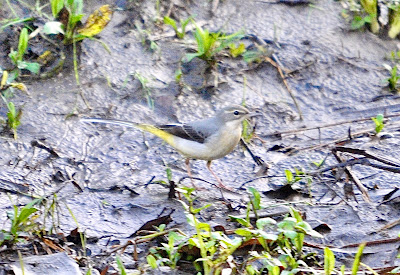
Grey Wagtail

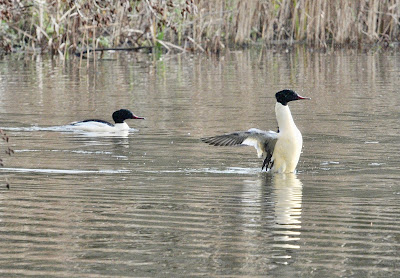
Goosanders

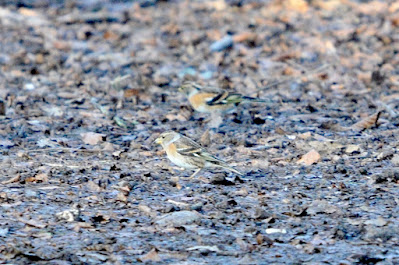
Bramblings

Corn Buntings

Little Gull


Monday, 5 April 2021

It begins...

After a dribs and drabs sort of affair for much of March (quite apt after my last blog post), migration has at last stepped up a gear in the past week with some real goodies turning up at Pulborough in recent days.

The undoubted star of the show was the stunning male Pied Flycatcher which has been present since Saturday morning until the time of writing. It was performing particularly well this morning along the fence line in the northeast corner of Brook Field, and this evening was flicking around one of the large Oaks up Green Lane. Although we've had a couple of good autumns for this species on the reserve, this certainly wasn't one on my radar to add to the year list so soon. Indeed, it's the first one I've seen in the spring here, and the first adult male I've seen anywhere for years.

Pied Flycatcher

One of the true harbingers of spring at Pulborough, the first Nightingale of the year rather hesitantly announced its arrival along Adder Alley on Easter Day, followed by another singing very briefly at the Hanger this evening; three days earlier than my previous earliest record here. 

There's a nice selection of waders to be seen on the North Brooks now, with up to three pairs of Avocet looking very settled, plus up to three Little Ringed Plovers, several pairs of Redshank and Lapwing and five Ruff. 24 Black-tailed Godwit stayed for a few days last week, many resplendent in breeding plumage, but these have since moved on. A Grey Plover on the North Brooks this morning was the first I've seen on the reserve since 2019. Sadly, its stay was short-lived as it met its end at the talons of a Peregrine this afternoon. 

Wildfowl numbers have really dropped now. There were a couple of drake Pintails lingering into this weekend and a dozen or so Wigeon and Shoveler as of yesterday but otherwise it's only really the Teal hanging on in reasonable numbers. The first Garganey of the year, a splendid drake, showed well on the North Brooks on Wednesday and Thursday but hasn't been seen since.

Garganey. Photo: Dave Carlsson

Warbler numbers continue to increase, with dozens of Chiffchaffs around now, many paired up and already nest building, and Blackcap numbers are steadily building too. The first Willow Warbler turned up on 31st March, followed by at least two more this past weekend. Strangely no Sedge Warbler or Whitethroat yet, although it's still early days, but the Cetti's Warbler persists below the Hanger.

Chiffchaff

It took until the last weekend of March for me to see my first Sand Martins, and Swallows only began trickling through last week, but this past weekend has seen good numbers of both, plus the first House Martin of the year on Easter Day.

Other highlights from this weekend included a year first Great Crested Grebe on the Arun on Saturday and Sunday, a fly-through male Hen Harrier on Saturday and a sloughing male Adder enjoying the sun (out of the wind!) most days.

Great Crested Grebe

Adder

After such a great ten days or so, my patch year list now stands on 119, out of a total of 121 for the reserve so far. Hopefully once this icy spell has passed the flood gates will really open!

Tuesday, 14 May 2019

Pulborough, 7th-14th May. Waders get moving

It's been a bit more lively on the patch in the past week thanks to some more favourable conditions, and new species for the year have started coming at a rather more seasonal rate once again.

Aside from up to three Little Ringed Plovers on the North Brooks and a lingering trio of Whimbrel near West Mead, the bulk of the wader action has been on just about the most distant area of wet mud imaginable, on the area of the Mid Brooks nearest the Arun (see map below). It's here that highlights of the past week have been up to a dozen Dunlin (on the 10th and 12th) and six Ringed Plover (on the 10th). At least one Greenshank has been doing the rounds too and there was one in this area on the 12th, while the same or another was at West Mead on the 13th. The first Wood Sandpiper of the year was a good find by Paul Davy on the 7th, first in the Hog Brook area, then later refound by Gary Trew on the North Brooks.
A single Avocet was at West Mead on the 9th and was joined by a second on the 10th. The pair have been touring the reserve since then and today were largely on the North Brooks. A Snipe flew up from the South Brooks on the morning of the 11th which is encouraging as drumming has been heard on at least a couple of occasions recently. Rather unexpected on the 12th were two Barnacle Geese on the South Brooks.

My first Yellow Wagtail of the year was a welcome sight and sound flying over West Mead on the morning of the 11th, especially as it took me until the autumn to get one here last year. Equally welcome was a very vocal Spotted Flycatcher in Black Wood this morning - my first of the year - following on from two together near Little Hanger on the 10th, found by John Russell. Anna Allum found a further two singing males/pairs on her breeding bird survey in the wooded heath area this morning. Is it me or does this species seem to have had a littlee 'comeback' in the past couple of years?

Last year the last couple of weeks of May really produced the fireworks on the wader front; here's hoping for a repeat performance this year!


Sunday, 27 January 2019

26th and 27th January: Pulborough and Coldwaltham

I didn't get in a huge amount of time on the patch this weekend owing to being in Hampshire from Saturday lunchtime to Sunday lunchtime for the wedding of two very good friends. Despite that, I still managed to sneak a couple of patch year ticks.

Two hours at Pulborough first thing on Saturday before the wedding and the rain was a fairly lively session with my first Barn Owl of 2019 quartering over the South Brooks followed by an immature male Marsh Harrier causing havoc over the North Brooks. A decent selection of waders too with the highlights being at least five Ruff (Ads Bowley had ten later in the day), 36 Black-tailed Godwits and a single Golden Plover in with the Lapwings. Shelduck numbers are starting to increase now with at least 17 yesterday and 16 today.

Sadly I couldn't find the two White-fronted Geese that have been around on and off a few times this month, most recently on Friday, so it was a bit galling to see Sean Moore and Ads Bowley reporting them as present again on the North Brooks from late morning yesterday. Clearly these birds don't get up as early as I do!

With that in mind, when we got home just after noon today I quickly set up my scope in the attic and set about scanning what was clearly a good size flock of geese just south of the Stor. It took a while thanks to unfavourable sunlight and the distance but I eventually picked up the White-fronts among the Canadas and Greylags. Later on I dropped in to the reserve and had much better views of them from the Hanger - they were still in much the same spot when I headed home a little after 16:00.

With no news on the Glaucous Gull at Holmethorpe SP in Surrey since yesterday morning - which I was tempted to go and see - I decided instead to stay much closer to home and dropped in to Coldwaltham Sewage Works early afternoon in the hope of finding the two Siberian Chiffchaffs which have been around for a week or so at least.

Having not visited since the autumn I was pleased to find the place absolutely heaving with Chiffchaffs - certainly at least fifteen but likely many more. Some clumps of Willow had four or five in at a time and there were often as many as that flycatching out over the filter beds. I quickly found a Firecrest flicking around the brambles near the main gate but after an hour of sifting through the Chiffs still hadn't seen one I felt happy calling a tristis. Another look through the gate just as I was about to call it a day revealed a very cold two-tone looking Chiff on the edge of one of the filter beds - this looked the part. It flew off into the brambles and a short while later I heard a couple of clear tristis-type calls close by and the two Siberian Chiffchaffs revealed themselves together. As reported by Alan Kitson last week, these two do seem to associate with one another rather more exclusively instead of just tagging along with the other Common Chiffs. Nice birds to see so close to home.
Siberian Chiffchaff, Coldwaltham Sewage Works

Thursday, 27 December 2018

Pulborough and Climping

A fairly quiet morning at Pulborough once the fog eventually began to clear. Highlights were three each of Ruff and Dunlin among the Lapwings on the North Brooks plus the usual throng of Black-tailed Godwits which today numbered somewhere in the region of four hundred. Also of note were three Shelduck, three Stonechat, the now regular Little Grebe at West Mead and heard only Kingfisher and Water Rail from the Hanger/Little Hanger. I left early afternoon and so missed the two Black Swans which turned up at Winpenny later on. Obviously not tickable as my patch year 150 but still would be nice to see, hopefully they'll stick around...
In the afternoon I headed down to Arundel with Kate for a bit of lunch and I couldn't resist a quick look in Kim's Bookshop which has a mouth-watering selection of bird books in the back room upstairs. I treated myself to a copy of Birds of the Atlantic Islands which will come in handy for our belated honeymoon trip to Madeira in May

We then headed on to Climping for a walk along the (surprisingly busy!) beach. Despite the amount of people and dogs there was still a decent selection of birds on offer - probably the 'birdiest' I've seen the place since we moved down this way last year. A flock of c.340 Brent Geese flew east over the sea, at least thirty Turnstones were feeding in the shingle or roosting out on the breakwaters while at least the same number of Mediterranean Gulls were around, either on the sea or feeding with Black-headed Gulls, Carrion Crows and a few Buzzards in the arable field.
Turnstones
Turnstone
Med Gulls

Brent Geese


Sunday, 21 October 2018

Pulborough, 20th-21st October


A mixed weekend at Pulborough. Water levels steadily increasing along with Wigeon and Lapwing numbers (conservative counts of 220 and 400 today, respectively). Yesterday there were three Black-tailed Godwits and a single Redshank on the North Brooks, with another two Redshanks seen at Hails View. Noticeably more Goldcrests around but surprisingly few thrushes, with just fifteen Redwing, ten each of Blackbird and Song Thrush and a single Fieldfare. A good selection of flyover bits with singles of Crossbill and Brambling the highlights. A Little Owl was calling loudly but remained unseen on the east side of the reserve. A couple of hours this afternoon produced a Barn Owl at Redstart Corner, a heard only Water Rail from the Hanger and a flyover Green Sandpiper near Winpenny while highlights on the North Brooks (among the Lapwing and Wigeon) were two Pintail, two Common Gulls, six Gadwall, 10+ Snipe, a Little Egret and a striking leucistic Black-headed Gull. Friday's Redstart was reported again at West Mead but I didn't see it. A rather faded Clouded Yellow was on the wing in Brook Field.
Distant and grainy phonescope shots as is the norm at Pulborough but clear enough to see the overall slim build, thin bill, pointed wings and total absence of black in the wing on this presumed leucistic Black-headed Gull on the North Brooks this afternoon
 
Possibly the most entertaining moment of the weekend was watching a Grey Heron wrestling with an Eel at Winpenny on Saturday morning. The Eel was near enough the same length as the Heron's body and although the Heron managed to swallow it whole on several occasions the Eel managed to wriggle its way back out every time. Eventually the Heron stabbed the unfortunate creature a few times with its bill before carrying it off, bloodied, into the reeds.


Friday, 24 August 2018

Pulborough, mid-August: getting busy!

Return migration has really stepped up a gear in the past few days it seems - particularly on the passerine front - and this morning at Pulborough was without doubt the best visit of the autumn so far. After the disappointment of missing Clive Hope's Pied Flycatcher a couple of weeks ago and then yet another Osprey last weekend which, from Gary Trew's description probably flew right over my house (!), one of my patch bogey birds fell at last today with a male Redstart working its way along the hedge just north of Redstart Corner.
Redstart
While I was watching it I heard a Yellow Wagtail fly over, my first of the year and later followed by another heard only at the Hanger and a third being chased around the North Brooks by the Pied Wagtails. This species came tantalisingly close to being added to the patch year list a few days earlier with several calls recorded during my first nocmig session of the season on Monday night, but more on that later. The hedgerows were teeming with warblers today, largely Blackcap, Chiffchaff, Whitethroat and a few Willow Warblers, but also a Garden Warbler near West Mead, a Reed Warbler near Winpenny and at least five Lesser Whitethroats dotted about. Best of all though was the Tree Pipit kicking about in the Blackthorns near West Mead. Only my second record of this species here.
Tree Pipit (and Song Thrush)
There were potentially as many as ten Whinchats about with 4-5 seen on the North Brooks and the same amount on the South Brooks. Reported by others but not seen by me were two Spotted Flycatchers on the far eastern side of the reserve and three near Winpenny later in the day, and a Wheatear on the North Brooks. Good numbers of House Martins and Sand Martins, with the latter mostly streaming straight through while the former were lingering and feeding over the site. These inevitably attracted the attentions of a Hobby which plunged straight through the middle of a flock above the path down to Nettleys. A juvenile Marsh Harrier was again doing the rounds - I saw it from Redstart Corner and later from the visitor centre but others also saw it quartering over the North Brooks. Other than sixty-odd Lapwing there wasn't too much of note on the wader front today, with just two Dunlin and three Green Sandpipers on the North Brooks. Indeed it's been a little quiet on that side of things lately with nothing majorly noteworthy since my Wood Sand a couple of weeks ago. Hopefully September will bring a few more goodies.
View from 'the Obs' (attic) during one of the recent storms
Interestingly my first nocmigging attempts of the autumn this week have provided a bit more wader variety, in particular my first recorded Whimbrel(s) over the house, with six calls from an indeterminable number of birds recorded very early Tuesday morning. Other bits of note include the aforementioned Yellow Wags, a Common Sandpiper, a Little Ringed Plover and a Snipe. Quite a few strange tics and whistles too, particularly on Monday night - most of them as yet unidentified. Ortolan Bunting next?...

Monday, 6 August 2018

Pulborough, 1st-6th August

It's all got distinctly autumnal since my last patch round-up post, starting with the evocative sound of a Willow Warbler sub-singing at dawn on the 2nd and culminating in the first returning Wood Sandpiper of the season on Sunday.
Thursday and Friday's visits were fairly uneventful with just the usual scattering of Green and Common Sandpipers on the North Brooks, though two Gadwall among the Mallards on Thursday were of note as they're the first I've seen onsite for a little while. On Friday I walked to the eastern side of the North Brooks from the village, stumbling across a Tawny Owl along the footpath. I met up with the usual Friday birding gang who reported a Whinchat and occasional calls from the lingering Grasshopper Warbler in this area.
Tawny Owl
Saturday morning produced a single Black-tailed Godwit in among the usual suspects on the North Brooks while John Russell reported a Little Ringed Plover and a Whinchat again.

The mornings are getting steadily mistier and dewier at the moment so it was no surprise to find the North Brooks still largely hidden in the murk when I arrived on Sunday morning. A quick scan revealed a fall of Green Sandpipers though, with at least ten scurrying about. As the mist cleared further a Wood Sandpiper revealed itself - feeding separately from its stockier Tringa cousins. Teal numbers had increased to twenty and there were at least five Snipe about. Everything was sent skyward a few times thanks to a couple of half-hearted swoops from a juvenile Peregrine.

Wood Sandpiper - obligatory long distance phonescope shot
It wasn't just the water birds that had increased overnight as there were clearly more warblers in the bushes. I managed to glean at least six juvenile Willow Warblers and two Lesser Whitethroats. Despite scouring every area of suitable habitat several times over the weekend though I sadly wasn't able to join in the Pied Flycatcher fun, but the autumn is still young!
Lesser Whitethroat
Another foggy start today, though it was nice to hear a Little Owl calling on the east side of the North Brooks as well as a Kingfisher which flew across the water unseen. When the mist did eventually start to clear it revealed seven Green Sandpipers, two Common Sandpipers and a single Little Ringed Plover. Things are certainly hotting up, although the approach of some cooler, rainier weather towards the end of the week is particularly overdue and will hopefully deliver some more migration action.
Raven

Wednesday, 1 August 2018

Pulborough, late July

An encouraging last few days of July with some signs of migration stepping up a gear and the unusually prolonged hot and dry spell breaking at last with some much needed rain arriving over the weekend.

The rain didn't do a great deal to raise the water levels on the patch, mind, with the North Brooks still the only area offering anything for waders and waterfowl - so it's here I've been largely focussing my early morning efforts recently.

An hour before work on Friday (27th) produced my only year tick of the month with a Grasshopper Warbler (142 on the patch year list) reeling briefly along the footpath on the east side of the North Brooks. It was still present in the same area on Sunday morning but again keeping well hidden.

Waders have been in surprisingly short supply, relatively speaking, despite my best efforts in the foul weather on Sunday morning which I had high hopes would deliver something tasty, especially given the numbers of Whimbrels and Curlew Sandpipers moving elsewhere the previous day. Indeed it's been business as usual for a while now with a fairly standard selection of varying numbers of Green Sandpipers, Common Sandpipers, half a dozen or so Black-tailed Godwits and ones or twos of Dunlin and Little Ringed Plover. It's good to see Snipe numbers gradually increasing though with at least ten dotted around the North Brooks on Saturday morning.

On the wildfowl front there are a few Shoveler and Teal to be picked out among the Mallards, but an eclipse drake Wigeon on Saturday morning was a little more unexpected. This is presumably either or failed breeder or perhaps one that has summered somewhere fairly locally.

Talking of species I haven't seen a great deal of locally since the spring, on Saturday morning there was a decent trickle of Sand Martins moving through and an immature Marsh Harrier dropped in and quartered for a while, putting the wind up all the other birds on the North Brooks.

After the previous weekend's single juvenile Mediterranean Gull, two more dropped in during the rain on Sunday morning just gone. It seems to have been a good summer for this species generally with some amazing counts along the south coast and juveniles popping up all over the place inland. I've not had much experience with young ones in the past so it's been good to get my eye in on them and I now find they stand out like a sore thumb among the more frequently seen Black-headeds.
Mediterranean Gulls

As I mentioned in my previous patch round-up the single Whinchat on the 21st was unexpectedly early, and Saturday just gone there were at least two kicking around: an adult male still in near breeding finery and one very young-looking juvenile. Gary Trew reported one in the same area on Tuesday this week. This all seems rather early for a string of migrants to be moving through already so I'm actually beginning to wonder if they haven't in fact bred somewhere fairly nearby -  especially as it appears the species has bred up on Cissbury Ring this summer which is not very far away.
Whinchats (honest!)
Mind you, with the days now getting perceptibly shorter as we head into August and an autumnal freshness just starting to creep into the mornings and evenings, it hopefully won't be long before return passage really kicks off!

Monday, 25 June 2018

Mind the Gap

So yes, as I was saying, June has been quiet...

That wonderfully simple yet accurate term in the butterflying community - 'the June gap' - used to describe the midsummer lull between the dwindling of the spring species and the full emergence of the high summer ones could, I always think, be just as readily applied to birding at this time of year.

Of course there are plenty of resident and migrant birds busy breeding everywhere but still there is that unavoidable sense of things getting distinctly quiet come mid-June and with the spring being so late in getting going this year the onset of the doldrums felt particularly sudden and pronounced, and even I must admit to having found the urge to get up at 5 to hit the patch most mornings waning somewhat recently.
Adult and juvenile Rooks
There have nonetheless been a few birds of note at Pulborough this month with more records of Osprey and Garganey in the past couple of weeks (I still haven't caught up with the former on patch!) and the odd couple of Mediterranean Gulls here and there. What was presumably the same Avocet pair from earlier in the year made a brief reappearance on the North Brooks on the 8th, while the Winpenny area has been playing host to at least one Snipe throughout the breeding season. The seemingly solitary male Nightjar continues to call near Black Pond every evening I've checked, and it's been good to see at least one Barn Owl around on most visits lately - thankfully some of them made it through that awful end to the winter.

After the excitement of the Royal Tern at Pagham, the following evening (20th) delivered my first and so far only patch year tick of June in the form of two Common Terns flying south over the North Brooks. This was particularly noteworthy for me as it's the first Tern of any species on my Pulborough list.
Med Gull over Winpenny, 18th June
Thankfully, the four week quiet spell seems to be coming to an end with the first hints of birds beginning to move again in the past few days. On Sunday morning the Brooks held six Little Ringed Plovers and three Green Sandpipers - one of which dropped down in front of Winpenny for barely three minutes before flying off south at height - and a Sand Martin was noted powering south overhead; the first one I've seen here for a while so presumably not a local bird. Then last night I woke up in the middle of the night to the sound of a Water Rail calling as it flew over the house. With the evenings gradually beginning to draw in from now on (I get told off if I mention that to my other half...) and July just around the corner, hopefully wader passage will really get going in the coming few weeks.

Signs that the butterfly June Gap is coming to an end were evident on Sunday also, with singles of White-letter Hairstreak and White Admiral seen along with good numbers of Purple Hairstreak. Also of note were my first two Brown Hawkers of the year and two Water Voles plopping into the ditches on the recently opened Wetland Discovery Trail.
White-letter Hairstreak


Two other bits of good news worth a mention: I was delighted to read that the breeding waders at Pulborough have had such a good year with 41 Lapwing chicks and 10 Redshank chicks successfully reared, thanks in no small part to the hard work put in by all the RSPB staff and volunteers. Secondly, I was also pleased to hear that my record of a juvenile Iceland Gull flying over the visitor centre on 2nd April was accepted by the Sussex rarities committee, making it the first record for Pulborough Brooks!
Juvenile Lapwing

Wednesday, 20 June 2018

A Royal Flush!

My plans for Tuesday evening were fairly sedate: water the allotment, a bit of reading (trying to finish Michael McCarthy's excellent The Moth Snowstorm) and hopefully finish the blog post I've been working on about how quiet June has been so far in birding terms.

Then the orange-billed Tern which had been reported at Church Norton earlier in the day and was presumed to be last year's Elegant Tern was re-identified as an American Royal Tern - the 2nd summer bird that's been in France and the Channel Islands in recent months - and in a matter of minutes I was heading south on the A29.

I got to Pagham in just over half an hour and was pleased to find just a dozen or so cars in the car park, and even more pleased to discover the bird still on show out on the Tern Island. It made a brief flight around the harbour before settling back on the island where it gave good views for all present, its huge carrot bill impossible to miss as it caught the evening sunlight. It was in all aspects a chunkier-looking bird than last year's Elegant, a clear half size larger than the Sarnies around it and with that stouter, straighter bill, pale back and punky black crew cut, spiked at the back and already beginning to recede into winter plumage at the front.

By the time I left at least sixty people had connected with the bird - it was good to run into Robin Stride among other familiar faces.

I even got home in time to finish my book! Now to finish that blog post about June being quiet...