Showing posts with label whitethroat. Show all posts

Thursday, 14 September 2023

Seasons collide

As the schools go back and we enter meteorological autumn of course the weather has decided to go all 'high summer' with the first anticyclonic system to reach our shores since June, as I write this in early September. It's been a bit of a shock to the system to dig out the shorts and suncream again after what felt like a protracted bout of autumnal weather in recent weeks. It's also scuppered the first week and a half of September from a birding point of view, in some ways, with many migrants clearly making a quick getaway in the fine weather. Vismig in particular has been pretty poor so far, but I'm still hopeful for better to come in the next few weeks.

It's still been an enjoyable start to autumn proper though, with plenty of bits to talk about in this ten day period. 

1st September

It was our fifth wedding anniversary today, so we headed down to Ferring for breakfast and a walk along the beach followed by a stroll around Parham gardens.

At Ferring, avian highlights came in the form of three Ringed Plover and two Sanderlings among around 75 Turnstones roosting on the beach, and at least ten Sandwich Terns and three Common Terns past at sea. A lone Teal briefly landed offshore before flying off west. Eight Oystercatchers flew west while we were having breakfast.

Sandwich Terns

Sanderlings
The highlight of the morning though came when Kate asked 'what's that flapping about on the beach there?' Upon closer inspection, it turned out to be a Convolvulus Hawkmoth, presumably newly arrived from across the Channel. It was struggling to stay clear of the incoming tide so I gently scooped it up and placed it in a patch of vegetation at the top of the beach, safely away from a nearby flock of House Sparrows. A remarkable encounter!
Convolvulus Hawkmoth
Parham was, comparatively, pretty quiet, though raptors were much in evidence in the by now warm afternoon sunshine, with at least half a dozen Buzzards thermalling overhead along with a couple of Red Kites and a Sparrowhawk. At least three Ravens were around too, and I commented to Kate that it's amazing how quickly the species has spread into this part of West Sussex, going from being a relatively infrequently occurrence when we moved down here in 2017 to now being a daily event. 

2nd September

An early morning loop of Pulborough Brooks produced 58 species including a pleasing selection of waders on the North Brooks (seven Black-tailed Godwits, four Ruff, three Green Sandpiper, four Snipe and 120 Lapwing) but sadly not the Spotted Redshank seen by Chris and Juliet et al the previous day. At least a dozen Yellow Wagtails were with the cattle near Winpenny and a Spotted Flycatcher was among a mixed flock at the picnic area on the way down to Nettleys.

Ruff and Lapwings
Later in the morning, while at our allotment, I noted a Swallow flying over carrying food, so presumably still feeding young in a nest. Later still, a Cattle Egret flew low over the A29 as we were driving home. 

3rd September

A morning walk from home with Kate and B produced a couple of Willow Warblers and three Spotted Flycatchers up Sandy Lane. 

A check of the North Brooks at Pulborough en route to Knepp was again lively on the wader front, with Wood Sandpiper the highlight along with eight Black-tailed Godwits, two Ruff, heard-only Green Sandpiper and at least 140 Lapwings. At least five Yellow Wagtails were with the cattle up towards Brookgate Farm, one of the Knepp White Storks was also wading about on the North Brooks but too distant to read the ring number, and a Hobby was hawking overhead.

Yellow Wagtails
Knepp itself was rather quiet on the bird front, but a check of Southlands Farm in West Chiltington on the way home produced singles of Tufted Duck and Shoveler on the little pool there; both new species for me at this site. 

4th September

After dropping B at nursery this morning I headed up to Amberley Mount, hoping I would find it above the fog level. Frustratingly, the fog was sitting just at the height of the Downs here and took a little while to clear. As I reached the top of the western slope, it had thankfully mostly dissipated and the first birds to reveal themselves were three Wheatears on the fence line around the sheep fields. There were several Yellow Wagtails calling and occasionally flying up from among the sheep too - I reckoned at least six by the end of the session here. Other highlights from a lively couple of hours included a minimum of ten Redstarts (mostly on the southern slopes), a few Willow Warblers, singles of Whinchat, Stonechat, Corn Bunting and Spotted Flycatcher, and a Marsh Harrier powering north. Swallows and House Martins were trickling west/south-west throughout the session, and three small groups of Siskin were also heard flying over, seemingly heading in the same direction. 

Willow Warbler
Marsh Harrier
5th September

A rewarding early morning jaunt from home produced a 1km year tick in the form of a Whinchat in the scrub near the railway crossing at Waltham Brooks. Atypically, it didn't hang around for any photos as it flew strongly off towards the river almost as soon as I'd lifted my bins. This followed a flyover Yellow Wagtail - species 104 for the Watersfield Farmland hotspot. At least one Yellow Wag was heard around the cattle at Waltham Brooks too, with other highlights including at least three Lesser Whitethroat, half a dozen Common Whitethroat, three Snipe (my first of the autumn here), two Stonechat, Water Rail, three Tufted Duck and a Little Grebe.

Whitethroat
Lesser Whitethroat and Stonechat
A mid-afternoon skywatch from the fields near home proved rather quiet in the searing heat, though at least 100 Swallows were milling about, some purposefully heading WNW, with a few House Martins in tow. An adult Lesser Black-backed Gull also drifted the same way.

6th September

After a morning garden safari at Knepp (highlights of which were Hummingbird Hawkmoth and a lot of hornets!) I made an impromptu decision to pop down to Mill Hill near Shoreham, even though the Red-backed Shrike hadn't been reported for a couple of days. I hadn't been here for a few years and it was lovely to have a stroll round, even if it was blisteringly hot and the shrike didn't put in an appearance. 
Highlights included two Spotted Flycatchers in the scrub north of the car park, a heard-only Redstart and, best of all, a Honey Buzzard which suddenly appeared to the west of the hill, flying away from me before gaining height, banking and heading north. Annoyingly, a combination of the element of surprise, suncream on my glasses and terrible light meant I wasn't able to get any useable photos of it, so the record shot below is purely for posterity. Mill Hill is always a great site for butterflies and today didn't disappoint, with several Adonis Blues about and my first UK Clouded Yellow of the year. 
Adonis Blues
Spotted Flycatcher
Honey Buzzard (honest!)
On the way home I briefly stopped off at Pulborough for a scan of the South Brooks from Hail's View which produced just a couple of Green Sandpipers. 

7th September

A dawn walk from home was rather too hampered by fog and low light to be anything other than a nice breath of cool air after a sticky night.
Sunrise over Watersfield
After dropping B off at nursery I decided to head over to the farmland and private reservoir near Petworth. The temperature was already climbing fast and it was uncomfortable to be in the sun for any length of time. It proved to be a fairly lively 90 minutes or so here though, with 42 species recorded. Highlights were a hotspot first Redstart briefly in flight along a hedgerow, Wheatear, two Common Sandpipers at the reservoir and at least two Ringed Plover flying over, calling, seemingly heading west but not seen.
Farmland near Petworth
8th September

Not much birding today aside from a trip to Warnham LNR with B. My first visit to this reserve for a while, today it produced 32 species including Kingfisher, Marsh Tit and the usual assortment of wildfowl and gulls. 

Best from the garden moth trap at home in the morning were two Light Emeralds and the first Centre-barred Sallow of the autumn.
Light Emerald
Centre-barred Sallow
While in the garden in the afternoon, singles of Yellow Wagtail and Siskin flew south and south-west, respectively. 

9th September

A morning safari at Knepp was scorching hot and rather quiet on the bird front, though the odonata put on a good show, especially Migrant Hawkers which seemed to be everywhere we looked. 

An evening walk out to the river at Thorndale Bridge was a relief after the heat of the day, and produced a juvenile Marsh Harrier quartering just across the river at Amberley and a Great White Egret which flew across to Amberley from Waltham Brooks, the latter my first record for this eBird hotspot. 
Great White Egret
Marsh Harrier
10th September

The moth trap was out again overnight which produced a new for the garden Marbled Green. Prior to emptying the trap, an early morning loop of Waltham Brooks and Thorndale Bridge produced a/the Great White Egret again, flying in from Amberley before turning and heading up the river towards Pulborough. Also noteworthy were two Whinchats along the river bank, a Green Sandpiper which flew in from the north and dropped in under Greatham Bridge and a heard-only Kingfisher.
Marbled Green
Waltham Brooks sunrise
Whinchat
Great White Egret
Later in the morning, half a dozen Siskins flew high south-west over the garden. There already seem to be more of these around lately, even if just moving through. Fingers crossed for a better winter ahead for them and other winter finches.

With rain forecast around lunchtime I headed over to the private reservoir near Petworth hoping for a wader to drop in. In the event, there was just a Common Sandpiper of note on the deck, although at least two Ringed Plover were again heard flying over, 16 Pochard was a fairly high count here and at least 70 Swallows drifted east ahead of the approaching weather. 

Wednesday, 30 August 2023

Honey, Sandwiches and other local delights

As a birder and all-round naturalist, I always find it tricky to decide on my favourite time of year. At a push though, when August comes around, I am reminded just how great late summer and early autumn can be. The golden and misty mornings and atmospheric evenings, and the feeling that you could bump into absolutely anything every time you leave the house, make birding extra exciting at this transitional point in the year. 

Indeed, this past ten days or so has delivered some of my most enjoyable birding moments of the year to date, including two 10km year ticks and three 1km year ticks. My Watersfield Farmland hotspot close to home has tipped past the 100 species mark with the addition of three new species, two of which were entirely unexpected (more on that later).

Since surpassing my 150 species target at Pulborough Brooks two years ago, I have been enjoying spreading my net further afield, while still staying local to home, and it's times like the past couple of weeks when I'm reminded just how rewarding that can be.

12th August

An early morning walk from home around the local farmland revealed a noticeable increase in Willow Warblers and Whitethroats, with a minimum of 8 of the former and 5 of the latter just in the hedges and scrub on the edge of Watersfield. There was no sign of any other notable migrant passerines though.

Whitethroat
A walk up towards Watersfield Common with B later in the morning produced two Hobbies hunting Swallows together. I'm sure this species must have bred somewhere locally this summer but haven't yet worked out exactly where. 

Talking of Hobbies I also had one low and fast over Shalford Common in Surrey in the afternoon, while up there catching up with friends. 

13th August

No early birding today as I was busy checking the contents of the moth trap, which included Jersey Tiger, Webb's Wainscot, Canary-shouldered Thorn and White-point.

Canary-shouldered Thorn
White-point
A check of Waltham Brooks on my way to Knepp produced a juvenile Marsh Harrier and a couple of Swifts powering south/south-west, but little in the way of passerine activity in the now quite brisk wind. 4 Gadwall were among the Mallards on the main lake. 

14th August

A quick look at the South Brooks from near the visitor centre at Pulborough proved fairly quiet, with just a few Lapwing and a single Little Egret of note. The strikingly pale Buzzard was perched on a fence post on the bank of the Arun, a bird surely responsible for more misidentifications than any other in the area!

Late morning, a walk near The Mens produced a nice immature Goshawk briefly circling above the wooded hillside to the west. 

15th August

No time for any of my own birding today as I was in East Sussex for a meeting in the morning then hotfooted it down to Dungeness to lead a Wildstarts tour at the RSPB reserve. It was a productive afternoon, with 50 species recorded. All three UK egret species were present and correct, although we unfortunately didn't complete the set with the reported Glossy Ibises at the ARC pit as we didn't make it out that far. Other highlights included Common Sandpiper, a flyover Hobby carrying prey, a heard-only Greenshank and my first Whinchat anywhere this year.

Cattle Egrets

16th August

A bright and golden early autumn start to the day felt like the perfect inspiration needed for a walk up on the Downs. The only issue with Amberley Mount is that a morning walk means ascending towards the sun, so the first hour or so felt a little quiet and frustrating aside from a female type Redstart at the top of the slope. Things livened up once I got up onto the plateau though, where I found two Wheatears and a Corn Bunting along the fenceline, the latter surprisingly my first record of this species at this location. I tend to find I have to go to other downland sites further east or south to find them around here. 

Returning down the slope towards Downs Farm things got even better with a spanking male Redstart revealing itself in the scrub. Two fluffy Little Owl juveniles were playing hide and seek on one of the buildings at the farm and two Whinchats were flycatching from the telegraph wires here - my first locally this year. 

Ravens
Whinchat
Little Owls

17th August

A grey and rather foggy start to the day. My occasional early morning circuit from home to Thorndale Bridge and up the river to Waltham Brooks and back took a particularly exciting and unexpected turn when I heard the distinctive grating call of a Sandwich Tern as I approached the riverbank from the railway bridge. Looking up in the direction of the call I picked up a single bird, quite high, powering in through the murk from the south-west. As it called again I quickly realised there were two birds, rather separated from each other but clearly travelling together. I fired off a few record shots and grabbed a short recording before just standing and enjoying the spectacle as they disappeared off upriver towards Pulborough. 

This was a particularly remarkable record given that just the previous day Ed and I had been discussing historical records of this species in my local area, after he had two over Enton Lakes near Godalming. As I had stated, any tern species is a pretty rare thing in this part of inland West Sussex, so to have these two fly right over my head within about 15 minutes of walking out of my door this morning was particularly extraordinary! As far as I can work out, it's the first record anywhere in the inland Arun Valley area since 2002.

Sandwich Tern

The rest of the walk paled into insignificance to be honest, after such a breathtaking moment as that. Highlights at Waltham Brooks included a few Reed Warblers, Willow Warblers, juvenile Stonechat and at least 18 Greenfinches.

Later in the day I took B down to Arundel for a stroll around Swanbourne Lake, which provided a few bits of interest including at least 3 Willow Warblers, Marsh Tit, two each of Mandarin and Pochard and a flyover Peregrine. 
Pochard
18th August

Rain arrived from the east early this morning and by around 8.30 had turned decidedly biblical. I decided to head over to Petworth for a bit of a stakeout at the private reservoir there. In the end I rather wished I hadn't bothered as I barely scraped to 20 species in 90 minutes, with a Common Sandpiper really the only bird of note. 

Later in the day, after drying off at a home, a walk round the local farmland produced Hobby, Peregrine, a Common Gull drifting south, and a Lesser Whitethroat in the bushes just west of the boundary with Waltham Brooks; the latter species number 100 for my Watersfield Farmland hotspot!
Common Gull
An evening check of local water bodies including a distant scan from Greatham Lane towards Hardham Reservoir, in the hope of Black Terns (lots around elsewhere this evening), didn't produce loads, although heard only Raven and Greenshank here were noteworthy. This section of farmland and wetland is effectively the connecting corridor between Pulborough Brooks and Waltham Brooks but is very underwatched. It's the same area I had two Little Ringed Plovers earlier in the year. 

19th August

An early morning stroll round the local farmland produced very little so later in the morning I headed over to Burton Mill Pond with B, which proved rather more lively. The highlight was a mixed passerine flock in the trees at New Piece (western side of the pond), which included several Marsh Tits, a Willow Warbler and a family part of Spotted Flycatchers.
Spotted Flycatchers
20th August

WeBS day today, so I headed over to the private reservoir near Petworth where I do my monthly count. It was rather uneventful today, as it has been for the most part of late, to be honest. Still, three Common Sandpipers represented my second highest count of the species here (4 on 4th May this year) and I again saw one of the leucistic Egyptian Geese in flight with one of the small flocks flying about to and from the reservoir - 59 in total today.
Common Sandpipers
Egyptian Geese
Later in the morning, a walk out to check the local fields and scrub on the western side of Waltham Brooks proved relatively quiet aside from a flyover Hobby worrying the Swallows and a somewhat out of context Reed Bunting in a hedgerow down River Lane. 
Hobby
In the afternoon I was back at Knepp leading a safari, the highlight of which was a lovely female type Redstart in one of the hedges north of New Barn Farm; my first here this year. 

21st August

My car was booked in for its MOT this morning, so I decided to try the walk home from the garage in Pulborough for the first time (around 4km). I was interested to see how long it took (admittedly at a birding pace) but also explore any bits of less familiar habitat I encountered along the way.

It was actually fairly quiet for the most part, until I reached Waltham Brooks, with the exception of a Tawny Owl in flight along the Wey South Path on the west side of Widney Brooks. Waltham Brooks itself held a few Willow Warblers and a female type Redstart in the scrub, the latter my 130th species for the site.

The best was yet to come though as I exited the reserve and headed into the farmland that separates it from home. I was in a 'home straight' sort of mindset by this point, having been walking for around two hours, so wasn't perhaps quite as alert as I had been at the start. Nonetheless, I immediately recognised the raptor heading straight towards me from the north-west as something 'interesting' and lifted my bins to confirm it was a Honey Buzzard, powering east/south-east on flat wings. A lovely adult male, it briefly circled over my head, gaining height as it did so, before continuing onwards towards Parham/Amberley. Needless to say, my first for the 1km recording area and my 101st species for the eBird hotspot here. 
Honey Buzzard

Saturday, 6 May 2023

When April steps aside for May

Late April into early May is always a hectic and exciting time for us birders. Rarely does it ever feel more possible that just about anything can turn up, anywhere. This can be especially exciting in the context of local birding, when passage waders and passerines, in particular, grace our familiar patches and birding haunts, sometimes for just a matter of hours or even minutes, before continuing on their epic journey north. 

While I have found this spring rather frustrating in terms of often being either unable to get out birding as much I would have liked, or being in the field but in the wrong place at the wrong time, these past ten days have delivered some of the most enjoyable moments of the season so far in a local context.

27th April

After the previous day's wader excitement at Pulborough Brooks, a message from Jon Winder in the evening alerting me to a Whooper Swan on the South Brooks was enough to prompt me to head back there again early this morning. Sadly, there was no sign of the swan, but the Wood Sandpiper and two Greenshanks were still present, along with a Curlew which flew off towards Hardham, giving away its presence by its unmistakable song. As I was heading back up to the car park, a White Stork drifted west over Uppertons Field towards the South Brooks and the river.

With the arrival of heavy rain in the evening I stopped off to check the scrape at Hadworth Farm in West Burton which produced a Green Sandpiper and my first local Yellow Wagtails of the year - three in total. It just goes to show that any decent patch of habitat is worth checking at this time of year, especially when the heavens open!

28th April

Cloudy with light rain and a west/south-westerly wind this morning. It felt like a water body kind of day so I headed over to the private site near Petworth (via the Hadworth Farm scrape which was sadly virtually birdless). An hour at the reservoir proved to be a decent session with first a heard-only Common Tern (not at all common round here!) as I arrived followed by a Dunlin, two Common Sandpipers and flyovers of Swift and Hobby. The Common Tern was heard again a little while later, but again not seen. I had just one local record of this species locally last year, strangely enough at the same site.

Hobby
Much of the rest of the day was spent around Arundel with friends visiting from Ireland (former Leith Hill ranger Sam Bayley and family) where visits to the WWT and Swanbourne Lake produced, among others, Oystercatcher (a noisy party of four flying around over the wetland centre), Kingfisher, Willow Warbler, 40+ Sand Martins and the ubiquitous Firecrest, singing along Mill Road. 

After a safari at Knepp in the evening I dropped in at Waltham Brooks for a bit of a listening session near the railway bridge, which produced at least three singing Nightingales plus distant Little Owl, Tawny Owl and Water Rail. 

29th April

Two bites of the cherry at Pulborough today. First up this morning, when I got in on the wader fest action unfolding at Winpenny, hide, now featuring three Wood Sandpipers, at least 7 Greenshanks and a Ringed Plover. Just as we were getting ready to leave, news broke of a Wood Warbler found on the edge of the heath by Anna Allum from the RSPB and volunteer Rob, so I dashed down the path to Black Pond and enjoyed listening to that iconic coin spinning song for a few minutes.

I was at Knepp in the afternoon leading a safari, highlights of which included my first Garden Warbler of the year and branching Tawny Owl chicks with an adult. 

In the evening I returned to Pulborough for a second look at the Wood Warbler which, by now, was showing relatively well in the oaks near the woodland play area. Remarkably, a Pied Flycatcher had also turned up in much the same area, which showed beautifully, flitting about in a large flowering Cherry tree in the evening sunshine. What a smashing species duo to encounter in Sussex at this time of year!

Pied Flycatcher

Wood Warbler

30th April

Not much time for birding today after a Knepp dawn safari which produced Cuckoo, lots of Lesser and Common Whitethroats and a couple of Garden Warblers. A walk round the local farmland mid-morning also produced a new in Garden Warbler - my first of the year in the 1km area. Following on from my previous blog post where I talked about aiming to get past 100 species for as many of my local sites as possible, Garden Warbler was number 97 for the 'Watersfield Farmland' eBird hotspot...

1st May

A clear and rather chilly morning saw me heading over to Parham Park for my first BBS visit there of the season. As per usual, it was Jackdaws, Greylag Geese and Fallow Deer galore, but a flyover Sand Martin as I was finishing was actually a Parham tick for me!

On the way home I dropped in at Waltham Brooks for a quick look. A Garden Warbler singing near the main lake was my first of the year there and there were good numbers of Sedge Warbler and Common Whitethroat around. A Cuckoo flew low over my head, heading north, while a second bird was singing distantly across the river in the direction of Amberley.

Osprey is becoming something of a nemesis species for me this year, having missed several locally (mostly at Pulborough) so it was particularly galling to get home to discover one had just flown over Waltham Brooks after I left!

An afternoon walk round the local fields produced a few Swallows, singles of Kestrel and Red Kite, but otherwise not much. Today definitely felt like a bit of a stopgap day...

2nd May

A little tour of local sites this morning before an appointment in Petworth. The scrape at Hadworth Farm is, regrettably, drying up fast now we've had a few days without rain. Just two Canada Geese, four Stock Doves and a Pheasant here this morning although the Lesser Whitethroat was still singing in the nearby hedgerow. A half hour stake-out at Burton Mill Pond didn't produce much aside from 'singing' Water Rail, Grey Wagtail and the usual Great Crested Grebes and ducks. Talking of ducks, the private reservoir near Petworth rather surprisingly held five Pochards this morning (three drakes), quite a late date for birds round here. Also of note here were a single Common Sandpiper, five Swifts and the lingering singing Willow Warbler which has been in the area for about three weeks now. 

Early afternoon I dropped in at our allotment near Stopham for the first time in a while and was pleased to hear a Nightingale back on territory in the nearby scrub, plus a Cuckoo singing slightly further away towards the Arun. Even better, while surveying our plot and panicking somewhat at the amount of work needed, I stumbled across a lovely female Adder basking on a crumpled heap of weed membrane, followed closely by a Slow-worm in one of the compost bins. Hooray for neglected allotments!

Adder
I also stopped off for a quick look at the wet meadow near Swan Bridge in Pulborough (where I have had Spotted Crake and LRP in the past, among others). Today the highlight was a heard-only Yellow Wagtail.

Later in the day a walk out through the local farmland to the Arun produced a hunting Hobby, several Swifts along with all three hirundines and one of the White-tailed Eagles in flight over Amberley Wildbrooks, flushing up all manner of birds including a Curlew which started to sing, albeit distantly from my vantage point on the river bank. That's now the third or fourth record of singing Curlew in the area recently, following on from recent reports of two birds together at Pulborough. Could it be too much to dream that a territorial pair may attempt to breed somewhere in the valley?

3rd May

A fine and rather chilly morning with an easterly breeze. Being as the next week or so is looking very hectic I decided it was my last chance to get over to Byworth for my second South Downs Farmland Bird Monitoring survey early visit of the season. The square, SU9820, proved to be quite productive last year with highlights including multiple singing Skylarks and even a flyover Whimbrel! This morning I managed 42 species in 90 minutes including Cuckoo, Nightingale, Red-legged Partridge and Stonechat (the latter just outside the map square but still nice to see).


After this I headed over to Knepp for my first Stork Safari of the year. By now it was a beautiful spring morning and a perfect one to be out and about in the Southern Block. The storks put on a great show, feeding chicks on several of the nests, all to a soundtrack of Nightingales and the abundant Lesser Whitethroats and quite a few Garden Warblers too.

An afternoon walk round the local farm fields produced a few Swallows, a couple of Swifts and Sand Martins and the continuing singing Nightingale, which today was clearly audible from the bedroom window as I was working upstairs. 

4th May

This morning I was at Knepp again, leading a dawn safari. There had a been a couple of reports of Turtle Dove back on the estate this week, so I was very pleased to see two flying over mine and my group's heads during the safari, which also featured many singing Nightingales and the usual assortment of Sylvia warblers in abundance.

Whitethroat

On the way home I stopped off for a quick look at Waltham and Widney Brooks, both of which were fairly quiet, though a singing Lesser Whitethroat and flyover Yellow Wagtail near Greatham Bridge were both 1km year ticks.

A look at the private reservoir near Petworth late afternoon in the hope of terns and waders proved relatively successful in terms of the latter, with 4 Common Sandpipers, a pair of Little Ringed Plovers and a Dunlin present. It's definitely not been quite so spectacular here for waders here as it was last spring, when eight species were recorded here in April and May. 

Far better for waders so far this spring has been Pulborough Brooks, where I again headed this evening on my way over to Knepp, primarily to see the spectacle of the 70+ Ruff that had been reported here earlier in the day. There had been some remarkable movements of this species across England today, with a flock of 14 over Beddington Farmlands in Surrey/London and three-figure counts in Lincolnshire. Sure enough, scanning from the tea terrace at Pulborough I didn't struggle to find the flock of at least 65 still actively feeding and scurrying about, occasionally all springing into the air as one group. From memory, my previous record count of this species here was 26, so it's fair to say today smashed that!

5th May

I couldn't resist heading back over to PB for another look at the Ruff/general wader madness this morning. I was actually quite surprised to find at least 60 still present, especially given as it had been a relatively clear night. There were still two Wood Sandpipers in among them too, along with four Ringed Plover, two Dunlin and a single Greenshank, along with the resident Avocets, Redshanks and Lapwings, the latter of which now have a few chicks scurrying about. 

Some of the 60+ Ruff at Pulborough

6th May

Not much proper birding today. A check of the scrape at Hadworth Farm in passing late afternoon/early evening produced a pair of Gadwall, a few Swallows and a Grey Wagtail. 

Tuesday, 11 April 2023

And back to April

Swift and Swallow carry me
Above the deepest sea
And back to April...

- lyrics from 'April' by Hope & Social

I've always loved April. Perhaps it's because it's my birth month. Perhaps it's because it's when the summer birds really start coming back in numbers. Either way, it's a month that's full of promise, flowers and, often, the first real warmth of spring. 

We've had a bit of all the above in the past couple of weeks. In fact, on the 7th Pulborough recorded the highest temperature anywhere in that UK that day. The yearlist is also steadily creeping up; it's that wonderful time when almost every day brings a new arrival or two.

1st April

Not a huge amount of birding today due to various other commitments. A family walk at Burton and Chingford Ponds mid-morning was largely pretty quiet, aside from at least 7-8 singing Chiffchaffs and singing Woodlark and Firecrest. Three Great Crested Grebes were on Burton Pond while a lone drake Mandarin was on Chingford Pond. 

2nd April

A much more encouraging start to the day, with cloud, some light drizzle and a bit of a north/north-easterly breeze, making it feel quite a bit colder than the 7 Celsius air temperature. I headed out early for a whistle-stop tour of local sites. First up, the private reservoir over near Petworth which proved fairly lively, with a single Swallow among at least 40 Sand Martins, 2 Little Ringed Plover and my first Willow Warbler of the year, singing softly in trees nearby. It was a bit of a seasons collide moment here, as there were still a dozen Redwings and a couple of Fieldfares about too.

Fittleworth Water Meadows got a look-in briefly in passing but yielded little, although it is looking cracking for Garganey at the moment - three Shoveler were the best ducks I could find today.

An hour at Waltham Brooks was particularly good, producing 46 species, including my first two House Martins of the year feeding over the main lake with around 50 Sand Martins and 2-3 Swallows. There had clearly been another fall of Chiffchaffs, with at least a dozen singing around the place. Nothing spectacular, but my liveliest local morning of the spring so far, with two 10km year ticks, while the House Martins were my 100th species within 1km of home this year. 

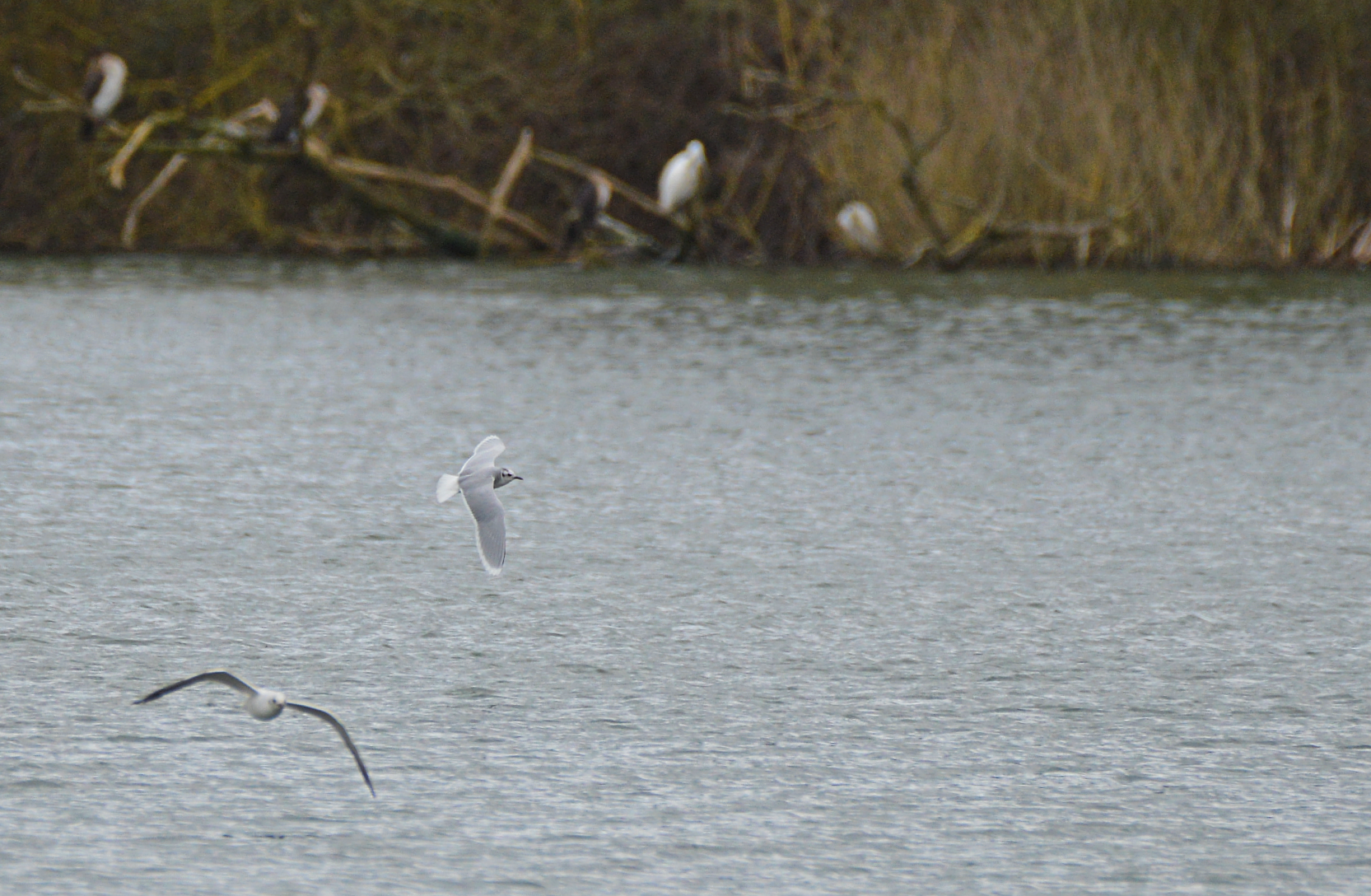
By late morning the cloud was beginning to clear a bit, as forecast, and news broke of an Alpine Swift down at Chichester GPs. Normally, I would resist the urge to twitch but, as it was a Sussex tick just 20 minutes from home, and Kate and I were out anyway, we decided to pop down. Typically, I arrived to find that it had flown off strongly about half an hour beforehand, but it was still great to see my first two Little Gulls of the year feeding over West Trout Lake.

Little Gull
3rd April

The first frost for a little while. I headed over to Pulborough Brooks for a bit of a session there this morning, which began with promise in the form of a Swallow over the visitor centre then a singing Willow Warbler down the ZigZag. The North Brooks seemed quiet aside from a scattering of the usual ducks, but then Juliet Moore text to inform me of a drake Garganey on the South Brooks. I hurried to the viewpoint behind the Hanger and managed to get very distant views of it, right over by the river bank. Heading round to Winpenny, I caught up with Juliet, Chris and Alan there, where we enjoyed brief views of a Water Pipit (presumably the same individual that has been around since January) as well as 2-3 Swallows and at least 10 Sand Martins feeding out over the water. A Chiffchaff was noted nest building near the hide and on the way back up top I saw a Woodlark briefly song flighting above Uppertons Field before dropping back down into the grass.

A lunchtime 1k walk was very pleasant indeed in the now warm sunshine but largely uneventful aside from a Brimstone butterfly, a clear fall of Chiffchaffs and a 'new in' Blackcap singing on the edge of Lodge Hill. 

4th April

Another cold and frosty start and a day in which I hadn't planned to do much birding, due to work commitments. Sometimes though, those end up being the best days! A dawn walk around the local farmland proved to be really enjoyable. A hunting Barn Owl down at Wharf Field near Thorndale Bridge was followed by a singing Blackcap and a rather late Redwing, then, best of all, my earliest ever singing Nightingale in scrub between River Lane and Waltham Brooks.

Barn Owl
It only gave a few phrases but it was unmistakable. Sadly, when I tried to get a bit closer, it stopped singing and there was no further sign. Garden birding on and off during the day produced lots of Buzzard action and a few Swallows flying over. 

5th April

A cloudy start to the day after a couple of days of easterlies seemed like good fall conditions. I headed out early on foot, through the local farmland towards Waltham Brooks. Yesterday's Nightingale was still present and singing on and off, while there seemed to be even more Chiffchaffs around the place. At Waltham Brooks there were at least 3 Sedge Warblers singing in the vicinity of the main lake, with two engaging in some territorial scuffling. A Stonechat was singing near the railway crossing too. Gulls were in evidence, moving overhead, including Mediterranean Gull - first a very vocal flock of 19 which flew north-west from Amberley towards Lodge Hill, followed by at least four in with a flock of Black-headeds going north. 
Grey Wagtail

Mediterranean Gulls
6th April

A bit of overnight rain, followed by low cloud and a brisk south-westerly had me thinking it was a water body kind of morning. I headed over to the private site near Petworth which quickly produced a Little Ringed Plover flying around calling over the farmland, followed by ~35 Sand Martins, 2 Swallows and a House Martin feeding over the reservoir; the latter my first of the year here. Best of all though, was a Redshank which announced itself first by its mournful call (don't they always?) before I got eyes on it on the far bank. After a little while it took flight through the cloud of hirundines and disappeared purposefully east. Amazingly, considering I have recorded Spotted Redshank and Greenshank here, this was my first site record of Redshank!
Redshank
A check of Burton Mill Pond on the way home produced 29 species in 20 minutes including a squealing Water Rail and a lone drake Mandarin. 

A walk round the hamlet and local fields at lunchtime produced a pair of Swallows on wires - my first 'local' pair seemingly back on territory, as they proceeded to feed merrily over the nearby horse paddock for the rest of my walk. Also of note were a Brimstone and my first Dark-edged Bee-fly of the year.
Swallows
7th April

It was a clear and still morning so I decided to head to local woodland for another go at Lesser Spotted Woodpecker. Sadly I didn't connect, but did have at least four Mediterranean Gulls flying over Coldwaltham Farm, heading high west, calling. 

In the evening I was back at Knepp for my first proper safari of the year, the clear highlight of which was the first Nightingale of the year there, singing very briefly in the Southern Block while I was pouring drinks for the safari guests. This was followed later on by a rather incongruous Woodcock, flying out of the stable yard at New Barn Farm through the headlights of the 4x4 buggy I was driving. 

8th April

My birthday and I was dropped off at Pulborough Brooks fairly early where Steve B and Paul D were waiting for me, later joined by other friends, and we did a full circuit of the nature trail. Sadly the thick fog was slow to clear but, when it did, we enjoyed good views of three pairs of Avocet on the North Brooks and my first Whitethroat of the year along Adder Alley. Late morning we headed down to Rackham Viewpoint where we quickly found one of the White-tailed Eagles along with a lone drake Garganey (there were at least three here yesterday).

A short walk round the local fields in the evening produced the Nightingale singing again. It seems to be getting gradually more vocal by the day.

9th April

Another rather misty start but thankfully nowhere near as bad as yesterday. I headed out early across the local farmland towards Waltham Brooks. The Nightingale was in good voice in the scrub near Besley Farm. Highlights at Waltham Brooks, meanwhile, were my first 1km Whitethroat of the year, at least three Sedge Warblers and a single Snipe. 
Roe Deer

Whitethroat
10th April

A very wet start so I didn't get out straight away. A late morning walk round the 1km area was largely without any fireworks until near the end when I found a singing Nightingale up Sandy Lane on the edge of Watersfield Common - my second 1k record so far this spring. As it's our first spring in the area, it's going to be really interesting to see how many of these guys breed locally.

Early afternoon I headed over to the farmland and private reservoir near Petworth. There wasn't much of note on the reservoir itself aside from an increase in Tufted Duck (20), a lone Great Crested Grebe and a few Swallows and Sand Martins. Passerine interest in the surrounding fields was better through with (at last!) my first Wheatears of the year (both male and female) hopping about in a potato field, and a singing Willow Warbler nearby.
Wheatear
11th April

A fine but breezy start to the day. I decided to venture out on foot from home to do the loop to Waltham Brooks via the river and the local farm fields. The farmland and river didn't produce much but a nice selection of warblers awaited me at Waltham Brooks including my first two Reed Warblers of the year (already reported by Wes A on Sunday), along with at least three Sedge Warblers and two each of Whitethroat and Willow Warbler. Around 60 Sand Martins were hawking around over the main lake. Heading towards the railway line I could hear a Nightingale singing and, as I got nearer, I realised it was two males engaging in a bit of a vocal duel. Unusually, I got brief views of both them, perched out in the open in a willow before they disappeared back into the scrub.

Later in the morning two House Martins flew west over the house and a singing Skylark was audible from the garden - the first time that's happened since we moved in.