There's a poem I've shared at least once on a previous blog that succinctly sums up the feeling of October giving way to November - written by Thomas Hood in 1844 - as follows:
No sun — no moon!
No morn — no noon —
No dawn — no dusk — no proper time of day.
No warmth, no cheerfulness, no healthful ease,
No comfortable feel in any member —
No shade, no shine, no butterflies, no bees,
No fruits, no flowers, no leaves, no birds! —
November!
Still. it's not all doom and gloom, especially when the autumn weather gods conspire to deliver something a bit tasty. It won't have escaped anyone's notice that we are experiencing a very wet autumn indeed, with the latest batch of spring tides and bouts of torrential rainfall seeing the River Arun overtopping its banks in many places from Pulborough down to the South Downs and beyond. Even so, the standout weather event of the season this year was undoubtedly the fierce Atlantic storm system, named Ciarán, which battered the south of the UK overnight on 1st/2nd November, resulting in a wreck of Leach's Storm-Petrels and a few European Storm-Petrels and Sabine's Gulls being seen along the coast all the way from Cornwall to Kent. Thanks to being recovered enough from my shoulder injury to drive (but still not back working full time) I was very lucky to be able to get to the coast to be part of this once in a lifetime birding experience. My write-up of that day and more included in this summary of the first ten days of November.
1st November
The arrival of the low pressure weather system associated with Storm Ciarán brought intermittent heavy rain and increasing winds this morning. I decided to stretch my driving muscles again with a trip over to the private reservoir near Petworth. A dozen Pochard were newly arrived here since my visit on 29th October, but I couldn't initially find the Long-tailed Duck. After a while it appeared (how do they do that?) and eventually showed quite well, preening for several minutes, though always distant. In fact, I worked out it was around 220 metres or more away from my viewpoint for the most part. Nonetheless, I am confident that it is an adult female bird moulting into winter plumage. I could also see as it preened that it appeared to be unringed. Interestingly, a different Long-tailed Duck was at a farm reservoir near Pagham yesterday. As another wave of heavy rain arrived from the south-west I decided to make a dash for the car, but was halted in my tracks as an adult Swallow flew over my head and leisurely hawked around over the fields and the little sewage works by the reservoir. It was presumably the same bird I saw here on Sunday and really didn't look in any hurry to get anywhere today. This represents my joint latest record of the species in the UK, following on from one over Leith Hill on the same date in 2015.
-2.jpg) |
| Long-tailed Duck - always distant! |
.jpg) |
| Red Kite |
In a break in the weather early afternoon I took the opportunity to head over to check Waltham Brooks which was seriously flooded even since my last proper visit a couple of days ago. Indeed, access around the lake was impossible coming from the railway line side, with paths totally flooded back up towards Greatham Bridge and the river bank back towards Thorndale Bridge. Unsurprisingly, there were a lot of ducks around including over a hundred Teal, plus at least seven Snipe and the ubiquitous squealing Water Rails (at least two). Three Marsh Harriers battled their way downriver, including a smart adult male again, and at least 25 Black-headed Gulls were doing the same, all looking distinctly Little Gull-esque at a glance as they skulled low over the floodwater, but sadly I wasn't able to find yesterday's Pulborough LG here today.
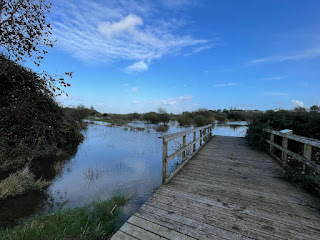 |
| A very flooded Waltham Brooks |
2nd NovemberThe calm after the storm, or in the middle of it, as we unexpectedly woke this morning to patchy cloud, no rain and almost no wind. It seems the eye of Storm Ciarán was right above us at this point as, by 09:30 or so, the rain was starting again and the wind beginning to pick up. After dropping B off at nursery I decided the best course of action was a quick tour of local water bodies which didn't produce a great deal aside from the continuing Long-tailed Duck. With reports of multiple Leach's Storm-Petrels starting to come in from the coast I felt like I was really only delaying the inevitable by waiting for something to happen inland, so headed down to Goring for an impromptu seawatch. I had barely parked my car on Marine Drive and wound down the window before I picked up the first Leach's Storm-Petrel powering east, fairly close in. This turned out to be the first of an extraordinary 20 that passed in the next 95 minutes or so, including a loose group of four just before 12:30. It was good to see Lyn and Mike Hunt here briefly and get them on a couple of Leach's, including one lingering fairly close to shore, plus a bonus European Storm-Petrel which I'm ashamed to say I only picked up when reviewing photos when I got home. It was hard to keep track of any one bird for very long in the swell.
Soon after 13:00, with the rain getting heavier and the wind picking up (and my injured shoulder aching) I decided to head for home. I hadn't got further than the sharp bend on Amberley Drive though, before I stopped again, as I picked up an adult Little Gull on the flood right by the road, through the car windscreen! I didn't even have to get out of the car to enjoy great views of it just a short distance away through the window. What a remarkable couple of hours! It will be interesting to see what effects this storm has on inland birding in the coming days, with surely a few seabirds and other bits displaced and attempting to reorientate.
-2.jpg) |
| Little Gull |
-2.jpg) |
| European Storm-Petrel |
.jpg) |
| Leach's Storm-Petrel |
 |
| Leach's Storm-Petrel |
3rd November
The calm after the storm the day before. This morning began clear with light winds, so I headed out early for a bit of a skywatch from the local farmland. It was fairly lively, with 54 species recorded in a little over an hour. It was tricky to establish the true movers from the local roosting species with light trickles of the likes of Goldfinch, Meadow Pipit, Pied Wagtail, Stock Dove, Herring Gull and Greenfinch in various directions. Rather more noteworthy bits included two Ravens south (picked up by the sound of their wingbeats!), five Lesser Black-backed Gulls west/south-west and at least one Dunlin heard flying west - my 110th species for this eBird hotspot!
After a bit of work at home I headed back out to Pulborough which I discovered had become one giant lake since my last visit a few days ago. Indeed, water was still gushing in over the river banks on both the North and South Brooks. As such, avian interest was somewhat limited, aside from a lot of geese and dabbling ducks. At least two or three Marsh Harriers were hunting along the remaining vegetated ditches and bits of exposed land. A
Redpoll flew over the Hanger while a Peregrine was back in the favourite big willow tree near the viewpoint there. It was good to catch up with Chris and Juliet Moore here and, as another band of unforecasted rain moved in, we decided to all make a swift exit and headed for Rackham Viewpoint. Amberley Wildbrooks was looking equally flooded but despite a good scan we couldn't pick out anything particularly unusual among the geese and Black-headed Gulls, aside from a single Cattle Egret, strangely associating with a Little Egret, flying in from the north-west before dropping in by the favourite eagle tree.
-3.jpg) |
| Red Kites |
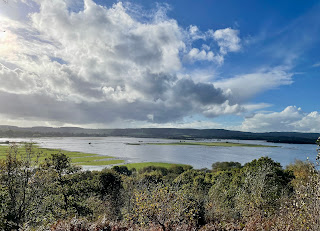 |
| A flooded Amberley Wildbrooks |
4th November
Not loads of birding today but I did a manage an hour locally in the afternoon, though the floodwater has risen to such an extent that Waltham Brooks is mostly inaccessible, with the main lake essentially now extending as far west as the railway line in some places. Highlights were the usual Water Rails (at least two), two Marsh Harriers, 20+ Shoveler, and two Stonechats gleaning insects from patches of detritus on the flood water near the railway. As I headed back through the farmland towards home a single flock of 60 Fieldfares flew over heading south.
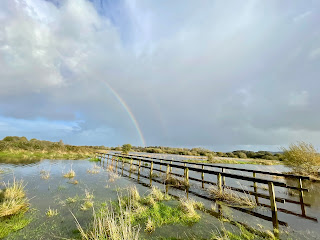 |
| Flooding at Waltham Brooks |
5th November
Remember, remember, your last hirundine of the year. Or was it? It's been a pretty extraordinary few days here in the Pulborough area, with my latest ever Hobby, my joint latest ever Swallow and, today, my joint latest ever House Martin. The way things are going though, I have a distinct feeling it won't be the last. How many hirundines must have been blown back in their tracks by Storm Ciaran?
It was a glorious bright autumn morning with clear blue sky, although a brisky west/north-westerly wind. As it was the first fine day after a spell of stormy weather I decided to check a few water bodies locally, in the hope of stumbling across any reorienting storm-blown birds. The reservoir near Petworth still held the female Long-tailed Duck, present for at least a week now, plus a 'new in' Green Sandpiper. It was also very apparent that today was a big Woodpigeon day, with a minimum of 1,080 flying south-west here in just over half an hour. Moving on to Burton Mill Pond, which was sadly lacking in any wildfowl at all (I didn't have enough time to walk round to check Chingford Pond) but again produced several big flocks of Woodpigeons, a couple of Redwings. plus showy Marsh Tit and Firecrest near the car park.
-2.jpg) |
| Firecrest |
.jpg) |
| Woodpigeons |
My final stop on the way home was Hadworth Farm in West Burton, where I also found the now very flooded scrape entirely devoid of waterbirds. There were again lots of Woodpigeons moving overhead (450 in about 15 minutes) plus a few other bits. Just as I was about to leave, I picked up a hirundine coming towards me from the west which turned to reveal its white rump. It then fed over the fields and scrape briefly before continuing on its way east/south-east.
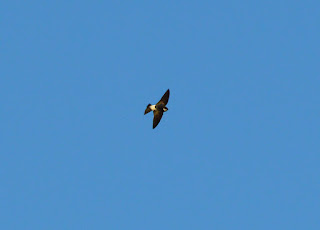 |
| House Martin |
6th November
Timing, patience and luck are three very important factors when it comes to enjoyment and success in birding. Some days it feels like everything has gone in your favour and you are rewarded for the choices you make. Other days, choices or circumstances can lead to a less than satisfactory time in the field. Today was an example of the latter, unfortunately.
With messages streaming in from friends in Surrey of massive Woodpigeon movements and other vismig delights, I was eager to get out birding ASAP. I wasn't able to get out until just after 8, which normally would still leave an hour or two of lively migration activity to enjoy, one would think. Today I headed up Amberley Mount for the first time in two months and have to say it was really rather underwhelming, relatively speaking. An early push of 1,200 Woodpigeons moving south down the river valley soon fizzled out and there was hardly any vismig of any description thereafter. A local congregation of Yellowhammers and constant soundtrack of Skylarks, plus a trio of Stonechats were nice, and a Great Black-backed Gull west was actually a new species for me at this site, but it still never felt like fireworks were imminent. A brief check of the floods at Greatham Bridge and Fittleworth also produced very little of note. Tomorrow is another day!
.jpg) |
| Stonechat |
An afternoon check of Waltham Brooks in between errands proved productive, with highlights being a flyover Peregrine, three Marsh Harrier, five Tufted Duck, 20 Fieldfares, and a very showy Great White Egret dropping in just 30 metres or so from where I was stood on the edge of the flood.
.jpg) |
| Great Egret |
7th November
The weather forecast suggested another decent morning for vismig today, especially after yesterday's big push of Woodpigeons. I again was a little later heading out than hoped and it was immediately clear that if there had been another such push today then I had again missed it. Indeed, it was one of the quietest vismig sessions I've done this season, at least for the first part - up on Alban Head just to the west of home. Highlights were single flocks of 80 Fieldfares and 130 Starlings west. Continuing the watch from a lower level - the farmland along River Lane - proved a clever move, as there was a clear upturn in movement, starting with a single Brambling low west with one Chaffinch, another 35 Fieldfares and 118 Woodpigeons west.
.jpg) |
| Woodpigeons |
Late morning I headed down to the coast. I was due to give a Knepp talk in Worthing early afternoon, so decided to take the opportunity for another seawatch at Goring Gap. As I parked up on Marine Drive, a scan of the flooded fields revealed a lot of gulls, especially Mediterranean Gull - a theme that continued throughout the session with perhaps 150 or more either moving purposefully west down the coasts or occasionally dropping in for a while. There was also a lone Brent Goose on the field which later flew west along the beach. Seawatching proved to be fairly quiet, with last week's Leach's fest already feeling somewhat like a dream. A Rock Pipit flew west down the beach, while much further out eight Gannets, six Great Crested Grebes and a single Red-throated Diver flew west. It was also good to bump into Nick Bond here and have a good chat.
-3.jpg) |
| Mediterranean Gull |
.jpg) |
| Sanderlings |
8th November
Another foul morning of wind and rain saw me do a whistle stop tour of a few local water bodies. First up, Amberley Wildbrooks, viewing from the southern side (trying to shelter from the worst of the weather!) and my target species was White-fronted Goose, with up to three seen here regularly by Paul Davy and others recently. Viewing conditions were less than ideal, to say the least, but after a while I picked the Russian trio up, feeding in among over a hundred Greylag Geese. Otherwise there wasn't much going on here, aside from an impressive 130+ Pintail, by far my highest count of this species so far this autumn. Interestingly, they were more or less the only ducks present, aside from about 50-60 Wigeon. White-fronted Goose takes my local year list to 158.
 |
| Truly woeful record shot of the three White-fronted Geese! |
Next up I checked Widney Brooks from Greatham Bridge. The water levels here have dropped a little but surely not for long given the hours of rain forecast today and more spring tides coming later in the week. Usual fare was on offer here, with around 40 Shoveler the best, on the flood to the south (so actually Waltham Brooks).
The private reservoir near Petworth was almost unbirdable with the wind driving waves of rain straight towards my viewing position on the north side. The Aythya flock has grown since my last visit, with 28 Tufted Duck and 22 Pochard both pretty good counts here, particularly the latter. The lingering female Long-tailed Duck was still present too, sheltering among the other diving ducks.
A brief stop-off at Waltham Brooks late afternoon proved rather interesting. The floodwater had receded a little, though still not enough to enable proper access close to or around the main lake. From the grassy peninsula on the western side I watched and listened as various birds flew to roost - singles of Little Egret and Marsh Harrier downriver and a swirl of over a thousand Starlings heading to Amberley. A lively mixed passerine flock was moving through the sallows nearby, including Chiffchaff, Blue Tits and Long-tailed Tits, all identified by their familiar calls. After a few minutes a less familiar call caught my attention, sounding somewhat like a weaker and more squeaky Pied Wagtail. Surely it couldn't be? Luckily I had my recorder running and, despite the rain, managed to get a half decent recording which others have agreed sounds good for Hume's Warbler - my third in Britain and first in West Sussex if so! Unfortunately I never saw the bird as the rain and darkness closed in.
9th November
An early start at Waltham Brooks this morning where I met up with Paul D and Andrew R, all of us hoping to relocate yesterday's mystery caller. Sadly, it wasn't to be, despite good numbers of Chiffchaffs, Goldcrests and a Firecrest in the sallows and other scrub between the main lake and the railway line. A heavy burst of rain halfway through the 90 minutes I was on-site didn't help. A Great White Egret flew upriver, a Marsh Harrier was about towards the end and at least 20 Fieldfares left roost. I wouldn't be surprised if the probable Hume's Warbler is still about somewhere, hopefully it might reappear in the coming days.
The rest of the day was spent at Woods Mill as I started my new job as Species Recovery Officer with Sussex Wildlife Trust. A short lunchtime walk here produced a Firecrest in trees near the car park, a Little Grebe on the main lake and a Common Gull flying north. As I was leaving late afternoon a male Tawny Owl was calling near the car park.
10th November
I was back at Knepp today, leading my first safari there in six weeks, for a group of Oxford uni students. En route, I couldn't resist quickly stopping off at Pulborough Brooks to twitch the Slavonian Grebe found by Chris and Juliet Moore earlier in the morning; a long awaited Pulborough tick for me, my first in thirteen months. It was an elusive bird, not helped by the un-forecast torrential rain, but I eventually managed to pick it up from Hail's View, albeit rather distantly. The first record for the reserve since 2010! Also testament to the depth of the water here at the moment were eight Pochard on the South Brooks - not quite as rare as Slavonian Grebe but still fairly unusual here.
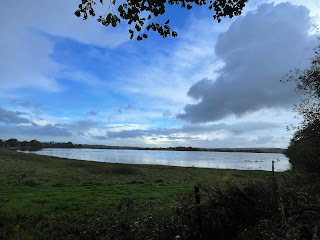 |
| Pulborough South Brooks floodwater |
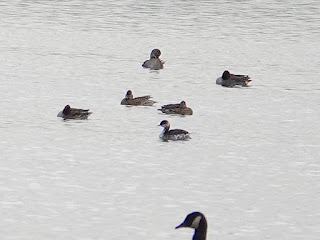 |
| Slavonian Grebe - pic by the finders Chris and Juliet Moore |
Back at Knepp in the evening for a staff party I heard a male Tawny Owl calling near New Barn Farm and also another one when I got back home.
-2.jpg)
.jpg)

-2.jpg)
-2.jpg)
.jpg)

-3.jpg)


-2.jpg)
.jpg)

.jpg)
.jpg)
.jpg)
.jpg)
-3.jpg)
.jpg)


-2.jpg)
.jpg)
.jpg)

.jpg)
.jpg)


.jpg)
.jpg)


.jpg)
.jpg)


