Showing posts with label barn owl. Show all posts

Saturday, 20 April 2024

Floodgates?

11th April

Just brief bits of birding today as I was back at my desk after a week off. An early walk out from home proved very rewarding though, with two 'new in' singing male Nightingales setting the tone for what turned into a great hour or so session. There had clearly been an arrival of Sedge Warblers overnight, with at least six singing males around the reserve at Waltham Brooks. Other bits of note here included singing Cuckoo, Willow Warbler and two male Tufted Ducks on the main lake. Best of all though, as I left the reserve and headed back out across the fields towards home I heard the unmistakable sound of a reeling Grasshopper Warbler in a bramble clump a short distance west of Coldwaltham sewage works. A 10km and 1km area year tick and a first for the local hotspot, it was also the first singing male I have found for a few years. Clearly there has been a pretty huge arrival of this species in recent days, with birds turning up all over the place (five already in Surrey this month, which is remarkable really).
Later in the morning I checked the scrape over at Hadworth/Bignor Park which held another new Willow Warbler, four Tufted Duck, and a couple of House Martins feeding in among at least eight Sand Martins. 

12th April

Another early start this morning and it was already pleasantly mild as I headed out just before 06:00. There was sadly no sign of yesterday's Gropper, unsurprisingly, but there was still plenty of song again from Cuckoo, Nightingale, Whitethroat and multiple Sedge Warblers. New for the year in the reeds at Waltham Brooks was a rather hesitant Reed Warbler.
Sunrise at Waltham Brooks
As it turned into a beautiful spring day, I couldn't resist getting out again in my lunch break. First up I checked the scrape at Bignor/Hadworth which is rapidly drying up now it's finally stopped raining. The long-staying Green Sandpiper seems to have finally departed as do the deep water birds such as Tufted Duck. A pair of Teal were still present along with a single drake Gadwall. 

A stroll round the woodland at nearby Waltham Park was very pleasant but relatively unremarkable on the bird side of things, aside from eight Redpolls and a Raven flying over. In the now warm sunshine, however, invertebrates were much in evidence including Tawny Mining Bee, various bumblebee species and lots of butterflies including Peacock, Red Admiral, Brimstone and Orange-tip (including my first female of the year). A Holly Blue was also enjoying the Ceanothus in our garden when I got home.
Holly Blue
Late afternoon I received a message from Chris and Juliet Moore alerting me to a beautiful male Pied Flycatcher they had just found at Black Wood at Pulborough Brooks. Once I had finished work I dashed over and was very pleased to catch up with the bird still flitting about in the pines there, at times elusive but typically posing well from time to time. After spending an enjoyable half hour with the bird I made my way down to Hail's View to check out some of the waders on offer on the South Brooks including my first local Grey Plover of the year, two Ruff, at least 20 Black-tailed Godwits - many looking resplendent in their breeding plumage - and a heard-only Little Ringed Plover. 
Pied Flycatcher
13th April

A tour of a few water bodies this morning. First up, the reservoir near Petworth which was quiet aside from a couple of Swallows. Burton Mill Pond proved rather more lively with highlights of Kingfisher, Woodlark, 50 Tufted Duck, Gadwall, two Red-legged Partridge and a 'singing' Water Rail). Finally, the scrape at Bignor Park which continued hosting the Green Sandpiper but also two each of Gadwall, Tufted Duck, Teal and Little Egret, and five each of Swallow and Sand Martin. 

The best of the bunch from a late morning session at Pulborough (tea terrace/visitor centre area only), meanwhile, were six Avocet, a single Ruff and a singing Nightingale.

14th April

An early session at Pulborough Brooks this morning with Steve Baines produced 63 species including my first local Ringed Plover (4) and Common Sandpiper (2) of the year among the usual breeding waders - three pairs of Avocet again on the South Brooks, multiple Lapwings and Redshanks and a heard-only Oystercatcher. There were still three Snipe kicking about too, including one flying low over the Hanger viewpoint. A flock of 24 Mediterranean Gulls north over the South Brooks was quite an impressive sight, sadly a bit too far away for us to hear them! Nightingales were much in evidence and making themselves heard as were multiple Sedge Warblers and a couple each of Whitethroat and Willow Warbler.
Nightingales
Mid-afternoon I again met up with Steve B and Paul D for a walk up at The Burgh. All the usual species were much in evidence including at least half a dozen pairs of Lapwing, 15 Red Kite, 20+ Skylarks and a few Yellowhammers. Bird of the afternoon though was a ringtail Hen Harrier quartering the fields near the dew pond. 

15th April

A classic April day of spells of very pleasant sunshine interspersed with some very squally showers, sometimes with added hail! A check of Bignor Park scrape before work produced the lingering Green Sandpiper again, while at the River Rother in Fittleworth I found a Swallow, singing Whitethroat and a flyover Little Egret. There was also a pair of Mallard with ducklings, with a Grey Heron in tow...

A brief check of Amberley en route to Woods Mill yielded another single Swallow and a pair of Egyptian Geese with eight young. Duck numbers are still fairly high here with minima of 90 Shoveler and 80 Teal, plus smaller numbers of Wigeon and a pair of Pintail. 

A lunchtime walk in the sunshine at Woods Mill produced only my second Reed Warbler of the year and my first Lesser Whitethroat of the year plus a pair of Common Whitethroat. 

After work I stopped off at Pulborough briefly which was unbirdable in high winds and heavy rain. Just a few minutes down the road though, I found Waltham Brooks bathed in pleasant sunshine, the rain and wind having already moved through here. A 25-minute whizz round near the lake and roadside scrub produced a Nightingale singing near the railway, two each of Swallow and Sand Martin, three Sedge Warbler, and three Tufted Duck on the lake. 

16th April

A leisurely check of Hadworth Farm and Burton Mill Pond before work took a wholly unexpected turn when news broke of a drake Green-winged Teal on the North Brooks at Pulborough, found by young RSPB volunteer Toby Stapleton. A bird I had always dreamed of finding there (or elsewhere locally), the first in the Arun Valley for 19 years, and in fact a UK tick for me. There was no way I was going to miss this! Luckily I had a bit of a window of opportunity so dashed straight over and soon joined Toby himself and Marc Read at Jupp's View where we enjoyed good views of the bird swimming about in the open with a few Eurasian Teal and Shoveler. 
Green-winged Teal
Other bits of note from my hour on the reserve this morning included four Avocet, two Black-tailed Godwit and singles of Ruff, Little Ringed Plover and Common Sandpiper. 

A brief lunchtime walk round the local farm fields proved fairly quiet aside from four Swallows whizzing around near the stables - the first proper little flock I've seen back in the 1k area this year. 

17th April

I was down in Brighton for a work event for most of today but did manage a quick hour out in the 1k before I left. Waltham Brooks was relatively quiet aside from a couple of Nightingales and at least six singing Sedge Warblers. A pair of Shoveler were still around on the lake along with four Gadwall and three Tufted Duck. I wonder if one or more of these species will attempt to breed here again this year after last year's successful Shoveler breeding. The bird of the session here though was a Barn Owl which cruised through the main grassland area of the site and off towards Greatham Bridge. Always nice to get a surprise dawn Barn Owl!
Barn Owl
Bird of the morning though, was reserved for the very smart male Redstart in one of the paddocks on River Lane - in fact the very same paddock I saw a male in on 12th April last year. Redstart can be a tricky bird to encounter round here in the spring so I made sure to relish the moment. Having grown up close to some major heathland sites, it's all too easy to take them for granted, but they really are one of the best looking spring migrants, for my money. 
Redstart
18th April

Another check of the fields near home this morning failed to turn up any more migrant surprises, though it was nice to see several Swallows about, including one back on its favourite perched on a telegraph wire a stone's throw from home.
Swallow
A brief look at Amberley Mount on the way to Woods Mill proved similarly quiet, two Common Gull flying north indicative of the fact that we are not quite free from more wintry species just yet, and the keen north wind a good reminder of the same! Other bits up here included an immature Peregrine which flew north-west and a Kestrel checking out a nest box at Downs Farm.

Despite the cold wind on the Downs, by lunchtime it had turned into a glorious spring day and a lunch break stroll at Woods Mill was almost more notable for the butterflies than birds. A Siskin flying north-east as a Lesser Whitethroat rattled in a nearby hedgerow was an interesting clash of seasonal sounds. Brimstone, Holly Blue, Orange-tip, Peacock, Comma and a White (probably Green-veined White) were all noted on the wing. 
Holly Blue
Chiffchaff
A check of the scrape at Bignor on the way home revealed the water level to have dropped considerably since I last checked in here earlier in the week. I couldn't find the Green Sandpiper (or any other waders for that matter) but it was great to see some 25 Swallows flying about and generally being very vocal, with a couple of Sand Martins and House Martins mixed in with them. 

19th April

An early check of a few local sites proved reasonably fruitful. At the private reservoir near Petworth I found two Common Sandpipers and a single Little Ringed Plover - my first proper little 'fall' of waders here this year. The intriguing mixed singing Willow Warbler was still present and singing away, still seemingly yet to attract a mate. A scan of Burton Mill Pond from the northern shore yielded usual bits, although new in was my first Reed Warbler of the year at this site and only my second anywhere in my local recording area. Finally, the scrape at Bignor which is now rapidly drying up to just a muddy puddle but which today produced the birds of the morning: a group of three Tree Pipits flying north-west overhead, qiuite high but calling. 
Willow Warbler
En route to a work event in East Sussex I stopped for a short while at Waltham Brooks which I found to be teeming with hirundines, the bulk of which were Sand Martins (some 150 or so) and a few House Martins and the odd Swallow. 

20th April

A very early start this morning for the first Knepp dawn safari of the year. Nightingales were in fine voice as were multiple Lesser Whitethroats and my first Garden Warbler of the year. 

Monday, 6 November 2023

The season of letting go

So then, farewell to October. At a pinch one of my absolute favourite months of the year and which this year produced five local year ticks and a pleasing selection of memorable moments, in spite of birding with my arm in a sling for the most part and being unable to drive. 

This last ten-day period of the month always feels somewhat tinged with melancholy. It's hard not to feel as though autumn has peaked somewhat by the last week of October and that we are inescapably careering into the long darkness of winter, especially when the clocks change and any last hopes of evening birding are extinguished for the next three or four months. 

This year, October went out with a bang, as a series of Atlantic weather systems brought torrential rain which, combined with a period of spring tides, saw the Arun overtopping its banks in many places in the Pulborough area. The flooding in turn attracted my first local Little Gull of the year on the 31st - just a couple of days after my second local record of Long-tailed Duck in two years - and I finally joined the Short-eared Owl party in what looks to be the best autumn/winter for the species in several years. 

21st October

Not loads of time for birding today owing to family stuff but the loop from home to Waltham Brooks and back through the farmland produced a few bits of interest. Over 200 ducks were on the main lake at Waltham, mostly Teal and Mallard though with a handful of Shoveler (2), Gadwall (3-4) and Wigeon (8) mixed in. They were very flighty and at one stage had a single Snipe among them as they flew circuits around the place. Oddly, the only raptors noted were two rather distant Red Kites, so I'm not entirely sure what the wildfowl were getting upset about! A few Siskins and Redpolls were about and there were two Stonechats in the scrub near the railway line.

Wigeon
                                            
Teal
22nd October

No real birding today but notable by their movement at both Bignor and Fittleworth during family activities were a steady stream of Red Admirals moving through, mostly south-west.

23rd October

I was at Knepp all day today for an excellent beaver workshop so not much birding time, but of note here were three Fieldfares and a single Siskin over towards the western side of the estate (near the beaver enclosure, in fact). 

Here be beavers!

24th October

A mixed bag this morning started with 80 minutes' vismigging from the high ground above Watersfield. It was generally fairly quiet, certainly in terms of thrushes and finches, though there was a distinct increase in Woodpigeons and Stock Doves moving south-west, though still only modest numbers (150 and 69, respectively). Best of all were 20 Pintail (15 south/5 north) over Lodge Hill which may have been local wintering birds arriving in the area, but it was still quite cool to see them 'migging' over open country.

A stroll over to Waltham Brooks later in the morning produced a Great White Egret dropping in near the main lake, a few Skylarks and Siskins over, and a flock of 40 Wigeon flying towards Widney Brooks. A Woodlark flew north-east over the farmland near home. My seventh record of this species within the 1km area in the past four weeks - pretty remarkable!

An evening vigil at Thorndale Bridge proved to be enjoyable but didn't yield the hoped-for Short-eared Owl, despite one seen upriver near Pulborough this afternoon. At least six Marsh Harriers flew past to roost, while one of the adult White-tailed Eagles was upsetting the geese over at Amberley and a Yellowhammer flew over among the many Reed Buntings heading to roost. 

25th October

Rain early morning was slow to clear but mid-morning I headed up to Alban Head for a couple of hours' vismigging which proved quite lively. Highlights were two more single Woodlarks east, 54 Wigeon north (20, 11 and 23), 31 Fieldfare north/north-west and a few Redpolls about. I also heard Crossbill but didn't see it. Back home for lunch and another Woodlark flew north/north-east past the bedroom window. It really is remarkable how many records of this species I've had locally recently.

Another late afternoon session on the river bank at Thorndale Bridge wasn't quite as exciting as yesterday but produced a single juvenile Marsh Harrier, a White-tailed Eagle in the usual tree over at Amberley, around 100 Teal flying upriver and a pair of Mandarins flying downriver. 

26th October

A late start this morning owing to unwelcome rain which put paid to any planned attempts at another proper vismig session. I decided instead to head to Waltham Brooks via the local farmland. Almost immediately I realised there were actually a few bits moving after the rain with first a couple of Grey Wagtails west followed by a Peregrine circling briefly overhead before flying towards Amberley. Even better, this was followed around ten minutes later by a smart adult Mediterranean Gull cruising south with a couple of Black-headed Gulls - my fifth 1km area record this year and the first since June. 

As I approached the railway line at Waltham Brooks I heard a Golden Plover calling somewhere to the east but never got eyes on it. Still, it was my 133rd species for the reserve. It proved quite lively here this morning, with 57 species recorded in two hours including Kingfisher, Marsh Harrier, Water Rail and two Stonechats. Wigeon numbers have really increased locally now, as evidenced by the flock of ~200 which flew north, in addition to the 11 kicking about on the reserve. A distant second winter Great Black-backed Gull south-west over Lodge Hill was only my second record for the reserve. 
Looking west from the river bank at Waltham Brooks
Greatham Bridge
Late afternoon I again headed over to Thorndale Bridge in the hope of a Short-eared Owl but no such luck. In fact the only real highlight here was a lone juvenile Marsh Harrier which powered south over Amberley, presumably heading to roost.

27th October

Kate kindly dropped me at Pulborough Brooks this morning for a couple of hours, my first visit here for almost three weeks! It's amazing to think that once upon a time I could barely tolerate missing a day here. The water levels had increased a great deal since my last visit and all the action was on the now very wet South Brooks which held two Ruff, five Dunlin and around 80 Black-tailed Godwits among the usual Lapwings and wildfowl. It was nice to see quite a few Pintail among the ducks here (at least ten) including my first proper smart drakes of the season. At least five each of Redpoll and Fieldfare were about around the trail while the North Brooks was curiously quiet save for a couple of hundred Canada Geese and a lone Shelduck. 

Another early evening stakeout on the river at Thorndale Bridge again proved fruitless on the owl front but I was rewarded for wading almost up to welly depth through flood water by a smart adult male Marsh Harrier (plus sub-adult male and juvenile) hunting just the other side of the river, flushing 25 Snipe in the process. 
Marsh Harrier
Snipe
Nocmig has been very quiet so far this autumn, but last night the microphone picked up a nice Barn Owl calling close to the garden. 

28th October

Family stuff today so no real birding but a short local walk early afternoon produced a Marsh Harrier briefly circling over Watersfield before drifting north-west over Lodge Hill. 

29th October

A very wet night gave way to a morning of sunny spells and squally showers. A short break in the downpours allowed for a quick check of the private reservoir near Petworth (thanks to a lift from Mrs Matt) which produced a couple of surprises. Firstly, a late Swallow over the ploughed field to the north of the reservoir which also held 25 Pied Wagtails and a few Meadow Pipits and Linnets. Secondly, a Long-tailed Duck on the reservoir itself. This was particularly unexpected, as it's coming up a year to when I found one here during a WeBS count in November 2022, that bird went on to stay until the end of December. I really struggle with aging and sexing female type Long-tailed Ducks in winter garb, so would welcome any comment, but have included photos below of today's bird and last winter's bird. Could it be the same one? If so, the likelihood is it surely must be a roaming feral bird. If not, perhaps today's is a genuine storm-blown individual which by some extraordinary coincidence has found its way to the same site as its predecessor. Otherwise, it is was usual fare on the reservoir, though a Great Crested Grebe was my first here since July. 
Today's Long-tailed Duck
And the 2022 bird...
Pied Wagtail
30th October

More heavy rain this morning delayed me heading out on foot from home, and scrapping my planned attempt at a vismig session. Instead I did the full loop out to Waltham Brooks, around the main lake and down the river bank. The water levels had increased dramatically since my last visit, with some of the paths entirely impassable (I had to get out onto the road in order to access the river bank from the north-western corner of the reserve. Avian highlights included a late group of eight Swallows feeding over the river and the north-western side of Amberley, a flock of ~40 Fieldfares over Greatham Bridge and good numbers of ducks - perhaps unsurprising given the water! Around 90 Wigeon flew north while at least 140 Teal were flying about plus a few Shoveler and Gadwall. As I was heading bak from the river bank towards the sewage works a Hummingbird Hawkmoth whizzed past heading purposefully south towards Amberley. 
Looking across the swollen River Arun towards Amberley
A very flooded Waltham Brooks
Continuing the theme of summer migrant stragglers, while working on the computer at home mid-afternoon I glanced up and out of the window towards Waltham Brooks and noticed a bird that on initial appearance seemed to be moving like a large hirundine. When I got bins on and realised it was a falcon and that it was clearly feeding on flying insects, the penny dropped that I was looking at my latest ever Hobby in the UK! I watched it for a minute or two before it drifted off south and I lost it behind trees. 

Late afternoon I decided to attempt my first drive for over a month. I didn't go far but had a quick look at the now very flooded scrape at Hadworth Farm in West Burton (my first check of this site since it dried up back in May) which produced a distant Green Sandpiper, a pair of Gadwall and seven Red-legged Partridge - the latter a good bird this close to home. I don't tend to see many of them away from the Downs round here. I then carried on a bit further to Burton Mill Pond, for my first visit here since before my accident (so around six weeks). An hour stakeout from the viewing platform produced the usual Cormorants flying in to roost (51 tonight) plus a few Little Egrets (9), Pied Wagtails (at least 25), Starlings (70) and Jackdaws (230). Two Water Rails were squealing in the reeds and a Kingfisher flew across the pond a couple of times.
Green Sandpiper
Little Egrets
31st October

A mostly fine morning after overnight rain and seemingly the last calm one of the week, with stormy conditions on the way as October gives way to November. I started this morning's local birding session with a relatively short vismig session up at Alban Head to the west of Watersfield. Despite the clement conditions, there really didn't appear to be much moving at all, despite some large counts of Woodpigeon in other locations in the south this morning. Highlights from 90 minutes here were singles of Crossbill and Yellowhammer north-west and a few Skylarks going in various directions, and two Red Admirals

I decided to head up to Watersfield Common and Waltham Park for a bit of a change, in the hope of finding some finches and other passerines. Watersfield Common delivered straight away with a single Crossbill and a flock of at least 15 Lesser Redpoll, followed by two showy Firecrests. Crossbill featured again at Waltham Park with one flying south at the same moment two late House Martins flew high south-east - not quite my latest ever in the UK but it's still pretty remarkable I've had Hobby and two hirundine species on the last two days of October! Other bits from here were seven Siskin and 11 Redpoll flying over, presumably all Lesser.             

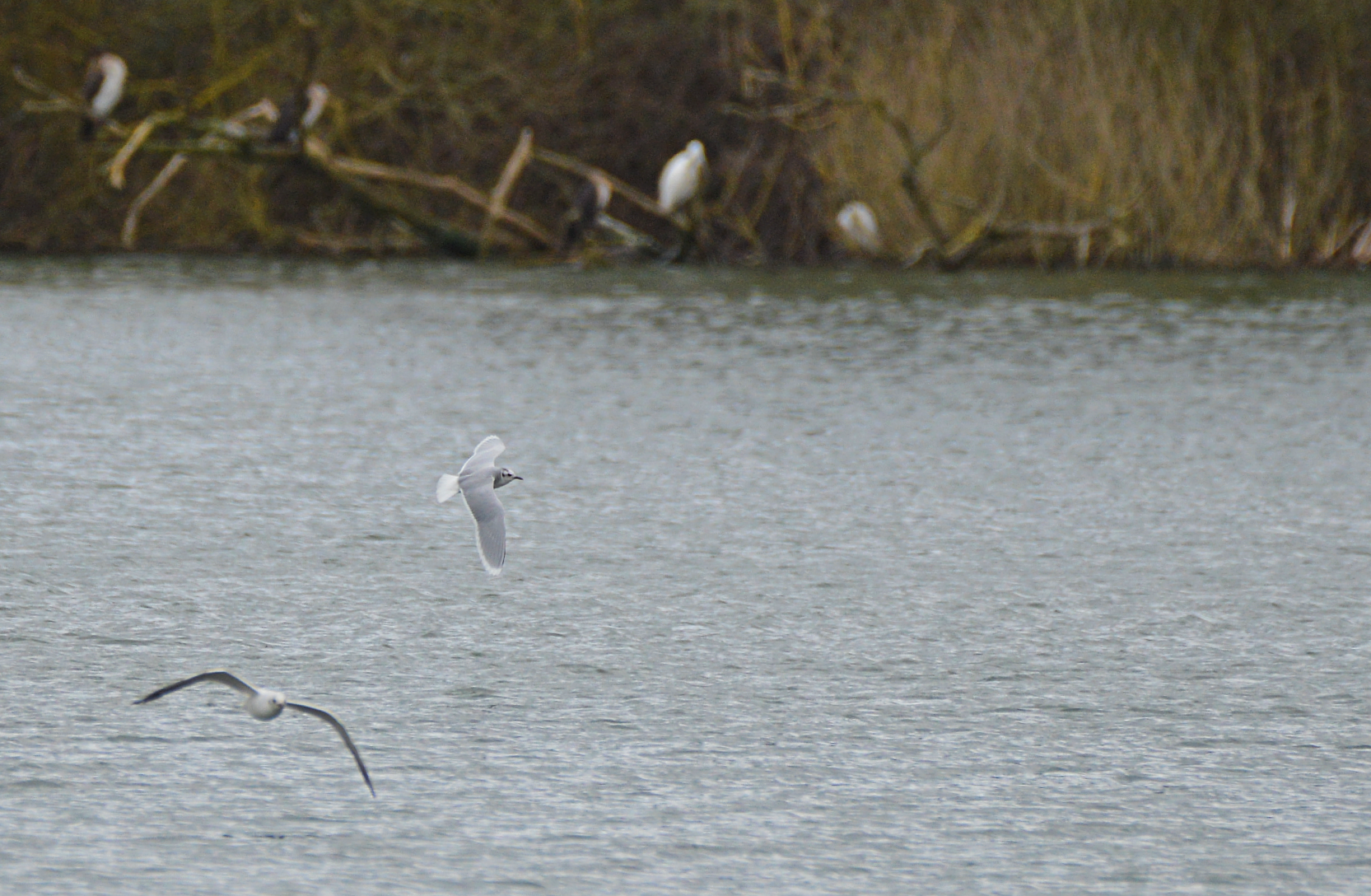
A great little afternoon session up at Pulborough proved to be a perfect way to finish my October local birding campaign. I'd actually just popped up to the village to get a few bits from the shops when news broke of a Little Gull over the floodwater between the North Brooks and the village hall. I dashed down to near our old house and quickly picked up the gull - an adult - resting on the water, before taking flight again and hawking for a few minutes. It repeated this routine a few times before eventually flying off with a small group of Black-headed Gulls. While this was going on my attention was drawn to a bird sailing right over my head which I quickly realised was a Short-eared Owl! Steve Chalmers reported one from his nearby garden a few days ago and presumably the same bird was seen over the North Brooks at the weekend, so it wasn't a surprise to see, but something about an SEO always gets the blood pumping! It dropped in towards the river bank where it was promptly chased off by a Magpie, then it gained height and flew towards the North Brooks. Here it continued to gained height, with an irate Rook in tow, until it was just a dot, then drifted off south - presumably in search of somewhere less flooded to hunt.
Short-eared Owl
Little Gull

Tuesday, 11 April 2023

And back to April

Swift and Swallow carry me
Above the deepest sea
And back to April...

- lyrics from 'April' by Hope & Social

I've always loved April. Perhaps it's because it's my birth month. Perhaps it's because it's when the summer birds really start coming back in numbers. Either way, it's a month that's full of promise, flowers and, often, the first real warmth of spring. 

We've had a bit of all the above in the past couple of weeks. In fact, on the 7th Pulborough recorded the highest temperature anywhere in that UK that day. The yearlist is also steadily creeping up; it's that wonderful time when almost every day brings a new arrival or two.

1st April

Not a huge amount of birding today due to various other commitments. A family walk at Burton and Chingford Ponds mid-morning was largely pretty quiet, aside from at least 7-8 singing Chiffchaffs and singing Woodlark and Firecrest. Three Great Crested Grebes were on Burton Pond while a lone drake Mandarin was on Chingford Pond. 

2nd April

A much more encouraging start to the day, with cloud, some light drizzle and a bit of a north/north-easterly breeze, making it feel quite a bit colder than the 7 Celsius air temperature. I headed out early for a whistle-stop tour of local sites. First up, the private reservoir over near Petworth which proved fairly lively, with a single Swallow among at least 40 Sand Martins, 2 Little Ringed Plover and my first Willow Warbler of the year, singing softly in trees nearby. It was a bit of a seasons collide moment here, as there were still a dozen Redwings and a couple of Fieldfares about too.

Fittleworth Water Meadows got a look-in briefly in passing but yielded little, although it is looking cracking for Garganey at the moment - three Shoveler were the best ducks I could find today.

An hour at Waltham Brooks was particularly good, producing 46 species, including my first two House Martins of the year feeding over the main lake with around 50 Sand Martins and 2-3 Swallows. There had clearly been another fall of Chiffchaffs, with at least a dozen singing around the place. Nothing spectacular, but my liveliest local morning of the spring so far, with two 10km year ticks, while the House Martins were my 100th species within 1km of home this year. 

By late morning the cloud was beginning to clear a bit, as forecast, and news broke of an Alpine Swift down at Chichester GPs. Normally, I would resist the urge to twitch but, as it was a Sussex tick just 20 minutes from home, and Kate and I were out anyway, we decided to pop down. Typically, I arrived to find that it had flown off strongly about half an hour beforehand, but it was still great to see my first two Little Gulls of the year feeding over West Trout Lake.

Little Gull
3rd April

The first frost for a little while. I headed over to Pulborough Brooks for a bit of a session there this morning, which began with promise in the form of a Swallow over the visitor centre then a singing Willow Warbler down the ZigZag. The North Brooks seemed quiet aside from a scattering of the usual ducks, but then Juliet Moore text to inform me of a drake Garganey on the South Brooks. I hurried to the viewpoint behind the Hanger and managed to get very distant views of it, right over by the river bank. Heading round to Winpenny, I caught up with Juliet, Chris and Alan there, where we enjoyed brief views of a Water Pipit (presumably the same individual that has been around since January) as well as 2-3 Swallows and at least 10 Sand Martins feeding out over the water. A Chiffchaff was noted nest building near the hide and on the way back up top I saw a Woodlark briefly song flighting above Uppertons Field before dropping back down into the grass.

A lunchtime 1k walk was very pleasant indeed in the now warm sunshine but largely uneventful aside from a Brimstone butterfly, a clear fall of Chiffchaffs and a 'new in' Blackcap singing on the edge of Lodge Hill. 

4th April

Another cold and frosty start and a day in which I hadn't planned to do much birding, due to work commitments. Sometimes though, those end up being the best days! A dawn walk around the local farmland proved to be really enjoyable. A hunting Barn Owl down at Wharf Field near Thorndale Bridge was followed by a singing Blackcap and a rather late Redwing, then, best of all, my earliest ever singing Nightingale in scrub between River Lane and Waltham Brooks.

Barn Owl
It only gave a few phrases but it was unmistakable. Sadly, when I tried to get a bit closer, it stopped singing and there was no further sign. Garden birding on and off during the day produced lots of Buzzard action and a few Swallows flying over. 

5th April

A cloudy start to the day after a couple of days of easterlies seemed like good fall conditions. I headed out early on foot, through the local farmland towards Waltham Brooks. Yesterday's Nightingale was still present and singing on and off, while there seemed to be even more Chiffchaffs around the place. At Waltham Brooks there were at least 3 Sedge Warblers singing in the vicinity of the main lake, with two engaging in some territorial scuffling. A Stonechat was singing near the railway crossing too. Gulls were in evidence, moving overhead, including Mediterranean Gull - first a very vocal flock of 19 which flew north-west from Amberley towards Lodge Hill, followed by at least four in with a flock of Black-headeds going north. 
Grey Wagtail

Mediterranean Gulls
6th April

A bit of overnight rain, followed by low cloud and a brisk south-westerly had me thinking it was a water body kind of morning. I headed over to the private site near Petworth which quickly produced a Little Ringed Plover flying around calling over the farmland, followed by ~35 Sand Martins, 2 Swallows and a House Martin feeding over the reservoir; the latter my first of the year here. Best of all though, was a Redshank which announced itself first by its mournful call (don't they always?) before I got eyes on it on the far bank. After a little while it took flight through the cloud of hirundines and disappeared purposefully east. Amazingly, considering I have recorded Spotted Redshank and Greenshank here, this was my first site record of Redshank!
Redshank
A check of Burton Mill Pond on the way home produced 29 species in 20 minutes including a squealing Water Rail and a lone drake Mandarin. 

A walk round the hamlet and local fields at lunchtime produced a pair of Swallows on wires - my first 'local' pair seemingly back on territory, as they proceeded to feed merrily over the nearby horse paddock for the rest of my walk. Also of note were a Brimstone and my first Dark-edged Bee-fly of the year.
Swallows
7th April

It was a clear and still morning so I decided to head to local woodland for another go at Lesser Spotted Woodpecker. Sadly I didn't connect, but did have at least four Mediterranean Gulls flying over Coldwaltham Farm, heading high west, calling. 

In the evening I was back at Knepp for my first proper safari of the year, the clear highlight of which was the first Nightingale of the year there, singing very briefly in the Southern Block while I was pouring drinks for the safari guests. This was followed later on by a rather incongruous Woodcock, flying out of the stable yard at New Barn Farm through the headlights of the 4x4 buggy I was driving. 

8th April

My birthday and I was dropped off at Pulborough Brooks fairly early where Steve B and Paul D were waiting for me, later joined by other friends, and we did a full circuit of the nature trail. Sadly the thick fog was slow to clear but, when it did, we enjoyed good views of three pairs of Avocet on the North Brooks and my first Whitethroat of the year along Adder Alley. Late morning we headed down to Rackham Viewpoint where we quickly found one of the White-tailed Eagles along with a lone drake Garganey (there were at least three here yesterday).

A short walk round the local fields in the evening produced the Nightingale singing again. It seems to be getting gradually more vocal by the day.

9th April

Another rather misty start but thankfully nowhere near as bad as yesterday. I headed out early across the local farmland towards Waltham Brooks. The Nightingale was in good voice in the scrub near Besley Farm. Highlights at Waltham Brooks, meanwhile, were my first 1km Whitethroat of the year, at least three Sedge Warblers and a single Snipe. 
Roe Deer

Whitethroat
10th April

A very wet start so I didn't get out straight away. A late morning walk round the 1km area was largely without any fireworks until near the end when I found a singing Nightingale up Sandy Lane on the edge of Watersfield Common - my second 1k record so far this spring. As it's our first spring in the area, it's going to be really interesting to see how many of these guys breed locally.

Early afternoon I headed over to the farmland and private reservoir near Petworth. There wasn't much of note on the reservoir itself aside from an increase in Tufted Duck (20), a lone Great Crested Grebe and a few Swallows and Sand Martins. Passerine interest in the surrounding fields was better through with (at last!) my first Wheatears of the year (both male and female) hopping about in a potato field, and a singing Willow Warbler nearby.
Wheatear
11th April

A fine but breezy start to the day. I decided to venture out on foot from home to do the loop to Waltham Brooks via the river and the local farm fields. The farmland and river didn't produce much but a nice selection of warblers awaited me at Waltham Brooks including my first two Reed Warblers of the year (already reported by Wes A on Sunday), along with at least three Sedge Warblers and two each of Whitethroat and Willow Warbler. Around 60 Sand Martins were hawking around over the main lake. Heading towards the railway line I could hear a Nightingale singing and, as I got nearer, I realised it was two males engaging in a bit of a vocal duel. Unusually, I got brief views of both them, perched out in the open in a willow before they disappeared back into the scrub.

Later in the morning two House Martins flew west over the house and a singing Skylark was audible from the garden - the first time that's happened since we moved in. 

Friday, 31 March 2023

The end of March

Two things you can say about March are it's never predictable and it's never dull. After several springs in a row of largely fine, north-easterly airflow dominated weather conditions, we have been overdue a proper wet, squally, Atlantic-driven start to the season - and that is sure what we have been getting plenty of this second half of March!

In terms of birds, it's fair to say that, unless you spend the entirety of March indoors, you cannot fail to see at least one migrant species by the end of the month and this year has been no exception. That said, while hirundine numbers have been extraordinary (I reckon I've already seen well over 200 Sand Martins and at least 10 Swallows locally in the last two weeks - more hirundines than I can ever recall seeing so early) passerine migrants have been relatively thin on the ground, with just a good scattering of Chiffchaffs, a single (admittedly rather early) Sedge Warbler and one or two Blackcaps noted so far.

20th March

A drizzly, murky start to the day with a return to south-westerly airflow. I dropped in at Waltham Brooks as I was passing and was immediately greeted by the sight of two Sand Martins hawking over the main lake - my first of the year here. The Tufted Duck flock had now increased to 29, which seems a pretty amazing number for the relatively small amount of water here. Later on in the session a Great White Egret flew in from Amberley and dropped into the main lake and the visit was topped off nicely by a singing Blackcap along Brook Lane as I was about to leave. My first record locally this year.

Great Egret
21st March

A little tour of local sites this morning produced good numbers of Sand Martins, including at least 18 at Waltham Brooks, but not a huge amount else. ~40 Fieldfare near Swan Bridge in Pulborough will surely be one of the last large local counts of this first winter period.

While working from home during the day I noted two lots of two Sand Martins flying past the window, the first pair going north and the second two going west. Clearly a good day for movement of this species. I'm not sure I've ever had so many records of Sand Martin by such an early date in March. Sadly no local Alpine Swift yet though...

A little lunchtime walk round the local farmland didn't produce too much although there were quite a few raptors up and about, including at least four each of Red Kite and Buzzard and one of the White-tailed Eagles drifting lazily south over Amberley.
White-tailed Eagle - so massive you can't miss it, even from a kilometre away!
22nd March

Not a huge amount of birding today as I was mostly up in Godalming with Ed working on the book. Passing through Fittleworth first thing though I briefly stopped by the river to scan the water meadows here, as I noticed quite a few Little Egrets from the car. Sure enough, I counted an impressive 21 feeding here - my highest count here by some margin and, indeed, the largest congregation of the species I've ever seen anywhere locally, I think!
Fittleworth water meadows (and some of the 21 Little Egrets)
After a long session of book work, Ed and I headed out for a short session at Eashing Fields late afternoon. We joked that we were going to try and find me five ticks for my eBird hotspot list. In the end we managed eight in a little over half an hour! This included both mine and Ed's first Swallow of the year which I picked up first, dashing south over the fields to the east of the site; evidently only the second anywhere in Surrey this year after one at Holmethorpe a couple of hours before. Other highlights from what turned out to be a pretty lively session included a Peregrine heading west and two Greylag Geese flying north-west, which Ed tells me was only the seventh site record!

23rd March

This morning I headed over to Waltham Brooks at first light in the hope of relocating the Garganey reported yesterday by Graeme Charles. In the end it wasn't to be but it was still an enjoyable, if rather blustery, session here; 49 species in total including Water Pipit, 5 Sand Martins, Marsh Harrier at least 3 Shelduck and 8 singing Chiffchaffs. Oh and a drake Mandarin flying about at breakneck speed when I arrived - don't see too many of those here!

Later in the day I headed out for another short walk round the local farmland which was again pretty windy and quiet, bird-wise, save for half a dozen Sand Martins powering into the wind over towards Amberley.

24th March

Another blustery and showery day. I popped my head in at Waltham Brooks again briefly as I was passing in the morning. Not a huge amount doing here aside from the usual wildfowl on the lake and singing Chiffchaff, Cetti's Warbler, etc. One of the introduced White-tailed Eagles got up over the treeline east of the river and drifted south over Amberley.
White-tailed Eagle
In the afternoon I was on my way back home from my mum's house in Hampshire so had a quick look at some farmland near Petworth. It was very windy indeed by this point, so again not a huge amount to write home about, but a flock of ~100 Linnet whizzing around over the fields was nice to see.
Linnets
25th March

An early morning stroll out to the river didn't go quite as planned, mainly because in my bleary-eyed state I strayed too deep into a large puddle under Thorndale Bridge and my wellies filled with water! Lesson learned, I headed home without much reward, aside from a Blackcap singing briefly on River Lane in Watersfield.

Mid-morning I headed over to Pulborough Brooks which again felt largely quiet, although it was great to see my first local Swallow of the year flying over Fattengates. Duck numbers have really dropped away now, and there were three Avocets on the North Brooks. It was pleasant enough in the sunshine to persuade a Brimstone butterfly to emerge and give a flypast near the visitor centre, otherwise it still felt quite wintry in the blustery south-westerly wind.

26th March

A switch to north-easterly winds and rain before dawn sounded like a good recipe for producing some migrants, so I headed out to check a couple of water bodies at first light. First up I checked the private reservoir over near Petworth which was productive - in 90 minutes here I had a dozen Sand Martins through, with one Swallow among them, while on the shoreline of the res were four Little Ringed Plovers and a single Dunlin. In the fields nearby the Linnet flock was somewhere in the region of 120 birds, all whirling about over the fields and hedges.
Dunlin and Little Ringed Plovers
After this I went over to Waltham Brooks for a bit of a stakeout. Sadly no sign of the Garganey in an hour here but I did have at least 80 Sand Martins through in waves, each group dropping in to feed over the lake for a short while before continuing north.

A late afternoon walk round the local farmland didn't produce much aside from the resident Rooks noisily flying to and from their nests. It's pretty mad that we've almost reached the end of March and I still haven't found a local Wheatear...

27th March

A change of scene this morning as I decided to head up Amberley Mount for the first time in quite a while, partly driven by the desire to find a Wheatear, but also just as a break from hammering the local wetland sites. As I ascended the slope on the western side one of the very first birds I saw was a Barn Owl, still out hunting at around 08:30. It perched up on a fencepost for a while but was getting a lot of grief from a Kestrel so didn't rest for long.
Barn Owl
Two Peregrines flew over and there were several Meadow Pipits singing and engaging in territorial squabbles. Yellowhammers and Skylarks were in fine voice too and both Grey and Red-legged Partridges were heard, but sadly no migrants were to be found. 

At the furthest point around the loop from where I'd parked the car, a text from Juliet Moore alerted me to the presence of two Great Crested Grebes at Waltham Brooks, which is a bit of a local mega, so I dropped in there on the way home and connected with the birds on the main lake. Sadly the Garganey was again nowhere to be seen, but I'm pleased for Juliet and Chris that it showed again a few hours later.
Great Crested Grebe
28th March

Back to Waltham Brooks this morning for another attempt at the Garganey... An hour and a half here sadly wasn't long enough to coax it out of hiding, despite a Marsh Harrier scaring seemingly all the ducks out into open water - including 50+ Teal, 40 Wigeon, 20 Shoveler and half a dozen Gadwall. Nonetheless, it was a rewarding session that yielded three 1km area ticks. First, two Swallows in among the 50 or so Sand Martins feeding over the lake, then two fly-through waders - a Little Ringed Plover (which wasn't seen but was clearly flying north, given by the doplar effect of its calls) and a Redshank (heard to call only once, but again not seen).

29th March

It was another drizzly, murky start to the day today (I seem to have been saying that quite a bit lately!) with a brisk southerly breeze. It was so misty and murky that when I eventually got out of bed and lifted the blinds I saw that visibility was down to about 50m. This felt like it might be conducive to dropping in some waterbirds so, after dropping B off at nursery, I headed over to the private site near Petworth for a check of the reservoir there, in the hope that the drizzle had pushed something down. In the event, it wasn't to be, with an hour here producing just a single Swallow and Little Ringed Plover of note. On the way home, a scan of Fittleworth water meadows produced 13 Little Egrets.

Working from home during the day was tricky with the distraction of Sand Martins and the odd Swallow streaming past the window every few minutes, not helped when Juliet Moore text news of an Osprey heading south from the North Brooks at Pulborough. A bit of a stakeout at the window sadly didn't yield any unusual raptors, just the local Red Kite, Buzzards and Kestrel.

30th March

A bit of a change of scene today, as I was on the road early with the rest of the Knepp safari team, heading to Salisbury Plain to visit the Great Bustard Group and see some of the birds. I absolutely love Salisbury Plain and it's become a bit of an annual pilgrimage most summers now with Ed and others to go and soak in the ambience of Yellow Wagtails, Whinchats, Stone-curlews, etc, usually in June. While I had seen a few distant Great Bustards during my visits over the years I had never actually been to see the work that the project group have been doing. Today we were treated to a talk by one of the group at Enford Village Hall before being taken out in Land Rovers to try and see some of the birds in the field. In classic Salisbury Plain fashion, pretty much the first two birds we saw out of the gate were a Corn Bunting and a ringtail Hen Harrier, the latter quartering over the fields south of Enford Hill.
Hen Harrier
A short distance further we saw our first Great Bustards of the trip: a group of six just on the crest of a rise ahead of us. We moved round to get a better angle and saw that there were in fact quite a good number together in this field: we reckoned at least 27, although it can be surprisingly tricky to count them accurately when they keep popping their heads up and down! Nonetheless, another excellent visit to one of my favourite birding locations in England.
Great Bustards
31st March

In a fortnight packed with damp and windy days, it's hard to pick out the worst of the bunch, but today was certainly a contender! Showery or sometimes more persistent periods of rain, heavy at times, blowing through on a howling force 7 west/south-westerly wind. In other words, pretty horrific for birding, so unsurprisingly I didn't get out much. A short session at Waltham Brooks first thing was quite lively though, with around 120 Sand Martins feeding low over the main lake, with a couple of Swallows in among them. A singing Sedge Warbler in the reeds was my first of the year (and I think my first ever March record!) and was presumably the same bird reported by Tim Morgan yesterday (you can just about hear it over the wind noise and the Greenfinch towards the end of the video below).