Showing posts with label great egret. Show all posts

Wednesday, 10 July 2024

The year is turning

1st July

A day off today so I managed to squeeze in few hours birding in the morning. First up, Pulborough Brooks which produced 55 species in a couple of hours. Highlights included 15 Cattle Egrets dropping in among the cows on the North Brooks; interestingly, exactly two years to the day since I stumbled across over 20 at Waltham Brooks. As was the case that day, it was good to see at least a couple of juveniles among the assembled birds at Pulborough today. Unsurprisingly, given the date, the other species of note were waders, with 22 Black-tailed Godwits and two Green Sandpipers busy feeding in the mud on the North Brooks, while the Greenshank found by Paul Evans yesterday was still present at West Mead when I arrived, although evidently had flown by the time I left.

Stonechats
Cattle Egrets
Black-tailed Godwits
Next up, I headed over to the private reservoir near Petworth, hoping the wader gods had delivered something here too. Sadly not, and there really wasn't much to write home about here at all really, aside from an obvious increase in Tufted Duck and Coot numbers (14 and 21, respectively). Ten Herring Gulls were gathered on the water, not all that common a sight here. 

Late afternoon I very briefly dropped in at Amberley Mount where a dozen or so Swallows were whizzing about over Downs Farm and a couple of Swifts flew south-west. 

2nd July

After a non-birding morning in sunny Brighton, I returned to the Pulborough just as light rain began to fall. I decided a check of a couple of water bodies was in order. First up, Petworth which again failed to produce any waders, but a few Swifts were feeding overhead and it was nice to confirm local breeding of Kestrel with at least three noisy youngsters about. 

Burton Mill Pond had a similar rather uninspiring feel to it. The Great Crested Grebe pair were busy feeding their three young, while there were also a couple of newly fledged Reed Warblers in the reeds by the roadside. A light south-westerly movement of Sand Martins gave just the slightest hint of the exodus of migrant species to come in the next few weeks and months.

Reed Warbler
Pied Wagtail
Later in the day I stopped off for a fairly brief stroll at Waltham Brooks which proved surprisingly lively given the time of day/year. 41 species was the total including one of the White-tailed Eagles drifting about just the other side of the river, seemingly flushing a Great White Egret in the process which flew through north low over the main lake. The farmer was cutting the hay up at Widney Brooks which seemed to be attracting the attention of a fair few raptors including at least three each of Buzzard and Red Kite and a single Hobby. Well over a hundred Swifts and 15 or so Sand Martins were also feeding overhead, while a Garden Warbler calling in scrub near the main lake was the first I've heard here in a little while. 
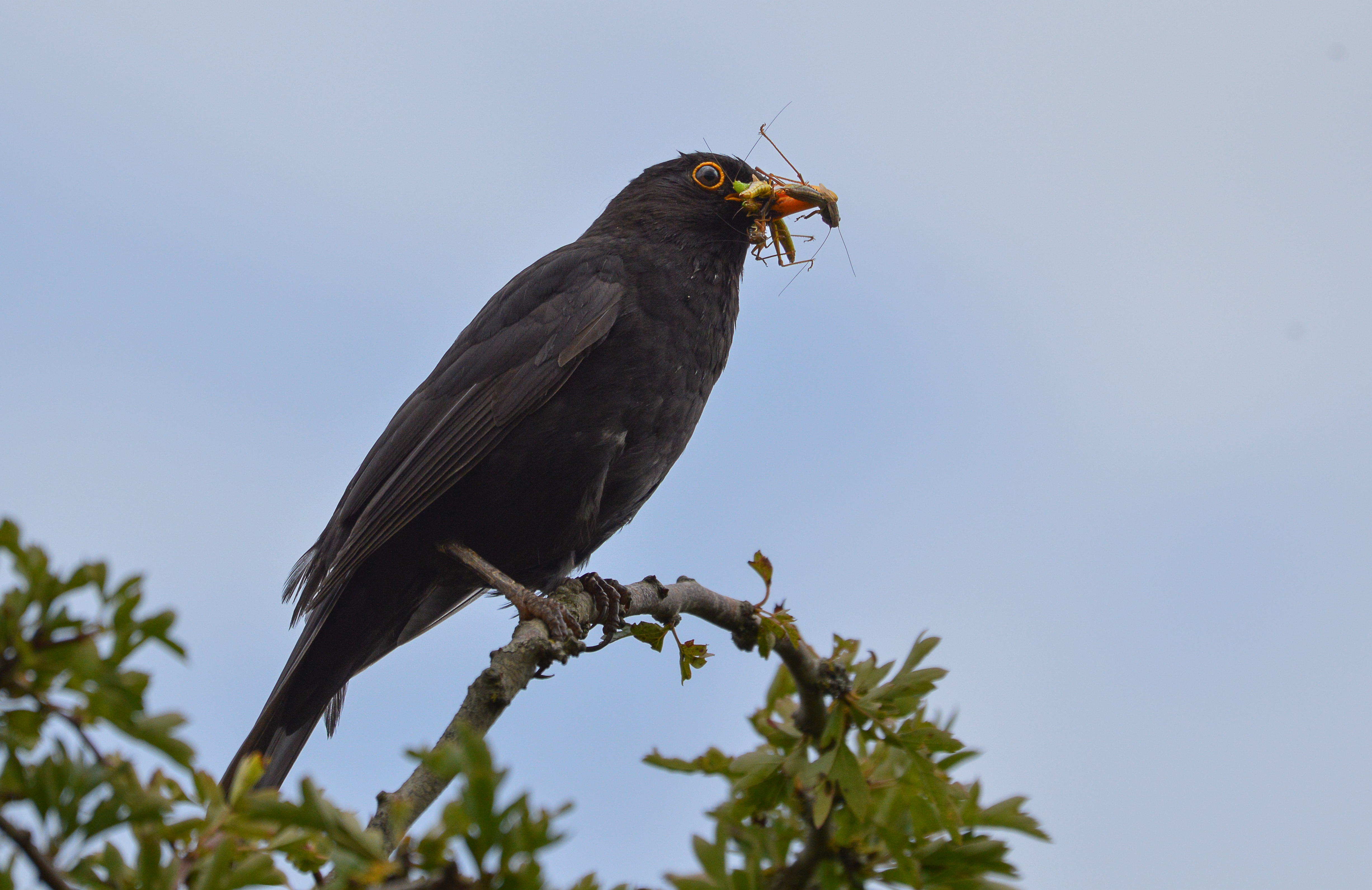
Blackbird (and some unfortunate crickets!)
Great White Egret
White-tailed Eagle
3rd July

Not much birding today aside from a quick stop in Petworth which failed to produce much of interest aside from a few Swifts (20+) and a calling Willow Warbler near the reservoir. 

4th July

I managed to squeeze in a bit of birding today despite all the election business and lots of work meetings. Waltham Brooks was relatively quiet, though it was good to see plenty of young birds about including recently fledged Whitethroat, Sedge Warbler and Greenfinch. Also a few Swifts around, though hard to detect any clear direction of travel. At least two very vocal Water Rails were along the river, with one briefly seen in flight. 
Sedge Warbler
A lunch break stroll round the local farm fields proved similarly quiet, not helped by the strengthening breeze which also put paid to my attempts to lure any clearwing moths. The newly cut sileage field south of River Lane was attracting a fair number of Swallows, feeding low over the sward. 

Perhaps the best birding action of the day though came from the garden in the evening when first a Hobby flew low overhead, worrying the local Swallows, followed a little later by two adult Great Black-backed Gulls powerfully skulling north towards Lodge Hill. A garden tick and first record in the 1k area in 2024. 

5th July

A pretty foul start to the day with intermittent rain, heavy at times, blown in on a brisk southwesterly. I decided a loop of Pulborough Brooks was in order before work. The lingering Greenshank that has been on the pool at West Mead most of the week was still present, feeding in the shallow puddle left there (soon to be topped up) along with four Little Egrets. The North Brooks, meanwhile, again held the bulk of the wader interest in the form of eight Little Ringed Plovers (including two juveniles), six Green Sandpipers and a single Common Sandpiper. 

A lunchtime walk at Waltham Brooks yielded a rather lowly 32 species, with the highlight being a Peregrine drifting north high overhead. 

6th July

An early start this morning to check out a couple of local water bodies. Petworth proved fairly quiet on the waterbird side of things but again produced a male Honey Buzzard giving a nice flypast, in view for several minutes as it drifted west. 

Next up, I dropped in at Burton Mill Pond for my first proper session here in a while (I've concluded it really does take a good hour and a half or more to check the area properly). Burton Pond itself was typically rather quiet aside from the resident Great Crested Grebe pair continuing to feed their three young. A check of Black Pond and Burton Park Farm revealed a Little Owl perched on the fence near the farm buildings. This is a traditional site for the species but this was my first record here this year. 

As is often the case, most of the action was at Chingford Pond where highlights included a female Tufted Duck with three ducklings, and some 250 or so Swifts and Sand Martins (roughly 50/50 between the two species) feeding overhead which, perhaps unsurprisingly, attracted the attentions of a passing Hobby which briefly stopped to have a go at a few of them. 
Juvenile Great Spotted Woodpecker
Grey Wagtail
Tufted Ducks
Hobby
Later in the day I took a trip down to Arundel with B. A boat trip on Swanbourne Lake brought us into close proximity with a female Gadwall with six ducklings in tow - my first confirmed breeding record of this species locally this year. Mill Road Watermeadows, meanwhile, held at least five Cattle Egrets around the cattle.
Gadwall family
Back home in the afternoon, the call of a Buzzard drew my attention skywards where I saw one of the White-tailed Eagles drifting over, mobbed by a couple of the aforementioned Buzzards as it drifted off south-east. 

7th July

This morning started with a check of the moth trap which produced a few goodies, including several species new for the garden. The highlights were five Elephant Hawk-moths and the localised micro moth Synaphe punctalis. After we'd finished this, B and I headed out for a little local walk which produced a Peregrine drifting overhead. 
Synaphe punctalis
Elephant Hawkmoths
All of us headed down to Littlehampton late morning for a stroll at West Beach. An interesting mix of species were recorded here including a Curlew and four Mediterranean Gulls flying west, and a Sand Martin flying purposefully out to sea. 

In the evening I met up with Roger and Caroline Morgan-Grenville for a walk at Lavington Common, hoping for Nightjars of course. As the light faded and the last of the Dartford Warbler and Stonechat calls faded away around us, so the Nightjars began tuning up. Soon, there was churring and 'kwicking' coming from seemingly every direction and the next half an hour or so produced perhaps some of my most memorable Nightjar moments to date. Best of all was undoubtedly when a pair decided to perform several close fly-bys right around us as we stopped, gawping, in the middle of the footpath junction at the centre of the common. 
Nightjar
8th July

A check of the North Brooks at Pulborough before work this morning produced a fairly typical selection of waders for the time of year: ten Black-tailed Godwits, five Little Ringed Plover, singles of Common Sandpiper and Green Sandpiper, and a heard-only Greenshank.

The rest of the day was mostly grey with on-off light rain. I did manage a brief stroll out from home after work for a check of the local fields and a brief skywatch, the highlight of which was a single group of 28 Sand Martins south and a Sparrowhawk carrying prey. 

9th July

Today proved to be unexpectedly action packed. The shift to an east/south-easterly airflow on Monday evening and shifting to more southerly in the small hours of today, combined with some rain near dawn, certainly looked to have the potential to deliver some goodies, despite the early date. Early on in the morning I was getting excited messages from Ed up in Surrey, telling me he was having a great morning, so I was keen to get in the field. 

After dropping B at nursery I dashed over to Petworth, where I was greeted by the sight of an eclipse drake Garganey, associating with an eclipse drake Teal. This was my first record of Garganey here, and an unusual plumage I don't see all that often, so a good learning opportunity, especially when it flew around showing off its very obvious pale wing panels. While I was here, news broke of a Wood Sandpiper at Pulborough - an overdue local year tick for me. It seemed that it had only been seen in flight, however, so I waited for news to break of it being relocated on the deck, which it was a little later, before I headed over there in my lunch break. The weather was decidedly filthy now and I was lucky to find the bird (after a bit of a wait) still on the North Brooks before the heavens really opened and I dashed back to my car. It was good to catch up with Pulborough regular Gary Trew here too. 
Garganey
Wood Sandpiper
10th July

In contrast to yesterday's excitement, today just didn't feel anywhere near as rare, despite the still rather inclement conditions. Another check at Petworth didn't produce anything of note on the waterbird front, though a flock of 50-60 House Sparrows flying between a hedgerow and a wheat field was a welcome sight. A little later in the morning I checked out Waltham Brooks which was also pretty quiet, aside from a Garden Warbler briefly showing quite well in the scrub near the lake, and a light but pronounced southerly trickle of Sand Martins and Swifts overhead. 
House Sparrow
Garden Warbler

Thursday, 20 June 2024

Moving on

11th June

Something always feels like it has turned come the second and third weeks of June. Usually it means the final drying up of any hopes of spring goodies arriving, but evidently spring 2024 still has a few more tricks up its sleeve (more on that shortly).

Today I was out early to carry out my final farmland bird survey visit of the year. The forecast was clear and cold, with a particularly fresh northerly wind. In the end, it actually wasn't too bad, and felt relatively warm in the sunshine once it got going. The destination was the farmland between Byworth, Haslingbourne and Shopham Bridge. An area I have described on this blog before as feeling pretty promising for a host of interesting species (I've had Cuckoo, Nightingale, Lesser Whitethroat and flyover Whimbrel here on previous visits). It's certainly got a bit more of a 'certain something' about it than other areas I've visited for survey purposes over the years. I also recently discovered the area hosted a lingering male Red-backed Shrike for several weeks back in 2008. 

Today, the star bird was somewhat less sensational but still very welcome, as I finally caught up with my first local Little Owls of the year - not just one but two! The first was silhouetted against the early morning sky, perched atop a narrow metal post and looking for all the world like a fixed ornament of some kind, until it turned its head! The second bird was a fair way west of this one, and perched on a telegraph pole, quite a distance from my viewpoint.

Little Owl
As I was finishing up the survey, I received an unexpected text from Joe Hobden at the RSPB informing me that volunteer Toby Stapleton had just reported a possible Savi's Warbler singing at Pulborough, so I of course raced straight down there. Arriving at Nettley's hide, I found Toby still there, but sadly he hadn't heard anything from the bird for around half an hour and there was no further sign in the time I had available to sit and listen. It would have to be an evening visit.

As luck would have it, I had already made plans to catch up with Ed and Abel later in the day and we had left the destination suitably undecided - depending on the weather - so of course we figured it made sense to head back to Pulborough. Half an hour or so at Nettley's hide produced no sight nor sound of the bird but a text from Matt Eade alerted us to the fact it was in fact audible from the Hanger viewpoint. Racing back up there, we found Matt with Gareth James both cupping their hands to their ears and listening intently. Within a couple of minutes we had all heard it - just about! Thankfully, Joe the warden was on hand again to help and guided us to a spot a little closer to where the sound was coming from, and we got definite ears on what was undoubtedly the mechanical whirring song of a Savi's Warbler - a Sussex tick for most of those present! Amazingly, it also represented my 160th species locally this year, what a way to reach that milestone!

12th June

A late start this morning and, with negative news of the Savi's Warbler at Pulborough, I decided instead to check in at Waltham Brooks for the first time in a few days. A Cuckoo was still singing over towards the river while the lake held eight Tufted Ducks. As I started wandering about to check the scrubby areas, a message alerted me to the fact the Savi's had been relocated at Pulborough, a fair bit closer than yesterday evening by the sounds of it. I had to go back! 

Racing down the path towards the river bank I spied Chris and Juliet Moore and others all gathered in a line looking over the mixed reeds and rushes to the south. Sure enough, after 15-20 minutes wait the bird sang again, really much clearer than yesterday. Unfortunately it didn't show for me there but, as I was leaving, I decided to quickly stick my head in at the dipping platform and not only heard the bird even more clearly but also glimpsed it very briefly perched up in full view near the top of the vegetation. Result!

13th June

An early morning walk out from home to Thorndale Bridge and Waltham Brooks today, in memory of the one year anniversary of finding a singing Marsh Warbler near Thorndale Bridge last year. What a difference though in terms of the weather from a year ago today, which as I remember was sunny and really quite warm. This morning was mostly cloudy, breezy and not at all warm! There was also, unsurprisingly, no Marsh Warbler to be found, but still a few bits about including a family group of Sedge Warblers, two singing male Cuckoos, a heard-only Kingfisher along the river and a Great White Egret in full breeding plumage at the main lake at Waltham Brooks. The Egret was also bearing a red colour ring on its left, identifying it as one from the Somerset Levels. 

14th June

Just a brief birding session this morning, and the destination was Amberley Wildbrooks, hoping to catch up with the Quail reported by Daniel Boon a couple of days ago. I walked up the Wey-South Path beyond the Swamp but couldn't hear any sound from it, if indeed it was still present. Mind you, the brisk wind wasn't helping. It was also amazing how much surface water and mud was present again on the path after the overnight rain. Is it really the middle of June? A Cuckoo was still singing near the castle, a Nightingale called briefly at the Swamp and a couple of Sand Martins flew south-west into the wind. 

15th June

Another day without much birding. A brief check of the private reservoir near Petworth in showery conditions mid-morning produced little of note, although an adult Mediterranean Gull flying north as I was leaving was only my third record of the species at this site. Otherwise there were plenty of Swifts feeding over the reservoir and surrounding fields. 

In the evening I was at Knepp to lead a dusk safari. The forecast didn't look great but in the end we dodged any further showers. The clear highlight of the evening was, hands down, my best ever UK encounter with Turtle Dove as purring alerted us to the presence of a nearby male which then flew and revealed two in flight together. No sooner had these two settled together in another nearby tree than they flew again, this time with a third bird in tow! Seemingly an interloping male being chased out of an active territory as soon what was the original pair returned to the tree and engaged in several minutes' of preening, courtship feeding and even mating. Just breathtaking. Only slight downside was that I only had my little bridge camera not my DSLR, otherwise I would have easily taken my best ever Turtle Dove photos instead of rather grainy record shots!
Turtle Doves
16th June

An early start this morning saw me heading first to Amberley for another attempt at the Quail. Sadly there was again no sign of it but a very showy Cattle Egret flew up from the cattle near the Swamp, where a Nightingale was also whistling away and a Lesser Whitethroat was still singing. A light passage of some 25 or so Swifts moved through, heading west/south-west.
Cattle Egret
Next up, I headed over to Pulborough for another go at the linger Savi's Warbler, present for at least its sixth day. As I approached the dipping platform along Adder Alley I could hear the bird reeling but, despite spending an hour down on the viewing platform - where it was great to catch up with Tice's Meadow stalwart John Hunt - the bird never showed itself. The highlight here aside from occasional burst of song from the Savi's, was a Peregrine flying overhead clutching what looked like a juvenile Starling. Photos of the bird revealed it was bearing a green darvic leg ring. I'll investigate where that may have come from. With a dark cloud moving in from the west I decided to make a break for the relative cover of the Hanger, just as the heavens opened. On the North Brooks I found five Avocets and a single Green Sandpiper, the latter the first early indications of return wader passage starting to slip into gear. 
Peregrine
Leaving Pulborough, I headed for a favourite skywatch viewpoint for an attempt at Honey Buzzarding, but the weather had other ideas. Although the sun was warm when it broke through, it just never felt like the morning was going to properly settle down and warm up, and there was still that cool and brisk breeze. There were quite a few Common Buzzards and Red Kites getting up on the meagre thermals, but otherwise it felt very quiet. 

17th June

Just a quick birding session before work today, at Waltham Brooks, the highlight of which was a noisy group of fledgling Cetti's Warblers flicking about in brambles near the lake. On the lake itself were a single Tufted Duck and some 27 Mallards. Otherwise not much else to report here really, although it was lovely to feel warm in the sunshine for a change - it almost felt like summer!
Cetti's Warbler
A lunchbreak skywatch from the garden produced singles of Hobby and White-tailed Eagle drifting about. 

18th June

I was at Arlington Reservoir for much of today, at a South East Water landowner advisor event. Sadly there wasn't much time for birding but I did note Kingfisher, Reed Warbler and Great Black-backed Gull during my lunch break. 

On the way home I stopped off for another brief stroll at Amberley Wildbrooks, again entering from near the castle and walking up past the Swamp. The single Cattle Egret from the other day had increased to three and it was quite entertaining to watch them picking flies off the faces of the cows, like Oxpeckers. Other bits of note here were a singing Lesser Whitethroat, and a few Swifts and House Martins overhead. 
Cattle Egrets
19th June

Today I was at Rye Harbour all day for a work staff meeting. Highlights from a couple of walks round the reserve included terns a plenty - Little, Common and Sandwich, plus very cute Oystercatcher chicks, Avocets and a Hobby. A ringing demonstration in the afternoon produced a couple of Lesser Whitethroats and a juvenile male Kingfisher.
Common Terns
Sandwich Tern
An evening walk from Kithurst Hill towards The Burgh and back produced at least three calling juvenile Tawny Owls and multiple Red-legged Partridge and Grey Partridge.
Looking west from south of Kithurst Hill

 20th June

A check of the private reservoir over near Petworth didn't produce much this morning. Then it was onwards to East Sussex for a work meeting, which saw me stopping for a lunch break walk at Arlington Reservoir where I found the usual selection of geese on the water along with at least eight Great Crested Grebes and three Great Black-backed Gulls. A Nightingale was calling in the scrub near the hide. 
Yellowhammer
Three private woodland sites in the High Weald were the destination for my walking meeting in the afternoon, the highlights of which were a Hawfinch, a fledgling Nightingale and a few Marsh Tits. 

Tuesday, 20 February 2024

Water, water everywhere

 11th February

WeBS day today, so I headed over to Petworth at first light to do my monthly count on the private reservoir there. It was pretty disappointing to be honest, with just ten Coots, 24 Shoveler and a couple of Little Grebes. Two each of Canada Goose and Egyptian Goose which flew over the farmland as I walked to the reservoir didn't even meet the criteria to be added to the count. Otherwise, a few Fieldfares, Redwings and Yellowhammers made up the highlights from a rather paltry total of 30 species.  

A brief check of Burton Mill Pond and Hadworth Farm/Bignor Park scrape on the way home proved a little more rewarding, particularly the latter where a Great White Egret flew in to join two Grey Herons already feeding at the edge of the scrape (spooking the lingering Green Sandpiper in the process!). A new species for me here. A couple of Ravens flew over towards Bignor Park, tumbling and calling.

Great White Egret
Green Sandpiper and Great White Egret

12th February

The first clear and frosty morning for a while turned into the most beautiful, sunny, late winter/early spring day. I even managed to work on my laptop in the garden for an hour or so early afternoon!
Two bites of the cherry at Pulborough Brooks (20 minutes or so from by the visitor centre before work and half an hour by the village hall at lunchtime) failed to turn up any sign of the pair of Goldeneye found by a volunteer Rob King yesterday. A real local rarity these days, these represented the first record of the species at Pulborough since the dubious 'are they/aren't they' quartet in October 2021, and before that, well, it was somewhere in the region of 15 years. A nice consolation came in the form of two Great Crested Grebes on the North Brooks (my first anywhere locally this year, incredibly) and a Barn Owl sleepily perched at the entrance of a nest box along the river.
The flood between Pulborough village and the North Brooks
A brief look at a local raptor watchpoint produced a nice displaying pair of Sparrowhawks, a few Buzzards and a couple of Red Kites, but not the hoped-for Goshawk. 

The clear highlight of the day though, came rather out of the blue, when I was putting the bin out at home just after 8pm and heard what I initially took to be a distant dog barking, before realising it was the call of a Brent Goose! I stopped in my tracks and listened in wonder as what sounded like a small-ish flock clearly flew north-east quite high overhead, calling occasionally until the sounded faded away into the distance towards Pulborough. One of those spectacular 'migration in action' moments where one can only pause and ponder the extraordinary journey those birds have ahead of them, after spending the winter on the south coast. Also a rare 'three list' tick in the form of garden, 10km year and 1km year. What a result!      

13th February

A brief look at a very flooded Waltham Brooks before work proved quite productive, with 45 species noted in just over half an hour. The flood water had risen to such an extent as to make circumnavigation of much of the reserve pretty much impossible. As such, and as I was short on time, I checked by the lake first then drove up to Greatham Bridge for another scan before heading on to Woods Mill for work. A Green Sandpiper flying up from near Greatham Bridge was a 1km year tick, as was the heard-only Little Grebe giving its Whimbrel-like call somewhere out on the flood. Four Tufted Ducks and a single Snipe made up the other highlights, although a flock of waders flying north from Amberley towards Pulborough looked interesting, but were too distant to get much on them, especially as they kept disappearing behind trees.  
Long-tailed Tit
14th February

Not much to love about the weather today (see what I did there?), as yesterday afternoon and evening's rain continued into a murky, drizzly and quite windy morning. I had hoped to get up the Downs but, seeing as they were entirely enshrouded in fog, I decided instead to drop in at Pulborough, specifically the Black Wood/Hail's View end, in order to scan the flooded South Brooks. Visibility was poor - so much so that I struggled even to see the far banks of the Arun from the viewpoint. Among the usual dabbling ducks were three Tufted Duck and at least five Coots (my first here this year) while a drake Mandarin flew east across the reserve towards Hollybush Hill.         

15th February

I had the day off today and fortunately it was a beautiful day - in fact, the warmest of the year so far, with the mercury rising to the mid-teens Celsius by lunchtime, coaxing out the always welcome sight of the first male Brimstone of the year, fluttering around the garden. This was followed later on by a Peacock dashing overhead at speed, as is typical for the species. On the birding front, I decided to indulge in a rather lengthier session than has been possible of late, at Pulborough in the morning. 67 species was the final tally from a little over two hours on the reserve, with just the slightest hints of spring poking its head above the parapet. At least two Lesser Black-backed Gulls were about, a species that really is only a February to late summer feature of birding here. The pair of Stonechats between West Mead and Winpenny were looking particularly dapper in their breeding finery, while a Cetti's Warbler sang nearby. Skylarks were rather forlornly singing and displaying over the flood waters on the both the North and South Brooks, while two Chiffchaffs at the Hanger were 'new in' since my last visit here. Other bits of note included four Raven, at least nine Tufted Duck, half a dozen Shelduck, two Great Crested Grebes, and a heard-only Green Sandpiper below the Hanger. Driving home, I noted a Great White Egret on Widney Brooks through the car window. 
Stonechat
In the afternoon I headed over to the private reservoir near Petworth which proved a little livelier than my last visit at the weekend. Highlights in the brisk and curiously warm southerly wind here were a single Great Crested Grebe, three Gadwall, 24 Shoveler and single drake Tufted Duck, with a couple of Yellowhammers singing in the hedgerows nearby. 
Yellowhammer
16th February

A brief check of the very flooded scrape at Bignor Park/Hadworth Farm first thing produced just a Little Grebe and a pair of Teal of note. As the morning was brightening and warming up, I headed to woodland near Fittleworth after this for a bit of a wander round. The air was ringing with birdsong, including at least two Marsh Tit and a couple of drumming Great Spotted Woodpeckers. A very welcome year tick came in the form of a noisy group of ten Crossbills which flew east high overhead. This wasn't the only sign of movement, as I also noted flocks of Woodpigeons flying purposefully north-east - some 250 or so at least, with the biggest group being ~100. Three Lesser Redpolls briefly dropped into a birch near me before flying off.
Lesser Redpolls
A brief lunchtime walk round the local farmland produced a welcome sign of early spring movement in the form of a smart male Stonechat on a fenceline where I've rarely seen one before. In fact, this represented just my third record of the species in the local farmland eBird hotspot since we moved here 18 months ago!

17th February

Not much birding today, although a walk with B in the morning did produce a singing Firecrest just up the road from home, while a check of the local farmland late morning revealed yesterday's Stonechat to be still present, plus a Lesser Black-backed Gull drifting north; another sure sign of the changing seasons! 

18th February

Rain all night and into this morning didn't inspire much confidence in a productive session, but I headed out at first light regardless to check a few lesser-watched local wetland sites. First up, the Bignor Park scrape which didn't hold any surprises, a croaking Raven being probably the best. Next, a check of the flooded Rother at Fittleworth where I found 14 Little Egrets in the fields near the sewage works, a singing Chiffchaff at the works, and a Coot on the nearby floods. Next up I headed over to Petworth for a look at the private reservoir there, where I was surprised to find the female Long-tailed Duck had returned after over a month's absence. She was very active following a group of Tufted Ducks around the place and even displaying a bit. Also present here were five Gadwall, four Mute Swans, 18 Shoveler and five Little Grebes.

Long-tailed Duck and friends
Burton Mill Pond next where I was pleased to see a Great Crested Grebe back on territory - my first record of the species here this year. Other bits of note were Kingfisher, Water Rail, Grey Wagtail and a single drake Pochard among 15 Tufted Ducks. That was about it for birding effort today although a couple of casual local walks later in the day produced another Lesser Black-backed Gull drifting north over Watersfield plus some good raptor action including a pair of Red Kites displaying over Alban Head. 
Great Crested Grebe
19th February

An early walk from home out to Waltham Brooks produced a few bits. At Waltham Brooks there were at least 27 Tufted Ducks on the main lake, while singles of Great White Egret and Marsh Harrier flew north/upriver. A few Snipe were flushed from marshy areas while a single female Stonechat was in the scrub near the railway crossing. Lots of birdsong around including Chiffchaff, Cetti's Warbler and Blackbird.

Mid-morning I headed down to Worthing to join a Sussex Wildlife Trust beach clean, where I finally encountered my first Great Black-backed Gulls of the year plus a few Turnstones on the beach near the pier. I took my lunch break at Goring Gap just up the road where I found at least half a dozen Mediterranean Gulls (also my first of the year) dotted about among the hundreds of roosting Common Gulls, while wader interest on the beach here came in the form of at least 55 Turnstones, eight Sanderling, at least 30 Oystercatchers and half a dozen or so Dunlin. 
Common and Mediterranean Gulls
20th February

After dropping B at nursery this morning I decided on a quick look at Amberley Wildbrooks from near Rackham Mill. The flood waters had receded a fair bit since my last visit and the landscape was clearly attracting some interest from waders and gulls, with at least 4 Dunlin and 2 Black-tailed Godwits among the displaying Lapwings, and some 200 gulls gathered at the water's edge right over near the castle - mostly Black-headed Gull and Common Gull. Two Red Kites were drifting about, periodically flushing the rather small numbers of ducks, and one of the White-tailed Eagles was in one of the trees right out in the middle.
Very distant White-tailed Eagle
At lunchtime I headed out for a quick look at the private reservoir near Petworth which produced surprisingly little - just nine Shoveler, five Little Grebes and a Grey Wagtail of note, although a Red-legged Partridge flushed from a track nearby was my first here since early December.

The scrape at Bignor Park/Hadworth Farm proved to be similarly lacklustre in terms of water birds, with just a single Little Grebe worthy of mention here.