Showing posts with label white-tailed eagle. Show all posts

Wednesday, 10 July 2024

The year is turning

1st July

A day off today so I managed to squeeze in few hours birding in the morning. First up, Pulborough Brooks which produced 55 species in a couple of hours. Highlights included 15 Cattle Egrets dropping in among the cows on the North Brooks; interestingly, exactly two years to the day since I stumbled across over 20 at Waltham Brooks. As was the case that day, it was good to see at least a couple of juveniles among the assembled birds at Pulborough today. Unsurprisingly, given the date, the other species of note were waders, with 22 Black-tailed Godwits and two Green Sandpipers busy feeding in the mud on the North Brooks, while the Greenshank found by Paul Evans yesterday was still present at West Mead when I arrived, although evidently had flown by the time I left.

Stonechats
Cattle Egrets
Black-tailed Godwits
Next up, I headed over to the private reservoir near Petworth, hoping the wader gods had delivered something here too. Sadly not, and there really wasn't much to write home about here at all really, aside from an obvious increase in Tufted Duck and Coot numbers (14 and 21, respectively). Ten Herring Gulls were gathered on the water, not all that common a sight here. 

Late afternoon I very briefly dropped in at Amberley Mount where a dozen or so Swallows were whizzing about over Downs Farm and a couple of Swifts flew south-west. 

2nd July

After a non-birding morning in sunny Brighton, I returned to the Pulborough just as light rain began to fall. I decided a check of a couple of water bodies was in order. First up, Petworth which again failed to produce any waders, but a few Swifts were feeding overhead and it was nice to confirm local breeding of Kestrel with at least three noisy youngsters about. 

Burton Mill Pond had a similar rather uninspiring feel to it. The Great Crested Grebe pair were busy feeding their three young, while there were also a couple of newly fledged Reed Warblers in the reeds by the roadside. A light south-westerly movement of Sand Martins gave just the slightest hint of the exodus of migrant species to come in the next few weeks and months.

Reed Warbler
Pied Wagtail
Later in the day I stopped off for a fairly brief stroll at Waltham Brooks which proved surprisingly lively given the time of day/year. 41 species was the total including one of the White-tailed Eagles drifting about just the other side of the river, seemingly flushing a Great White Egret in the process which flew through north low over the main lake. The farmer was cutting the hay up at Widney Brooks which seemed to be attracting the attention of a fair few raptors including at least three each of Buzzard and Red Kite and a single Hobby. Well over a hundred Swifts and 15 or so Sand Martins were also feeding overhead, while a Garden Warbler calling in scrub near the main lake was the first I've heard here in a little while. 
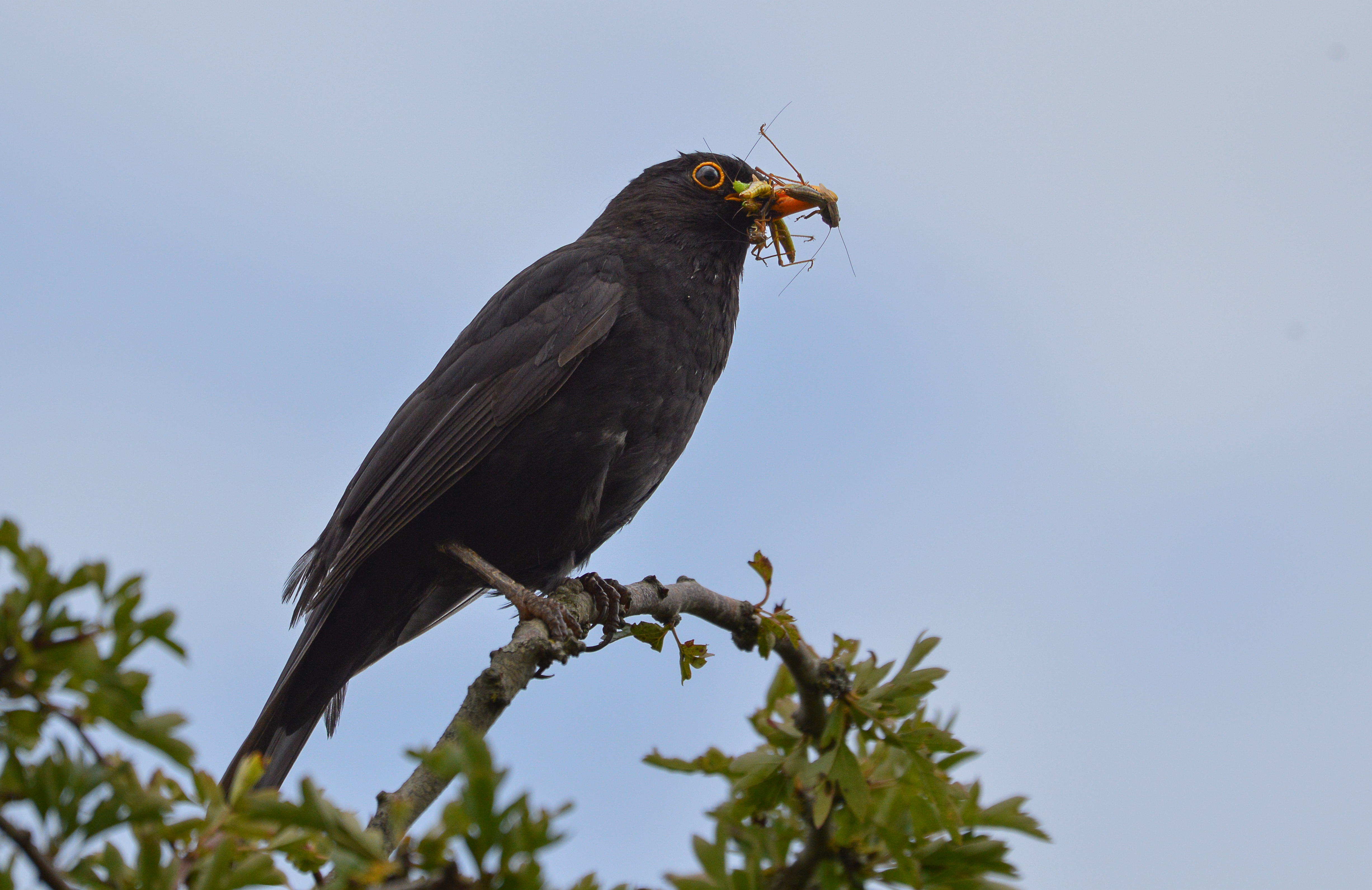
Blackbird (and some unfortunate crickets!)
Great White Egret
White-tailed Eagle
3rd July

Not much birding today aside from a quick stop in Petworth which failed to produce much of interest aside from a few Swifts (20+) and a calling Willow Warbler near the reservoir. 

4th July

I managed to squeeze in a bit of birding today despite all the election business and lots of work meetings. Waltham Brooks was relatively quiet, though it was good to see plenty of young birds about including recently fledged Whitethroat, Sedge Warbler and Greenfinch. Also a few Swifts around, though hard to detect any clear direction of travel. At least two very vocal Water Rails were along the river, with one briefly seen in flight. 
Sedge Warbler
A lunch break stroll round the local farm fields proved similarly quiet, not helped by the strengthening breeze which also put paid to my attempts to lure any clearwing moths. The newly cut sileage field south of River Lane was attracting a fair number of Swallows, feeding low over the sward. 

Perhaps the best birding action of the day though came from the garden in the evening when first a Hobby flew low overhead, worrying the local Swallows, followed a little later by two adult Great Black-backed Gulls powerfully skulling north towards Lodge Hill. A garden tick and first record in the 1k area in 2024. 

5th July

A pretty foul start to the day with intermittent rain, heavy at times, blown in on a brisk southwesterly. I decided a loop of Pulborough Brooks was in order before work. The lingering Greenshank that has been on the pool at West Mead most of the week was still present, feeding in the shallow puddle left there (soon to be topped up) along with four Little Egrets. The North Brooks, meanwhile, again held the bulk of the wader interest in the form of eight Little Ringed Plovers (including two juveniles), six Green Sandpipers and a single Common Sandpiper. 

A lunchtime walk at Waltham Brooks yielded a rather lowly 32 species, with the highlight being a Peregrine drifting north high overhead. 

6th July

An early start this morning to check out a couple of local water bodies. Petworth proved fairly quiet on the waterbird side of things but again produced a male Honey Buzzard giving a nice flypast, in view for several minutes as it drifted west. 

Next up, I dropped in at Burton Mill Pond for my first proper session here in a while (I've concluded it really does take a good hour and a half or more to check the area properly). Burton Pond itself was typically rather quiet aside from the resident Great Crested Grebe pair continuing to feed their three young. A check of Black Pond and Burton Park Farm revealed a Little Owl perched on the fence near the farm buildings. This is a traditional site for the species but this was my first record here this year. 

As is often the case, most of the action was at Chingford Pond where highlights included a female Tufted Duck with three ducklings, and some 250 or so Swifts and Sand Martins (roughly 50/50 between the two species) feeding overhead which, perhaps unsurprisingly, attracted the attentions of a passing Hobby which briefly stopped to have a go at a few of them. 
Juvenile Great Spotted Woodpecker
Grey Wagtail
Tufted Ducks
Hobby
Later in the day I took a trip down to Arundel with B. A boat trip on Swanbourne Lake brought us into close proximity with a female Gadwall with six ducklings in tow - my first confirmed breeding record of this species locally this year. Mill Road Watermeadows, meanwhile, held at least five Cattle Egrets around the cattle.
Gadwall family
Back home in the afternoon, the call of a Buzzard drew my attention skywards where I saw one of the White-tailed Eagles drifting over, mobbed by a couple of the aforementioned Buzzards as it drifted off south-east. 

7th July

This morning started with a check of the moth trap which produced a few goodies, including several species new for the garden. The highlights were five Elephant Hawk-moths and the localised micro moth Synaphe punctalis. After we'd finished this, B and I headed out for a little local walk which produced a Peregrine drifting overhead. 
Synaphe punctalis
Elephant Hawkmoths
All of us headed down to Littlehampton late morning for a stroll at West Beach. An interesting mix of species were recorded here including a Curlew and four Mediterranean Gulls flying west, and a Sand Martin flying purposefully out to sea. 

In the evening I met up with Roger and Caroline Morgan-Grenville for a walk at Lavington Common, hoping for Nightjars of course. As the light faded and the last of the Dartford Warbler and Stonechat calls faded away around us, so the Nightjars began tuning up. Soon, there was churring and 'kwicking' coming from seemingly every direction and the next half an hour or so produced perhaps some of my most memorable Nightjar moments to date. Best of all was undoubtedly when a pair decided to perform several close fly-bys right around us as we stopped, gawping, in the middle of the footpath junction at the centre of the common. 
Nightjar
8th July

A check of the North Brooks at Pulborough before work this morning produced a fairly typical selection of waders for the time of year: ten Black-tailed Godwits, five Little Ringed Plover, singles of Common Sandpiper and Green Sandpiper, and a heard-only Greenshank.

The rest of the day was mostly grey with on-off light rain. I did manage a brief stroll out from home after work for a check of the local fields and a brief skywatch, the highlight of which was a single group of 28 Sand Martins south and a Sparrowhawk carrying prey. 

9th July

Today proved to be unexpectedly action packed. The shift to an east/south-easterly airflow on Monday evening and shifting to more southerly in the small hours of today, combined with some rain near dawn, certainly looked to have the potential to deliver some goodies, despite the early date. Early on in the morning I was getting excited messages from Ed up in Surrey, telling me he was having a great morning, so I was keen to get in the field. 

After dropping B at nursery I dashed over to Petworth, where I was greeted by the sight of an eclipse drake Garganey, associating with an eclipse drake Teal. This was my first record of Garganey here, and an unusual plumage I don't see all that often, so a good learning opportunity, especially when it flew around showing off its very obvious pale wing panels. While I was here, news broke of a Wood Sandpiper at Pulborough - an overdue local year tick for me. It seemed that it had only been seen in flight, however, so I waited for news to break of it being relocated on the deck, which it was a little later, before I headed over there in my lunch break. The weather was decidedly filthy now and I was lucky to find the bird (after a bit of a wait) still on the North Brooks before the heavens really opened and I dashed back to my car. It was good to catch up with Pulborough regular Gary Trew here too. 
Garganey
Wood Sandpiper
10th July

In contrast to yesterday's excitement, today just didn't feel anywhere near as rare, despite the still rather inclement conditions. Another check at Petworth didn't produce anything of note on the waterbird front, though a flock of 50-60 House Sparrows flying between a hedgerow and a wheat field was a welcome sight. A little later in the morning I checked out Waltham Brooks which was also pretty quiet, aside from a Garden Warbler briefly showing quite well in the scrub near the lake, and a light but pronounced southerly trickle of Sand Martins and Swifts overhead. 
House Sparrow
Garden Warbler

Wednesday, 10 April 2024

All change

1st April

And so, perhaps the most frenetic month of the birding calendar begins again. I opted for a fairly leisurely start today, mainly as I slept through my alarm (still adjusting to the clock change and shaking off the dregs of a nasty cold). Walking from home out to Waltham Brooks it was clear there were more Chiffchaffs and Blackcaps around than I've heard so far this spring. A check of the sewage works produced an all too brief glimpse of a female type Black Redstart perched on the railings by one of the sewage pans. I decided to walk around to the other side, by the gate, to get a better view. Sadly I wasn't able to relocate the bird, despite a fairly extensive search. Still, my second record of one at this location in the past eighteen months, and a welcome year tick, however fleeting. Other bits of note from the reserve this morning included two Swallows, a male Stonechat, a Blackbird nest building and a Little Egret and three Grey Herons flying over (one of the latter carrying nest material - heading towards Amberley).

Grey Herons
Later in the day, with some fairly lively showers moving through, I checked out some favourite 'wet spots' in the hope of finding some goodies. The long staying Green Sandpiper continued at the scrape at Hadworth Farm/Bignor Park, while the Rother at Fittleworth held a couple of Little Egrets and a flyover Swallow. Hirundine movement had clearly stepped up a gear in the south-westerly today as I also had four Sand Martins through at Hadworth Farm and six Swallows and a dozen Sand Martins at the private reservoir near Petworth. Two vocal Swallows flew around over home in the evening, perhaps local birds returning to territory.

2nd April

I was at Goodwood for a work meeting this morning so stopped off for a walk at The Burgh on the way. Despite spells of bright sunshine it was feeling rather chilly in the brisk south-westerly. I hopefully scanned every paddock and field I passed for Wheatear or Ring Ouzel but it didn't actually feel particularly spring-like for the most part, aside from a singing Blackcap and a couple of Chiffchaffs at the copse just east of Canada Barn. Here I also heard a couple of soft drumming sounds which I am fairly sure was a Lesser Spotted Woodpecker, although frustratingly I never managed to find the bird in questions and also accidentally deleted the sound file on my digital recorder which was running at the time. One of those days! Other bits of note up here were a couple of Red Kites, two Lapwings and three Red-legged Partridges.

The Burgh
After a very enjoyable tour of Goodwood which included multiple Buzzards and Red Kites up in the sunshine, a few Red-legged Partridges and a Raven, I stopped for my lunch break at the private reservoir near Petworth which held four Shoveler but little else of any real note. The scrape at Hadworth Farm/Bignor was still hosting the long-staying Green Sandpiper as well as at least three Swallows and a dozen Sand Martins feeding overhead. 

3rd April

A brief look at Pulborough Brooks before work proved a worthwhile choice, as Chris and Juliet Moore had just found a Little Gull on the South Brooks. I headed to Hail's View and Black Wood from where I got a brief view of the adult Little Gull in flight, heading towards the river where I lost sight of it. Also out here in pretty unpleasant conditions were a single Swallow among at least six Sand Martins, a Marsh Harrier and at least ten Tufted Ducks. 44 species in as many minutes. 

I had to go over to Rotherfield in East Sussex for a work meeting later in the morning where I enjoyed hearing a couple of singing Marsh Tits. 

A lunchtime walk at Woods Mill was largely quiet aside from a couple of Blackcaps and Chiffchaffs, the cold and blustery wind evidently keeping most birds heads down. Similarly, a brief walk at Downs Farm in Amberley after work proved to be a quiet affair with little of note and nothing at all in the way of spring migrants. 

4th April

The first day of a two day Norfolk trip with the Knepp crew, starting with a tour of the new site recently acquired by Nattergal - High Fen near King's Lynn.

A couple of hours walking around here being led by some of the team at Nattergal produced 47 species including two Common Crane, a pair of Goosander, single Great White Egret, Redshank and multiple Marsh Harriers (at least five). It will be very interesting to see how the planned re-wetting approach to the land management here turns what is clearly already a pretty wildlife-rich site into something even more spectacular.
Great White Egret
Shelduck
Common Crane
5th April

This morning we left King's Lynn and headed on to Wild Ken Hill near Snettisham, where we received a warm welcome and introductions from some of the team before heading out on a tour of the site. It was fascinating to see this 'three-pronged approach' to landscape recovery, with a chunk of wild grazed wilding land sandwiched between areas of the estate dedicated to regenerative agriculture and more traditional wet grassland conservation with a focus on breeding waders. The bird species diversity spoke volumes about the richness of the habitat mosaic on offer, with highlights including a pair of Woodlark, multiple Red Kites, Shelducks, a singing Willow Warbler, pair of Oystercatcher, some 40 or so Curlew grazing in the field near the entrance, as well as multiple Brown Hares dotted around the place. Another site, like High Fen, that I hope to visit again in a few years' time to see how they are getting on, but I was very impressed on my first visit. 
Shelducks
On our way home we decided to all stop off at Weeting Heath, a Norfolk Wildlife Trust reserve where I saw my first ever Stone-curlews many years ago, but haven't visited for years. We were told at the visitor that seven Stone-curlews had been showing well this morning but had all gone to ground since lunchtime. We decided to give it a go anyway and were very pleased to enjoy fab views of four birds within a relatively short time of entering the hide. It was great to see a bit of display between a pair. A nice bonus as we were leaving was a Holly Blue on the entrance track - a joint first of the year for everyone present!
Stone-curlews
Holly Blue
6th April

An early start this morning and the promised arrival of Storm Kathleen delivered the forecast very mild but very windy conditions from the outset. I headed out on foot in the direction of Waltham Brooks, although with a slight diversion to check out the fields along River Lane near home. I had only got halfway down River Lane before I heard an unmistakable sound coming from beyond the tree line ahead of me, towards Thorndale Bridge. Cuckoo cuckoo cuckoo. Could it really be? As the wind abated momentarily my suspicions were confirmed - my earliest ever Cuckoo in the UK (by three days). It was still singing as I made my way around to the entrance to Waltham Brooks nearest the sewage works, although I never actually laid eyes on it. The Cuckoo aside, Waltham Brooks was actually rather quiet, aside from a very vocal Sedge Warbler in brambles near the main lake. A few Shoveler and a single drake Gadwall were around on the lake, as well as a heard-only Little Grebe. 

7th April

Today began with a Peregrine drifting over the garden at dawn as I was heading out for a check of a few local sites. First up, WeBS count at the private reservoir near Petworth which was very quiet on the waterbird front aside from seven Tufted Ducks and a pair of Little Grebes. The lingering mixed singing 'Willow Chiff' was still present and singing nearby. An intriguing bird this, as presumably the same individual was present through the breeding season last year but I wasn't able to confirm breeding. It will be interesting to see if it lingers again this year. 
A brief stop near Coultershaw Bridge yielded 16 Little Egrets in the flooded field here. Next up was Burton Mill Pond for my first proper session here for a few weeks. 54 species was the total, with highlights including a singing Willow Warbler, four drake Mandarin, 50 Tufted Duck and a mixed hirundine flock over Chingford Pond which included my first two House Martins of the year among some 25 Sand Martin and at least three Swallows. 

On the way home I stopped to scan the scrape at Hadworth Farm/Bignor Park which proved reasonably lively. The long-staying Green Sandpiper was still present, working its way around the edges, and a mixed flock of some 40 or so hirundines (mostly Sand Martin) also included a couple of House Martins. A Whitethroat briefly singing in the roadside hedge here was my first of the year. Continuing the hirundine theme, ten Sand Martins flew west over the garden late morning.
Green Sandpiper
Cormorant
8th April

Birthday birding today and I had booked the day off specially. After dropping B at nursery I headed over to Pulborough Brooks for my first proper session here since the Easter weekend. Highlights from 61 species included my first Nightingales of the year (2), plus good numbers of common migrant warblers including two Whitethroat, three Sedge Warbler, half a dozen Blackcaps and two Cetti's Warblers. Waders were represented by 26 Black-tailed Godwits and a single Green Sandpiper among the usual breeding Lapwings and Redshanks. One of the White-tailed Eagles was on the North Brooks, tucking into what looked like a female Teal. 
Next up, Waltham Brooks which produced 40 species including singing Cuckoo, Sedge Warbler and a couple of Whitethroats as well as small flurries of Sand Martins flying over towards Amberley (16 in total).

A relatively big walk up Amberley Mount early afternoon was largely uneventful aside from a nice pair of Wheatear at the top and a heard-only Yellow Wagtail.
Wheatears
The scrape at Bignor Park still held the Green Sandpiper as well as a couple of flyover Swallows. Two Red-legged Partridges were running down the road nearby. A dash over to Petworth late afternoon revealed the Long-tailed Duck to be still present.

In the evening a Nightingale was singing just down the road from home, my first in the 1k area this year. 

9th April

An early walk out to the river was scuppered by floodwater at Thorndale Bridge, so I instead did a bit of a stakeout here for a while which proved fairly quiet aside from yesterday evening's Nightingale still belting out its song nearby, plus a Cetti's Warbler. Later in the morning I headed out to check a few more local sites. At the Bignor/Hadworth Farm scrape I found the Green Sandpiper still present plus pairs of Teal and Tufted Duck. Some 30 Sand Martins were feeding overhead with at least five Swallows among them. Next I headed to Burton Mill Pond for a brief watch from the viewing platform. The breezy, overcast conditions felt good for raptors and, sure enough, a Peregrine and a Red Kite drifted overhead, but not the hoped-for Osprey. The resident Great Crested Grebe pair briefly displayed and a Cetti's Warbler was singing in the nearby reedbed. Lavington Common was my next stop, my first visit here this year. As I got out of the car I was greeted by the sounds of singing Firecrest and Woodlark, the latter the first of two singing males here today. Dartford Warbler was new for the local year list, with two birds scolding me as I passed. 

The private reservoir near Petworth was relatively quiet, with the Long-tailed Duck having gone AWOL again, leaving behind her eight Tufted Duck friends, in the company of a pair of Shoveler. Ten Swallows and half a dozen House Martins were feeding overhead. A brief look at the flooded Arun in Pulborough produced another couple of House Martins over the river, but little else of note. Finally, a check of Waltham Brooks late afternoon yielded around 30 Sand Martins and a couple of Swallows, plus singles of Whitethroat and Sedge Warbler.

10th April

Another day off today and, after a late start I dropped in at Amberley mid-morning. Amazingly, for the second time in just a few weeks, as I arrived at the viewpoint on the southern side a ringtail Hen Harrier appeared in view over Rackham Mill, circled and gained height then drift south towards the Downs. Sadly it wasn't as close as the last one back in March, so I didn't get any photos. Otherwise it was a relatively quiet hour here with just a couple each of Sand Martin and Swallow through of note plus one of the regular White-tailed Eagles.

Next up, I headed up The Burgh which provided a pretty uneventful 90 minutes, with very little sign of migrants aside from a few Chiffchaffs and Blackcaps. Ring Ouzel was certainly a species in my mind but, despite sifting carefully through an impressive number of Blackbirds (some 30 or so), I wasn't able to pin one down if there was one about. 

Finally for today, I stopped off near Petworth for another check of the private reservoir, which proved to be an altogether more lively birding destination. As I approached the edge of the reservoir I heard the unmistakable call of Oystercatcher and, sure enough, two appeared from in the basin and flew off eastwards, calling the whole time. Perhaps the pair that have been frequenting Pulborough Brooks recently, but still very cool to see and a long overdue site tick here. As if this wasn't enough, a bit later I picked up an immature Goshawk over the treeline to the south, which proceeded to put on one of the most amazing hunting displays I've ever seen from this species. It was in view pretty much continuously for around ten minutes, during which time it flushed seemingly every Woodpigeon within a couple of miles' radius and made several lunges at a few of them. It even connected with one at one point but the Woodpigeon amazingly seemed to fly away unscathed, aside from a little puff of feathers! Absolutely phenomenal experience.
Oystercatcher

Wednesday, 20 December 2023

Dark days

11th December

As is typical for the time of year, the darkness creeps ever more into my available birding time, but I managed to squeeze in a couple of short sessions before work and at lunchtime today. First, a 45-minute venture out to the local farmland near home which yielded 40 species including a few Teal and Wigeon on the flooded fields and singles of Chiffchaff and Cetti's Warbler in the bushes. Small groups of Fieldfare and Stock Dove were noted flying south/south-west overhead.

Watersfield living up to its name
Mid-morning I caught sight of a Peregrine circling over Watersfield before drifting off towards Amberley. 

A lunchtime check of Waltham Brooks produced the usual species, with a distant Marsh Harrier over towards Amberley probably the highlight. A male Stonechat in the scrub between the lake and the road was notable only for the large white spot on its face. I'm not sure what it was exactly. At least five Tufted Ducks were still on the main lake. 

Stonechat
12th December

A look at Waltham Brooks this morning en route to work produced an impressive array of ducks on the main lake, including at least 90 Shoveler and 10 Tufted Duck. A Marsh Harrier briefly stopped for a look, flushing 5 Snipe in the process, while 27 Fieldfare flew out of roost. 

Marsh Harrier
13th December

I was down in Rye today for a SWT staff meeting. Conditions weren't great but we had an enjoyable hour's walk round the reserve early afternoon led by new reserve manager Paul Tinsley-Marshall. The lingering Spoonbill was still roosting on Flat Beach which also held good numbers of Shoveler, a few Pintail and half a dozen or so Tufted Ducks. Well over 400 Cormorants flew over into roost as we were walking around, and around 50 Curlew did the same, coming in from the north-east as we were heading back to the car park. 
Cormorants
The obligatory sleeping Spoonbill photo
                              
14th December

Shoreham-by-Sea was the destination for today's work meeting, so I decided to swing past the harbour and Southwick canal while I was down there, hoping to connect with the lingering Great Northern Diver that's been in the ship canal for a couple of weeks now. 45 minutes of trekking around the area between the canal gates and Barrett Steel proved fruitless, as did a walk out to the seafront but I eventually got the bird just as I was leaving, along with the juvenile Eider that has also been around a while. Sadly neither gave as good views as the Turnstones on the sea wall!
Turnstones
15th December

After enjoying a Firecrest in the garden first thing this morning, I just had time for a quick circuit of the local farmland before starting work. This proved unremarkable aside from at least one heard-only Golden Plover flying overhead, seemingly heading east/north-east.
Firecrest
Late afternoon I headed over to Burton Mill Pond for a last light vigil from the viewing platform which produced 27 Little Egrets heading to roost plus 43 Cormorants, ~500 Starlings (dropping in to the reeds on the eastern side where two Sparrowhawks were patrolling), 2-3 Water Rails and a Kingfisher. 

16th December

An unusually free morning saw me taking a tour of various local sites, starting with the private reservoir near Petworth for the WeBS count there, where I found the Long-tailed Duck present again, having apparently gone AWOL on my last visit here a few days ago. Otherwise, waterbird numbers were really poor, with just 11 Tufted Duck, a lone female Pochard, a few Coots and a single Little Grebe. 

A check of the water meadows and farm fields by the Rother in Fittleworth produced seven Little Egrets around the cattle at Street Farm, a Chiffchaff calling at the sewage works and a male Stonechat in the scrubby field nearby.
Fittleworth Water Meadows
Then it was on to check the farm scrape at Hadworth Farm which held a pair of Gadwall, a few Coots and Mallards and a lone Cormorant perched in the dead trees behind the flood (another flew over heading east). Perhaps most notable here was the flock of ~250 Stock Doves which flew up from the fields to the south-west. 

Later in the morning I took a stroll out down the road from home which produced a Peregrine and at least nine Snipe flying high overhead.
Snipe
17th December

A morning walk round the local farmland proved fairly quiet aside from the now almost daily Peregrine circling high over Watersfield, and around 55-60 Fieldfares flying towards Coldwaltham.
Peregrine
Late afternoon I headed over to Thorndale Bridge for a scan from the railway embankment here (flooding made the walk under the railway bridge to the river bank impassable), the highlight of which was a Barn Owl hunting over the southern end of Waltham Brooks. At least 60 Redwings and 30 Fieldfares flew to roost, and at least four Water Rails were calling around the area. A Merlin flew low and fast over River Lane as I was walking down. 

18th December

A brief stop off at Waltham Brooks on my way to work this morning where highlights included an impressive 28 Tufted Ducks on the main lake (certainly my highest count of the species here), four Red Kites together over Quell Farm and a single Marsh Harrier flying north. Redwings were noticeably moving overhead, with 150 west in the 25 minutes or so I was on-site. 
Quite a lot of Tufted Ducks!
A lunchtime stroll at Woods Mill also proved reasonably lively for the time of year, with 30 Common Gulls over, a Water Rail showing very well but very briefly swimming across a ditch, and a Kestrel which was surprisingly a reserve tick for me!
Moorhen
19th December

A pretty rancid day, weather-wise. I did manage a brief lunchtime walk from home over to Waltham Brooks and back, but there wasn't much on offer there to write home about. Yesterday's bumper count of Tufted Duck had reduced to just a single drake, six Pintail and a single Raven flew north/north-west and nine Siskins flew into the Poplars near the lake. 

20th December

A quick dash up Amberley Mount before work proved to be quite lively, with as many as ten Red Kites, three Buzzards and 50+ Common Gulls all distinctly displeased by the arrival on the scene of a juvenile White-tailed Eagle which powered north low over the tumulus, briefly disappearing over the northern slopes before returning and drifting around over the vineyard towards The Burgh. It still blows my mind to see the size of these things in direct comparison to a Buzzard!
White-tailed Eagle
Red Kite
A lunchtime stroll at Woods Mill produced a similar number of Common Gulls to Amberley Mount and a reasonably showy Cetti's Warbler in the scrub along the stream.
Cetti's Warbler